Mpox has re-emerged in a country that has never before recorded the infection, signalling renewed international spread of a virus that caused a large global outbreak in 2022. Recent reporting says there have been almost 190,000 lab-confirmed cases of mpox across 145 countries since 2022, and the new case in Guinea‑Bissau is the first documented there.
What clinicians and health services should watch for
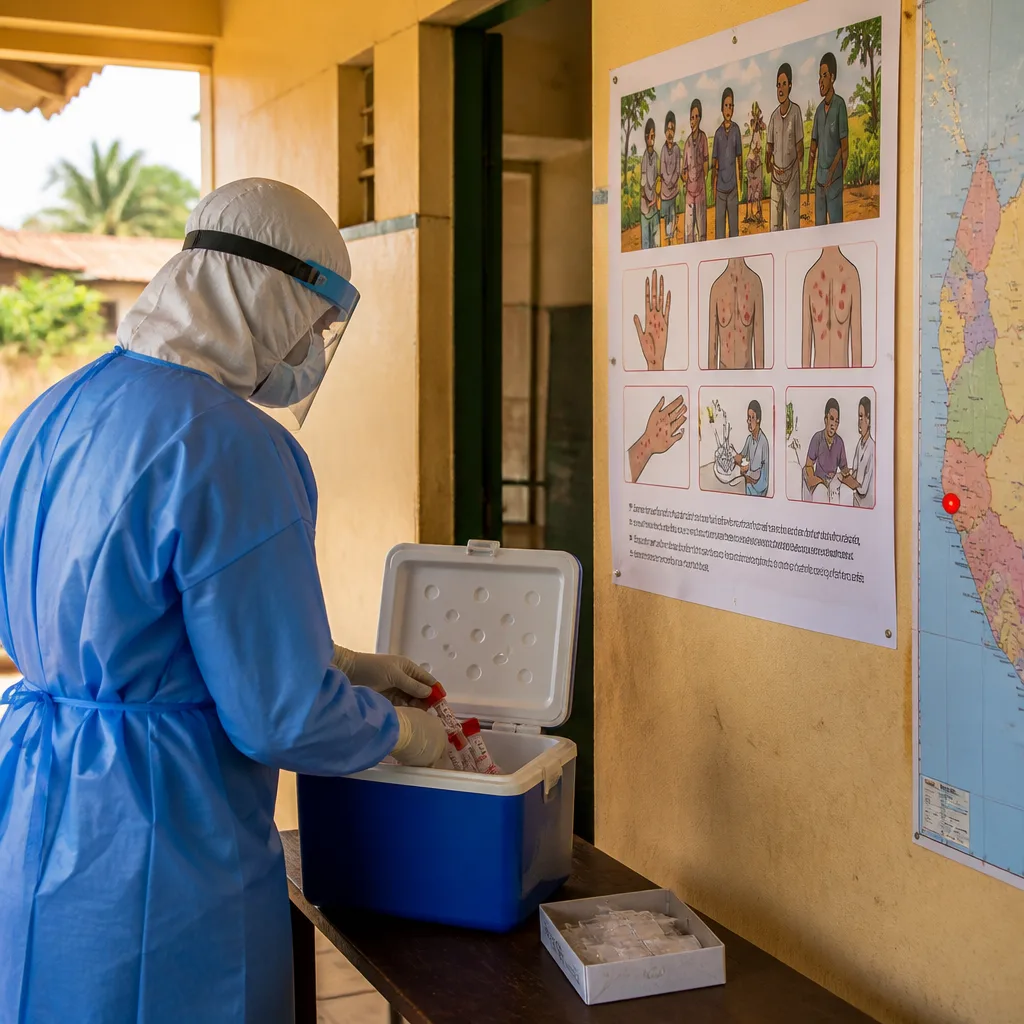
Mpox is a viral illness that commonly begins with non-specific, flu-like symptoms — fever, chills and muscle pains — followed by a characteristic skin eruption. The rash typically starts as raised spots that develop into fluid-filled blisters and later scab over. Historically, outbreaks were mainly reported in specific African countries and frequently followed animal-to-human transmission, often linked to handling or eating infected wild animals.
However, the pattern changed during the 2022 international outbreak. One of the virus types, formerly called the West African clade and now referred to by public-health authorities as clade II, appears to have acquired traits that made it easier to spread between people. Transmission in that wave was driven in large part by close personal contact; sexual transmission accounted for many cases, with men who have sex with men identified as a population at higher risk in that outbreak.
Implications for South Africa and the region
The reappearance of mpox in a new country highlights several priorities for public-health planners, clinicians and emergency-response teams in South Africa:
- Surveillance: Heightened case detection and laboratory testing for suspected mpox infections, especially among patients with compatible rashes and recent travel or close contact histories.
- Clinical preparedness: Ensure frontline clinicians recognise the typical presentation and know referral pathways for testing and management.
- Risk communication: Provide clear, non-stigmatising public advice on how mpox spreads and when people should seek care.
Public-health agencies in other countries have warned that ongoing transmission could lead to the virus becoming established in new settings. The US Centres for Disease Control and Prevention in Atlanta has said mpox could become endemic in the United States if chains of transmission persist.
| Metric | Figure |
|---|---|
| Lab‑confirmed cases since 2022 | ~190,000 |
| Countries reporting mpox since 2022 | 145 |
| Newly affected country (first report) | Guinea‑Bissau |
These figures, compiled in recent reporting, underline the capacity of mpox to move beyond its historical geographic limits. For South Africa, this translates into a need for vigilance in clinics and laboratories, and readiness to provide appropriate care and isolation when required.
Transmission, prevention and patient care
Mpox spreads primarily through close physical contact with an infected person, contact with contaminated materials such as bedding, or direct exposure to lesions. In some outbreaks, sexual contact played a major role. Standard infection-prevention measures apply: minimise close contact with symptomatic individuals, practise good hand hygiene, and avoid sharing bedding or clothing with people who have a rash.
Health authorities renamed the disease from “monkeypox” to mpox during the 2022 outbreak to address concerns about stigmatisation and discriminatory language. The virus is endemic in parts of Africa, but recent epidemics have involved sustained person-to-person transmission in new settings.
For clinicians: consider mpox in differential diagnoses of febrile rash illnesses and follow national or provincial guidance for testing and isolation. Patients with suspected mpox should be advised to seek care promptly at a clinic or hospital rather than attempting to self-diagnose or self-treat at home.
Public-health messaging should be factual and non-stigmatising while ensuring that at-risk communities receive accessible testing and care pathways.
As the situation evolves, health departments and laboratories will need to coordinate surveillance, contact tracing and clinical management to prevent further spread. Individuals with concerns about symptoms should consult their local clinic or healthcare provider for assessment.