
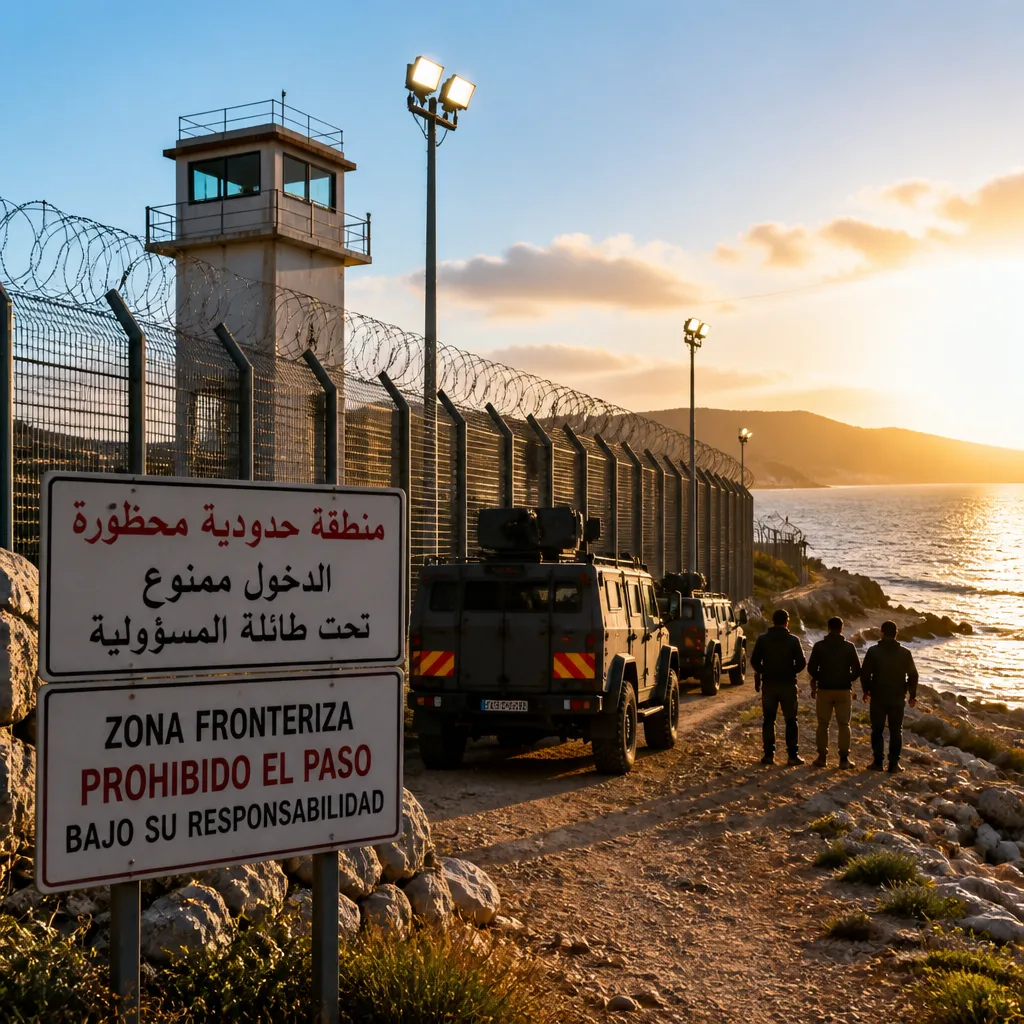
Morocco has stepped up security measures along the frontiers with Spain's autonomous cities of Ceuta and Melilla after fresh social media posts urged migrants to attempt another mass crossing, the Moroccan Interior Ministry said on Thursday.
Reinforced monitoring near frontier points
The ministry said authorities had reinforced security monitoring in areas close to both crossings, adding that "all necessary measures have been taken to counter" any further attempt at an illegal crossing and that they were maintaining "continuous vigilance" around both Ceuta and Melilla. No details were provided on the number of personnel or the types of equipment deployed.
"All necessary measures have been taken to counter [an illegal crossing]" and authorities were maintaining "continuous vigilance".
Spanish officials warned the border remained closed and urged people not to act on misleading information circulating online. The new warnings follow the dramatic events at the end of July, when a reported 72,000 migrants entered Ceuta after swimming around border barriers or climbing over breakwaters separating the enclave from Morocco.
Images and reports of heavy-handed response
Videos circulating on social media show hundreds of Moroccan police officers in riot gear near the border, with water cannons and ambulances visible. Moroccan media outlet Hespress reported that equipment for deploying tear gas and stun grenades had been brought to the area.
Almost all of those who entered Ceuta in late July have since returned to Morocco, the Interior Ministry said. Official figures put the death toll from the attempted crossings at least 80, while human rights groups have suggested the number of fatalities may be higher.
- 72,000 — estimated number who reached Ceuta during the late July rush.
- 80 — official deaths recorded during the crossings; human rights groups report a higher toll.
- Ceuta and Melilla — the European Union's only land borders with Africa.
Social media, misinformation and the risk of renewed attempts
The recent calls urging a new attempt at mass crossings were shared in Moroccan social media groups and reportedly encouraged would-be migrants to try to reach Ceuta on Saturday. Similar messages have also urged attempts on Melilla, though it remains unclear who is behind the posts.
Authorities on both sides have stressed that misleading rumours and unverified information played a key role in the previous wave of crossings. Spanish officials have reiterated that their border with Morocco remained closed and cautioned against following unverified online messages that could endanger lives.
Regional and humanitarian implications
The episode in Ceuta prompted political shockwaves in Spain and across Europe and highlighted the vulnerability of coastal migration routes in the western Mediterranean. The combination of sudden mass movements, dense policing and contested accounts of fatalities has raised questions about both border-management responses and humanitarian protection for people on the move.
| Item | Figure |
|---|---|
| People who entered Ceuta (late July) | 72,000 |
| Official deaths recorded | 80 |
For South Africa and other countries tracking migration and maritime safety, the events underscore how quickly misinformation can amplify movements and how state responses—ranging from reinforced patrols to use of crowd-control equipment—can shape both immediate outcomes and broader diplomatic relations.
The situation remains fluid: Moroccan authorities say they are on alert, Spanish officials maintain the border remains closed, and social media continues to be monitored for further calls that could trigger renewed attempts to cross into Ceuta or Melilla.









