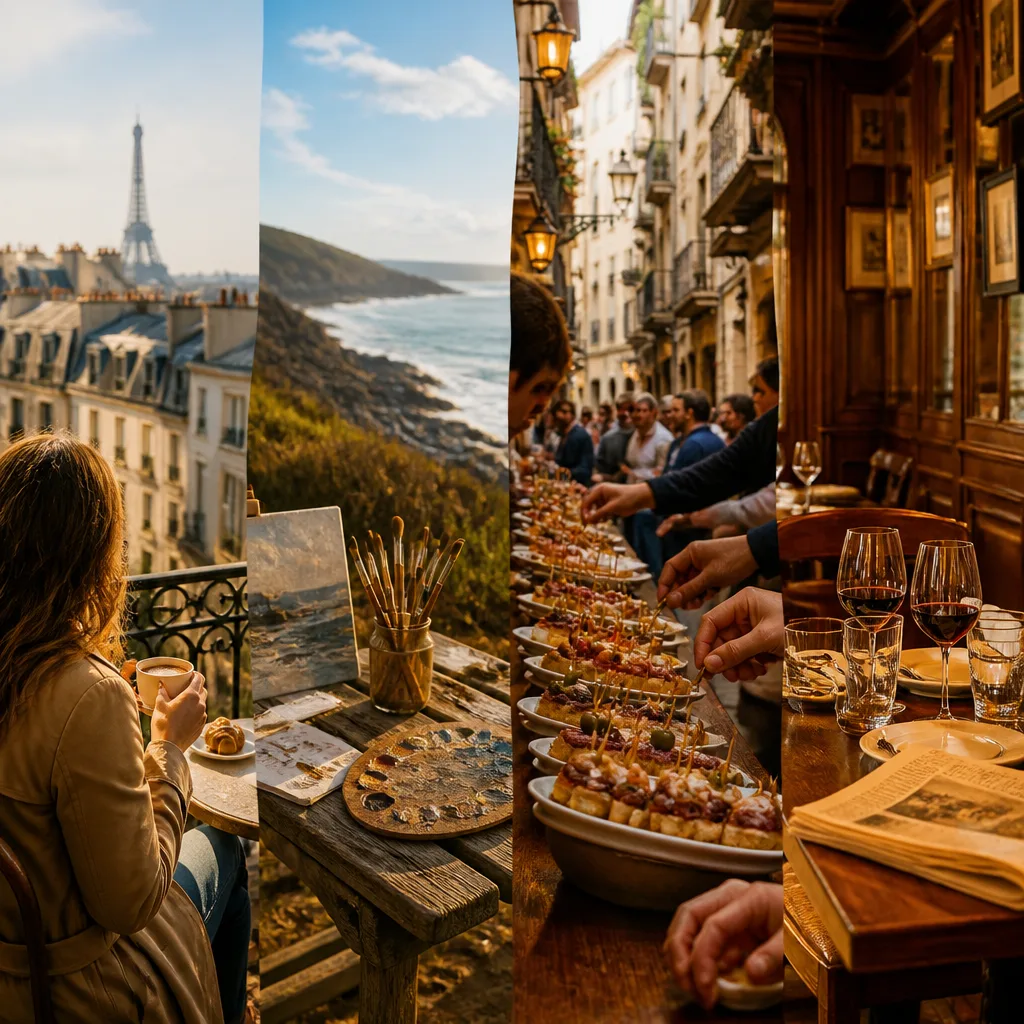
On a hot Biarritz afternoon the breeze off the Atlantic softens the heat and a local artist sets up a small palette on a bench facing the same stretch of coastline that drew Pablo Picasso a century ago. The brief ritual—close your eyes, tune into each sense, then paint—turns a tourist moment into a private practice of attention. It is an apt way to approach a trip framed around the so-called Lost Generation, now 100 years on from Ernest Hemingway’s The Sun Also Rises.
Why go now
This centennial invites reconsideration of the people and places that shaped early 20th-century literature and art. The journey moves between celebrated cafés and quieter corners: Montparnasse’s historic haunts in Paris, the coastal calm of Biarritz, the pintxo-lined alleys of San Sebastián and Madrid’s venerable restaurants where Hemingway once sat. The travel writer who retraced these steps found the experience equal parts homage and discovery—old favourites revisited through new, sensory exercises and contemporary local encounters.
“That’s what painting should feel like,” says Juliette, instructing the writer to heighten perception before applying brush to canvas.
That simple instruction shapes the trip’s approach: it is less about ticking boxes and more about inhabiting places that once fuelled creativity. You will still visit iconic sites—cafés, bookshops, museums and hotels with long histories—but the stronger impression comes from small rituals: a bench facing the sea, a favourite restaurant booth, or a local artist’s prompt to notice texture and light.
What to expect
The itinerary blends cultural landmarks with time for slow, sensory experiences. Highlights mentioned include:
- Montparnasse — historic cafés where writers and artists gathered;
- Biarritz — Atlantic coast views, shade under tamarisk trees and painting on the promenade;
- San Sebastián — cobbled alleys, pintxos and Basque cider;
- Madrid — the world’s oldest restaurant and a booth associated with Hemingway.
The writer notes time spent in grand hotels frequented by expatriates a century ago, visits to independent bookshops and leisurely cycles or walks that connect sites without the rush of a checklist tour. Food and drink, especially in Spain, are central: small plates, bars and the convivial pace of shared bites help explain why these cities sustained communities of artists and writers.
| Place | Notable experience |
|---|---|
| Biarritz | Painting the coastline near the 19th-century lighthouse Picasso painted |
| San Sebastián | Pintxos and Basque cider in cobbled alleys |
| Madrid | Dining where Hemingway favoured a back-corner booth |
Practical travel companies have built thematic itineraries around this era, combining museum visits with local experiences. For South Africans planning a similar trip, allowing time to linger is vital: these cities reveal themselves best when you give them unhurried hours rather than a compressed schedule.
The trip captures a paradox at the heart of the Lost Generation: a profound sense of disillusionment paired with intense creative output. Walking the same streets and sitting in the same cafés makes that tension tangible. More than museum labels or famous addresses, the journey is about the textures of place—light on the sea, the clink of glasses, the hush of a bookshop—that once drew people who were restless, exacting and, ultimately, human.
For readers looking to craft their own route, think in sensory prompts rather than landmarks. Bring a small notebook, leave a morning free for aimless wandering, and let local invitations—an artist’s lesson, a recommended back-street bar—shape your day. The result is a holiday that honours history while leaving space for personal discovery.
In the end, revisiting the Lost Generation’s footsteps is less about myth-making and more about noticing. Whether you’re a fan of Hemingway, Picasso or the fashion circles of the era, the true reward is how these places still encourage attention, craft and a slower way of seeing.