Minister of Electricity and Energy Kgosientsho Ramokgopa has proposed drastic changes to how Eskom competes in the evolving electricity market, saying the state utility must be liberated from some Public Finance Management Act (PFMA) constraints and that private sector players should carry similar social obligations to those Eskom currently shoulders.
What the minister urged
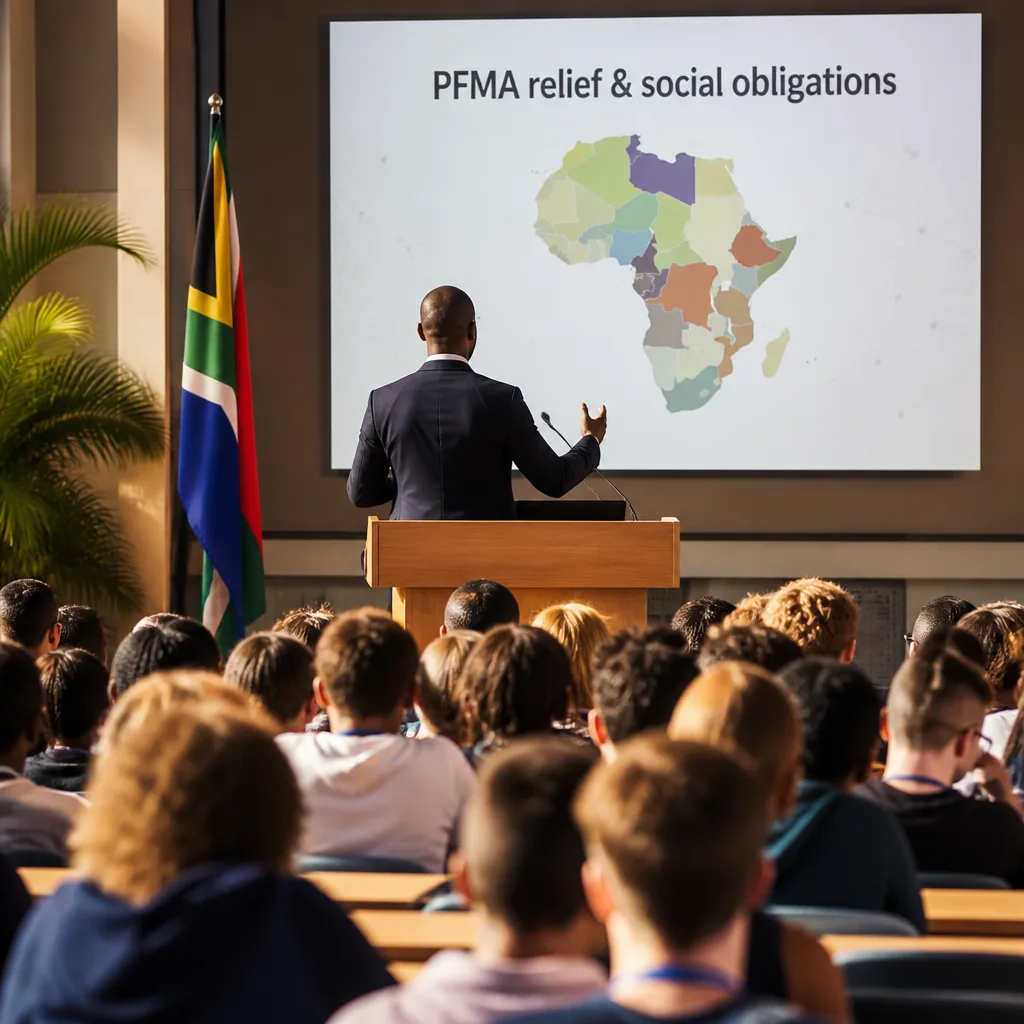
At a recent University of South Africa School of Business Leadership event, Ramokgopa said Eskom lacks the flexibility to move quickly in a competitive environment such as the South African Wholesale Energy Market (SAWEM). He warned the PFMA could hamstring Eskom when it seeks to respond to opportunities or compete with other generators.
Ramokgopa said he would make a submission to cabinet after consulting the Minister of Finance, Enoch Godongwana. He told the audience he believed the case for change was compelling:
“I can make the case, and I believe the case is compelling.”
Proposed obligations on private players
Ramokgopa wants private-sector entities, including those operating under bilateral contracts, to be subject to the same social obligations that Eskom currently carries. He did not provide detailed draft measures during his remarks, but framed the proposals as steps to ‘level the playing field’ between Eskom and private generators.
- PFMA relief: The minister suggested creating room for Eskom to act without some PFMA constraints so it can respond faster in competitive markets.
- Social obligations: Private generators would be required to take on responsibilities similar to Eskom’s — though Ramokgopa did not specify which obligations.
- Cabinet submission: He said he will consult the finance minister before taking the proposal to cabinet.
Expert reaction and context
The ideas prompted immediate questioning from industry figures and academics. Peter Attard Montalto, managing director at Krutham, said there are procurement and approval reforms worth pursuing to streamline SOE operations, but he questioned whether Ramokgopa’s specific proposals would be legally possible.
Anton Eberhard, emeritus professor at the University of Cape Town Graduate School of Business’s Power Futures Lab, said the minister appeared not to be fully appreciating the depth of reform needed in the power sector or what Eskom’s role will be in future market arrangements.
Eberhard noted that Eskom still holds about 70% of generation capacity, arguing that in many respects the private sector is at a disadvantage. That assessment contrasts with the minister’s contention that Eskom risks being disadvantaged by PFMA restrictions when competing on SAWEM.
Why this matters
Changes to Eskom’s statutory obligations or to the PFMA’s application to the utility could have broad consequences for public finance, procurement oversight and investor confidence. The PFMA is the central framework governing financial management and accountability in national departments and most state-owned entities.
Removing or relaxing PFMA constraints for Eskom could accelerate decision-making and procurement for the utility, the minister argues. But critics warn such changes could weaken financial controls and reduce transparency unless accompanied by clear alternative governance measures.
| Data point | Reference |
|---|---|
| Eskom generation share | ~70% (reported by Anton Eberhard) |
| Eskom debt referenced in related remarks | R7 billion (context cited in a related briefing) |
Next steps and open questions
Ramokgopa has signalled he will consult Finance Minister Enoch Godongwana before taking a formal submission to cabinet. Details remain thin: the minister did not outline which PFMA provisions he seeks to relax, how private players’ social obligations would be defined or enforced, nor what regulatory oversight would replace existing PFMA controls.
Industry and academic reactions show there is no consensus on the diagnosis. Some observers argue procurement processes for SOEs require reform; others stress that the wider power-sector architecture and market design need deep structural change.
The minister’s remarks are the latest in a series of policy shifts and debates as South Africa moves towards greater participation by independent generators and the establishment of SAWEM. How government balances flexibility for Eskom with accountability and a stable investor environment will be central to the debate going forward.
This story is developing and further details of the cabinet submission were not available at the time of reporting.