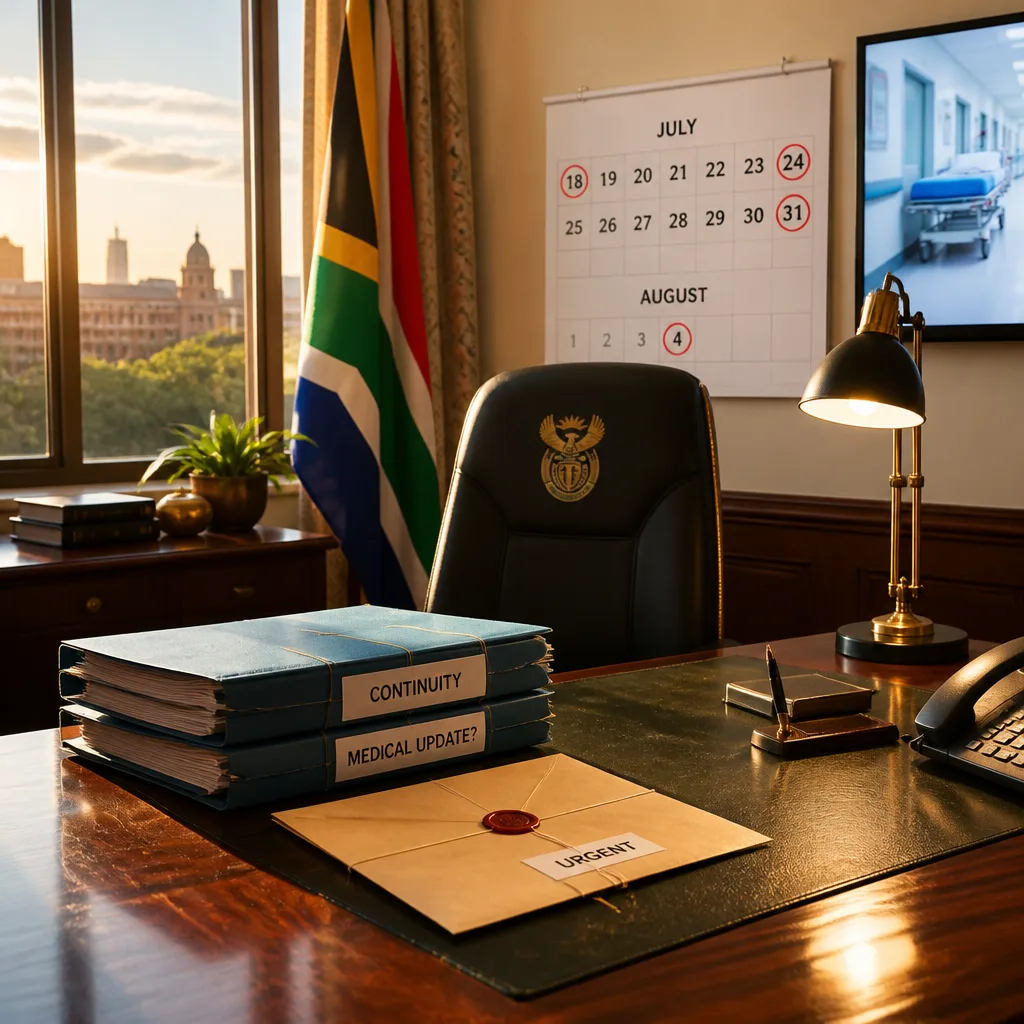
The Deputy President has not made a confirmed public appearance since 18 July 2026, and official explanations for his absence have been limited, raising concerns about how the health of senior office‑bearers is communicated to the public and within government.
Sequence of appearances and official statements
| Date | Event |
|---|---|
| 18 July 2026 | Last confirmed public appearance, officiated at the Mandela Day Water Services Project Launch and Acceleration Programme in KwaZulu‑Natal. |
| 23 July 2026 | International Relations Minister delivered a keynote address on his behalf at the Kgalema Motlanthe Foundation Winter Seminar. |
| 4 August 2026 | The Presidency said he was recovering from a "minor surgical procedure" and that the President had visited him and was assured he would soon return to work. |
| 23 August 2026 | The ANC secretary‑general said the Deputy President was recovering ahead of the party's manifesto launch. |
Those limited official updates have left space for competing accounts. One source briefed on developments reported that the Deputy President had at one stage been admitted to an intensive care unit before being discharged. Separate, unnamed sources raised suspicions that poisoning might have been involved, while another source said consideration had been given to sending him to Russia for medical treatment. A separate source close to the Deputy President said he had first received medical attention in Cape Town before returning to Johannesburg.
"The President visited the Deputy President this afternoon and was assured that his deputy will soon be back at work."
The sparse nature of public communication has generated debate about the balance between medical privacy and the public interest when holders of the highest executive offices — the President, Deputy President and Finance Minister — are unable to perform normal duties. Those offices sit at the heart of executive authority, continuity of government and economic confidence, and prolonged absences prompt questions about how responsibilities are being managed and when normal engagements will resume.
Issues raised and potential consequences
Public office does not remove an individual’s right to medical privacy. At the same time, the functioning of government and the public’s need for assurance create valid reasons for timely, clear information. The current episode highlights several concerns:
- Continuity of duties: Who is carrying out day‑to‑day responsibilities while the Deputy President is absent, and are any formal temporary delegations in place?
- Public confidence: Limited information can fuel speculation and competing narratives that may damage trust in government institutions.
- Protocol clarity: Whether there are agreed guidelines for disclosure when senior office‑bearers are incapacitated or undergoing medical treatment.
Experts and officials often stress that medical confidentiality must be respected. However, the absence of clear, regular updates in this case has allowed unverified accounts to circulate. That trend may increase pressure for more formalised communication protocols that preserve dignity and privacy while satisfying reasonable public expectations about governance and accountability.
Health desk reporting emphasises that readers should be cautious about unverified claims and rely on official announcements from the Presidency or authorised medical spokespeople for confirmed information. Anyone seeking medical advice or concerned about similar health issues should consult their doctor or clinic rather than rely on media speculation.
The unfolding situation will test how government balances individual privacy with institutional transparency. Until authoritative updates are released, questions about the Deputy President’s condition, the management of his duties and the adequacy of current communication practices are likely to persist.