
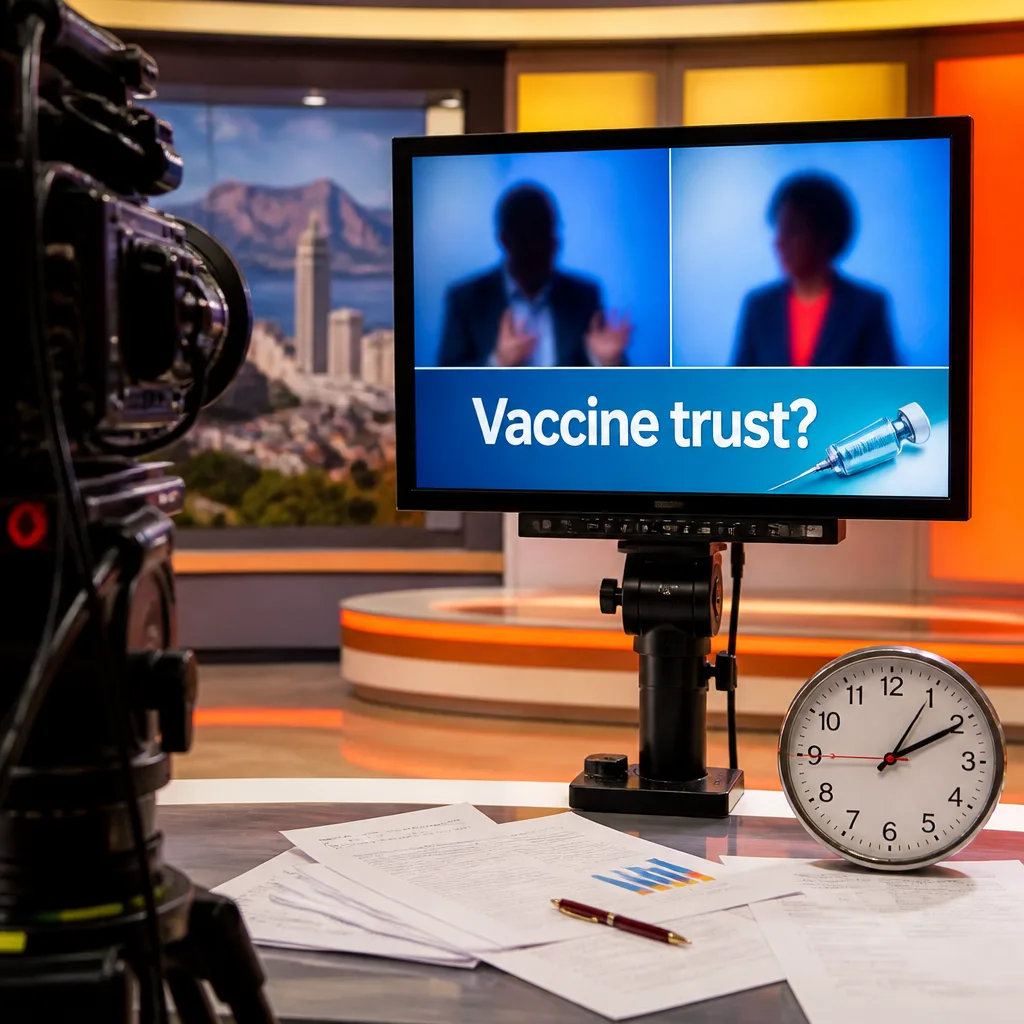
A tense interview between a senior health official and a television host has reignited debate about public trust in health advice and vaccines, according to published reporting. The exchange, carried live, centred on whether parents can rely on public health recommendations to vaccinate children ahead of the school year and whether political rhetoric has undermined confidence in medical guidance.
What happened on air
During the broadcast the official sought to discuss the role of misinformation in eroding trust. The interviewer repeatedly pressed for direct answers about whether parents should accept vaccination recommendations for their children. As the exchange grew heated, both parties clashed over past pandemic decisions and recent political interventions that critics say could damage confidence in vaccines.
“Should parents trust that they can go vaccinate their kids when their doctor tells them to do so for them to go back to school?”
The published account reports the interviewer pressed the official about an apparent executive order under consideration by political leaders to direct health authorities to investigate a link between autism and vaccines — a claim that has been widely disputed for decades. The official declined to comment on the contents of an executive order that, according to reporting, was not complete at the time of the interview.
Why the exchange matters
Experts and communication specialists regard clarity and consistency from health authorities as essential to preserving vaccine confidence. Sudden, politically driven statements or high-profile public disputes about recommendations can erode trust among parents and caregivers, potentially lowering vaccine uptake.
In South Africa, where routine immunisation programmes and school-entry vaccination campaigns rely on sustained public confidence, the international episode is a reminder of the fragile relationship between politics, media and public health. Health officials here routinely emphasise consultation with local clinics and health practitioners; published reporting of the US exchange underscores why that advice matters.
- Consistency matters: Contradictory messages from politicians, health officials and media can lead to confusion and reduced vaccine uptake.
- Political interventions risk harm: Public statements or orders that appear to question established scientific consensus may undermine routine immunisation efforts.
- Clinics remain key: Families should consult their local clinic or healthcare provider about vaccination decisions rather than rely on contentious media exchanges.
Exchange in brief
The following table summarises the main points attributed in the published reporting of the interview:
| Participant | Main focus |
|---|---|
| Interviewer | Pressed on whether parents can trust vaccine recommendations for school; questioned political actions that might link vaccines to autism |
| Health official | Sought to discuss misinformation and public health guidance; declined to comment on an incomplete executive order |
The published account records a moment of visible frustration as the conversation moved between past pandemic decisions and present-day vaccine confidence, with interruptions and sharp exchanges about who was responsible for the narrative being presented.
Implications for health communication
Public health experts have long warned that misinformation and politicisation of health issues can have tangible consequences: lower vaccination coverage, outbreaks of preventable disease, and reduced trust in routine health services. This broadcast episode is likely to be cited in discussions about how best to restore public confidence and shield scientific advice from political interference.
In South Africa, immunisation programmes are delivered through a network of public clinics and schools, and provincial health departments work with community health workers to address hesitancy. Health practitioners here continue to urge parents to seek information from qualified clinicians and official health channels when making decisions about vaccines.
Readers are reminded that individual health decisions are best made in consultation with a clinician or local clinic. If parents are unsure about vaccinations, they should contact their healthcare provider or the nearest public health facility for authoritative guidance rather than relying on contested media debates.
Reporting in this article is based on a published account of the television interview.











