
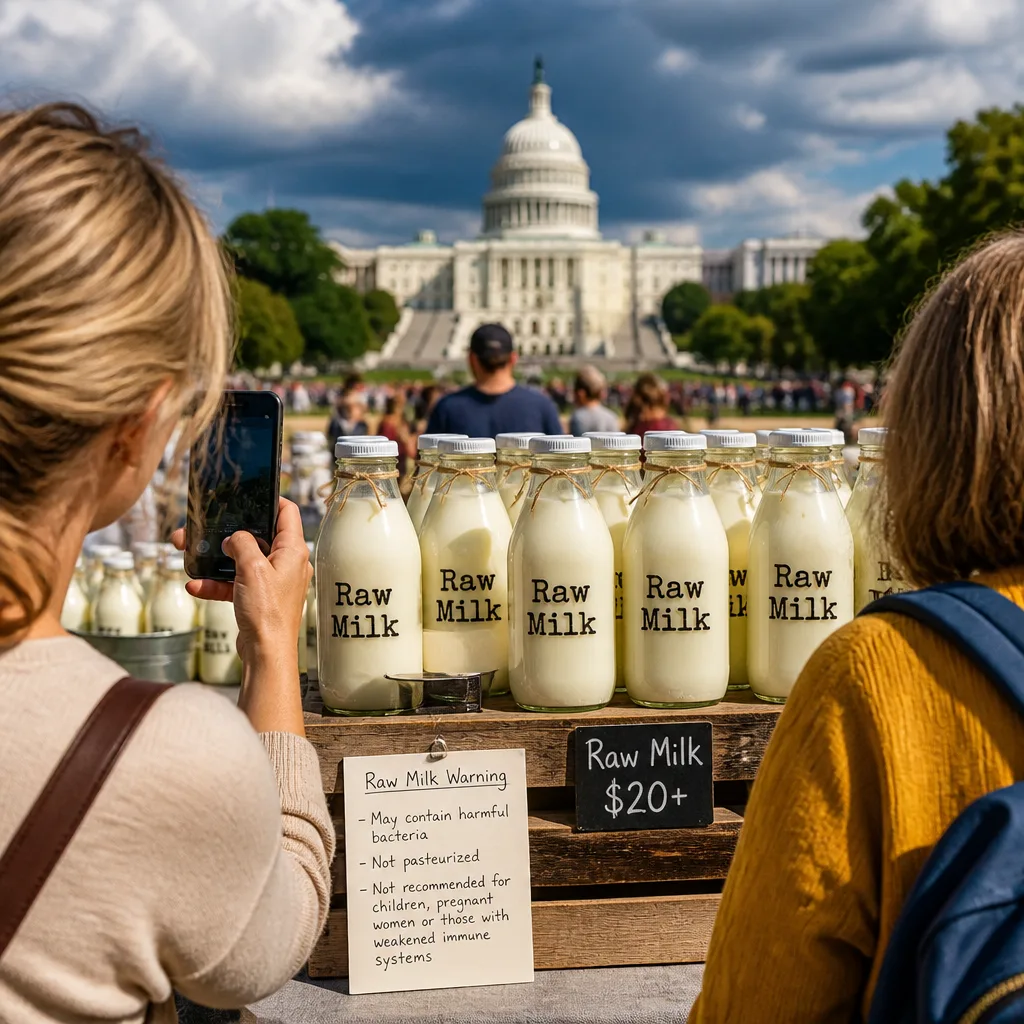
Raw milk — milk that has not been heat‑treated to kill pathogens — is growing in popularity across the United States despite repeated warnings from public‑health authorities about its risks, according to recent reporting.
Rising demand and political momentum
Farmers and sellers report increased consumer interest, with some reporting prices of more than $20 a gallon. Supporters range from social‑media health influencers to organised groups such as the Make America Healthy Again (MAHA) movement, and the drink has even been promoted in public by high‑profile figures.
At the same time, lawmakers in many states are moving to loosen restrictions on raw milk sales. A bipartisan bill introduced this year in the US House of Representatives would permit interstate commerce in raw milk products — effectively changing federal policy that currently prohibits sales across state lines. Advocates argue consumers should be free to decide for themselves, while opponents point to established food‑safety concerns.
Public‑health evidence and documented harms
Health agencies caution against consuming raw milk, particularly for vulnerable groups such as children and pregnant people. The US Centers for Disease Control and Prevention (CDC) reports that between 1998 and 2019 bacterial outbreaks linked to raw milk sickened about 2,600 people and were associated with 225 hospitalisations.
Research comparing pasteurised and unpasteurised dairy products has found raw milk products to be substantially more likely to lead to severe illness. One study cited in recent reporting estimated that products from unpasteurised milk were 45 times more likely than pasteurised products to cause hospitalisation.
| Metric | Figure (1998–2019) |
|---|---|
| People sickened in outbreaks linked to raw milk | 2,600 |
| Hospitalisations linked to raw milk outbreaks | 225 |
| Relative risk of hospitalisation (raw vs pasteurised) | 45× |
Industry responses and safety claims
Producers and advocacy groups say the product has become safer as more farmers adopt voluntary safety practices, such as regular bacterial testing and adherence to on‑farm protocols. The Raw Milk Institute, led by a California farmer active in the sector, has developed such guidance; the organisation reported substantial commercial sales for some producers — one farmer cited in reporting reportedly sells about $30 million of raw milk annually.
Still, federal regulators including the Food and Drug Administration (FDA) have maintained that pasteurisation remains the most reliable way to prevent milkborne illness. Recent CDC and FDA reporting linked several recent E. coli and other bacterial outbreaks to raw milk products, underscoring persistent risks even when producers adopt safety measures.
- Who is at higher risk: children, pregnant people, older adults and people with compromised immune systems.
- Why pasteurise: heat treatment kills bacteria such as E. coli, Salmonella and Listeria that can be present in fresh milk.
- Consumer drivers: taste preferences, distrust of industrial food processing, and claims about health benefits promoted by influencers and advocacy groups.
Supporters argue for consumer autonomy and point to artisanal appeal and purported health benefits, while public‑health officials stress that claims of greater nutritional value or safety from raw milk are not supported by the bulk of scientific evidence.
Implications and advice
The unfolding policy debate in the US — including the proposed federal bill to allow interstate sales — may make raw milk more widely available if enacted. For clinicians, public‑health practitioners and policymakers, the key challenge is balancing consumer choice with population safety, particularly protecting groups at greater risk of severe infection.
People considering raw milk should be aware of the documented risks and, where concerns arise, consult a healthcare professional rather than self‑diagnose. Pregnant people and parents of young children should follow existing public‑health guidance advising against consumption of unpasteurised milk.
As the debate continues, surveillance and transparency about outbreaks, plus clear public messaging from health authorities, will be important to help consumers make informed choices.
Readers with health concerns should consult a local clinic or their medical practitioner for personalised advice.











