
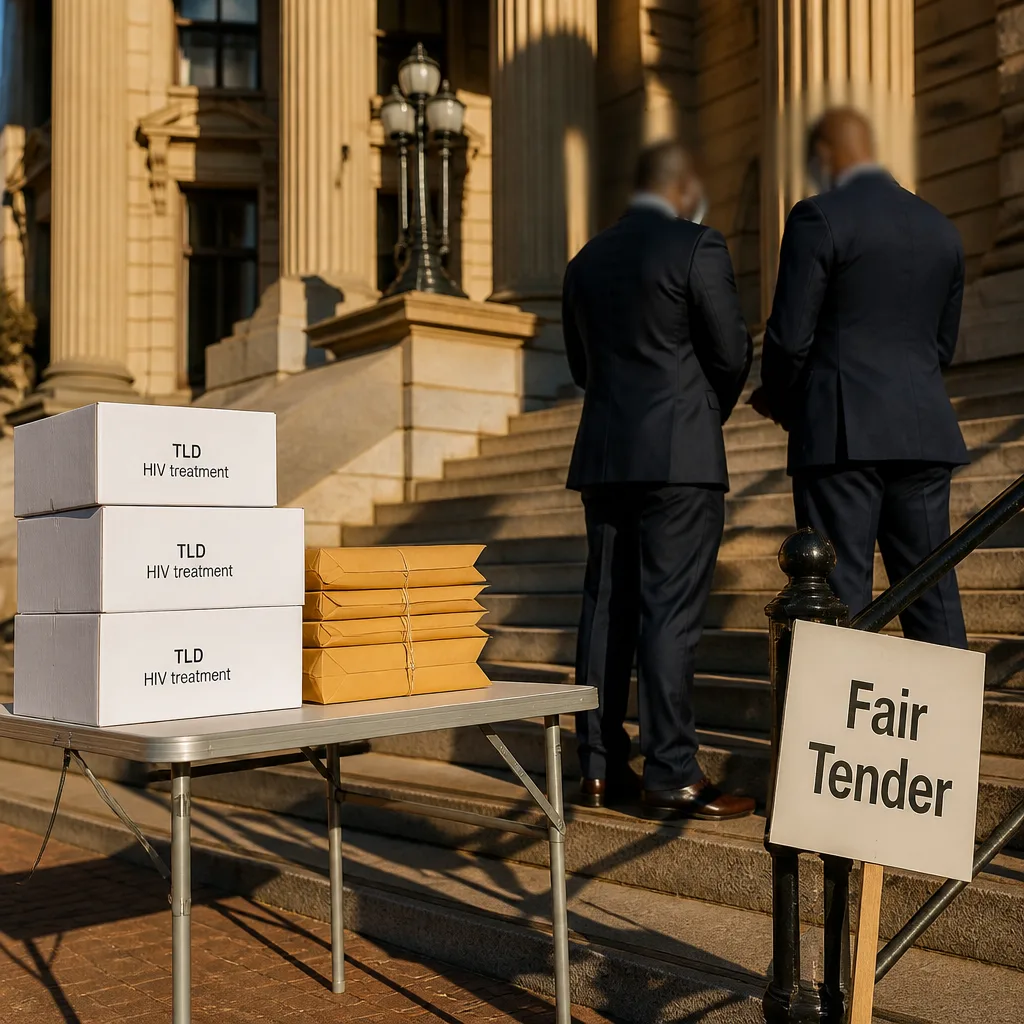
The Department of Health has told the Pretoria High Court that its procurement of antiretroviral (ARV) medication under a R15.5 billion tender was conducted lawfully and on rational economic grounds, rejecting a legal challenge brought by pharmaceutical manufacturer Cipla.
Department says process fair; Cipla disputes exclusion
The dispute centres on the government contracts for tenofovir, lamivudine and dolutegravir (TLD) combination pills, which are taken daily by the majority of people on HIV treatment. The core awards took effect on 1 December 2025. Cipla, previously a government supplier with local production capacity, was not allocated any portion of the contracts to supply either monthly or three‑monthly packs.
In court papers, the department argued officials followed a rational evaluation and that pricing decisions were a central factor in the awards. The tender for monthly TLD packs, valued at R7.25 billion, was split among eight suppliers. The three‑monthly pack contract, worth R5.38 billion, was awarded among seven companies.
"Story audio is generated using AI"
Cipla has applied to the high court to set aside the awards. The company alleges procurement irregularities, including inadequate consideration of local manufacturing capacity, the participation of bidders who should have been disqualified, and errors in how the contracts were apportioned between successful suppliers. The application was filed in February and the matter is expected to be argued in September after the exchange of affidavits concluded.
Price, negotiations and projected fiscal impact
The department’s legal papers emphasise the public cost implications of its choices. Officials disclosed details of rival bids and said Cipla’s offered prices were higher than those submitted by the winners. Cipla was given an opportunity to lower its prices during the negotiation phase but did not reduce them sufficiently to qualify for an allocation, the department said through its chief director for sector‑wide procurement, Khadija Jamaloodien.
A supporting affidavit from MacLeods Pharmaceuticals provides a comparative estimate: had Cipla been awarded shares of both TLD contracts at its original bid prices, the government would have faced an additional projected cost of R75 million compared with the agreement reached with Aspen Pharmacare, which was not the lowest priced bidder.
What is at stake
The outcome of this litigation could affect several areas of public health and procurement policy:
- Continuity of supply: TLD is the backbone of first‑line HIV treatment; stable contracts affect stock management and clinic dispensing.
- Public expenditure: The department defended price‑driven decisions to limit overall costs to the state.
- Local manufacturing: Cipla’s exclusion raises questions about how local production capacity is weighed in national tenders.
| Contract | Value | Number of suppliers |
|---|---|---|
| Monthly TLD packs | R7.25 billion | 8 |
| Three‑monthly TLD packs | R5.38 billion | 7 |
Legal papers filed by the department argue that careful scrutiny of bids and negotiation outcomes is required when spending significant public funds on essential medicines. The department also maintains that the tender splitting between multiple suppliers was part of a deliberate strategy, though Cipla contests the manner in which shares were allocated.
Next steps and wider implications
All parties who won portions of the contracts have opposed Cipla’s application. The Pretoria High Court is likely to hear oral arguments in September after written pleadings are finalised. A ruling in either direction could set a precedent for how price, manufacturability and bidder eligibility are balanced in future pharmaceutical tenders.
For patients and clinics dependent on TLD, procurement stability is vital. Any prolonged legal uncertainty could complicate supply-chain planning and stock ordering at provincial and facility level.
The department’s position underscores a familiar tension in public health procurement: reconciling fiscal stewardship with industrial policy and supplier relationships. Observers will be watching whether the court gives weight to Cipla’s concerns about local production capacity or defers to the department’s emphasis on cost containment and its assessment of competitive bids.
Readers with concerns about HIV treatment access or medication continuity should consult their local clinic or provincial health department rather than making changes to therapy on their own. Clinical decisions should always be made together with a clinician or pharmacist.











