
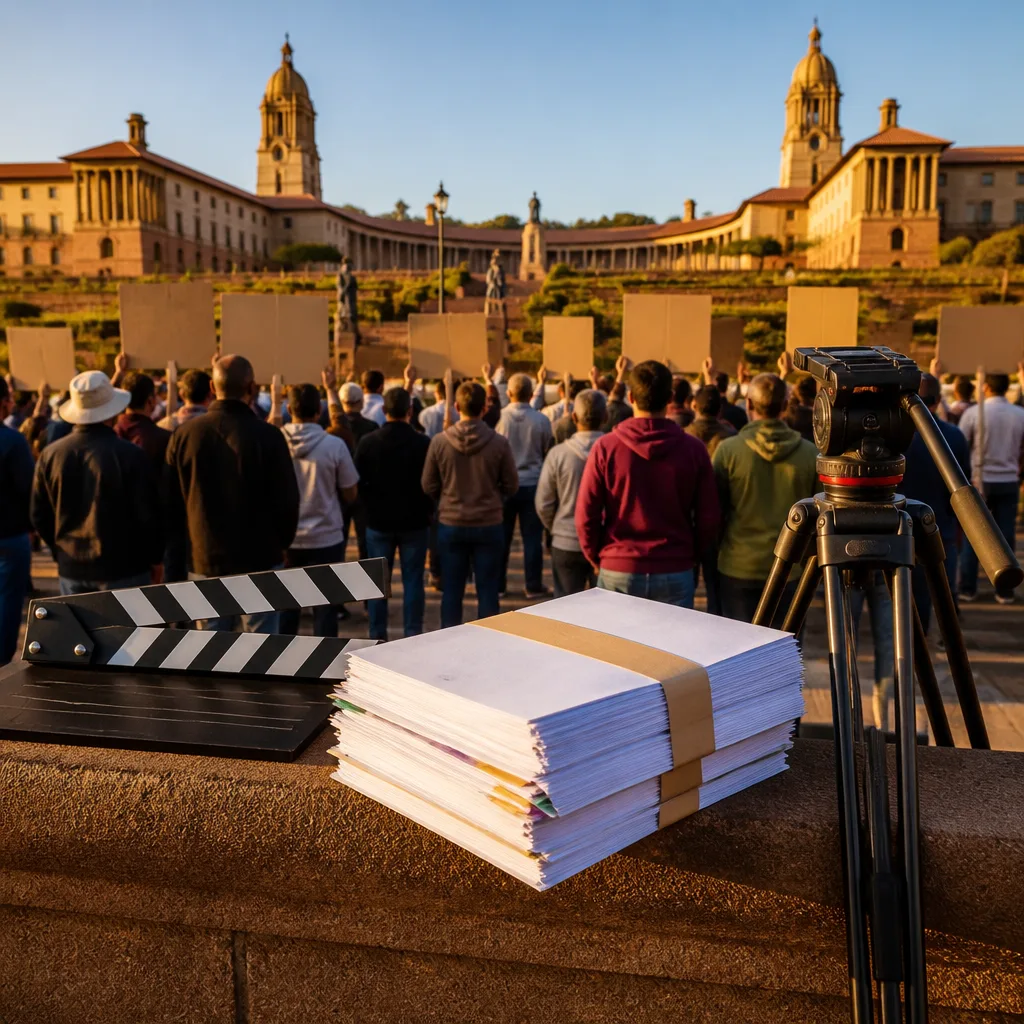
South Africa’s film and television industry has secured a formal way forward after months of industrial action and sustained pressure on government, but industry leaders say the agreement will be judged on delivery.
Following demonstrations in January and a sustained parliamentary engagement, the Department of Trade, Industry and Competition (DTIC) and the Save SA Film and TV Jobs Coalition presented a joint action plan to the Portfolio Committee on Trade, Industry and Competition on 11 August, the committee heard. The move aims to repair serious shortcomings in the administration of the Film and Television Production Incentive, which filmmakers say has stalled productions and cost jobs.
Background and parliamentary scrutiny
The campaign for change began when hundreds of industry workers marched on Parliament in Cape Town on 28 January 2026 and then to the DTIC offices in Pretoria on 29 January 2026, according to reporting by Lilita Gcwabe. Protesters complained of lengthy delays in processing applications and incentive claims, an idle adjudication committee and excessive bureaucracy that made South Africa less attractive to international producers.
The matter was raised in Parliament on 17 February 2026, when the Portfolio Committee brought together department officials and industry representatives to answer questions about the crisis. The committee was told that uncertainty over incentive payments was undermining production companies’ ability to secure commercial finance and placing jobs across the sector at risk.
What the joint action plan proposes
The committee welcomed the joint plan presented by the DTIC and the Save SA Film and TV Jobs Coalition. Key elements of the plan reported to the committee include:
- clearing the backlog of existing applications;
- removing administrative obstacles that delay claims and approvals;
- developing revised incentive guidelines and transitional arrangements;
- reinstating the adjudication committee so that new projects can be considered;
- addressing capacity constraints within the department and attaching clear timelines to each action.
The committee also set a follow-up progress meeting to monitor implementation, the report said. A specific date for that meeting was not given in the source material.
Industry impact and the stakes
Industry representatives had warned that the breakdown in the incentive system was more than administrative friction. According to the reporting, productions were being delayed or abandoned and workers were losing income. Producers said the uncertainty around payments was making it harder to raise finance and risked eroding international investment into South Africa’s screen sector.
The planned reforms aim to restore confidence quickly; however, stakeholders will be watching whether the DTIC can deliver on timelines and fix capacity gaps that have hamstrung the incentive for months.
| Issue | Planned action |
|---|---|
| Backlog of applications | Clearing backlog |
| Slow adjudication | Reinstate adjudication committee |
| Administrative hurdles | Remove obstacles; revise guidelines |
| Departmental capacity | Address capacity constraints; set timelines |
The outcome will affect a broad range of stakeholders: production crews, independent companies, international financiers and the wider creative economy. The committee’s insistence on timelines and a further progress meeting signals parliamentary impatience with slow implementation.
This account is based on reporting by Lilita Gcwabe and reflects the developments as presented to the Portfolio Committee; some operational details and the date of the next progress meeting were not specified in the source.














