
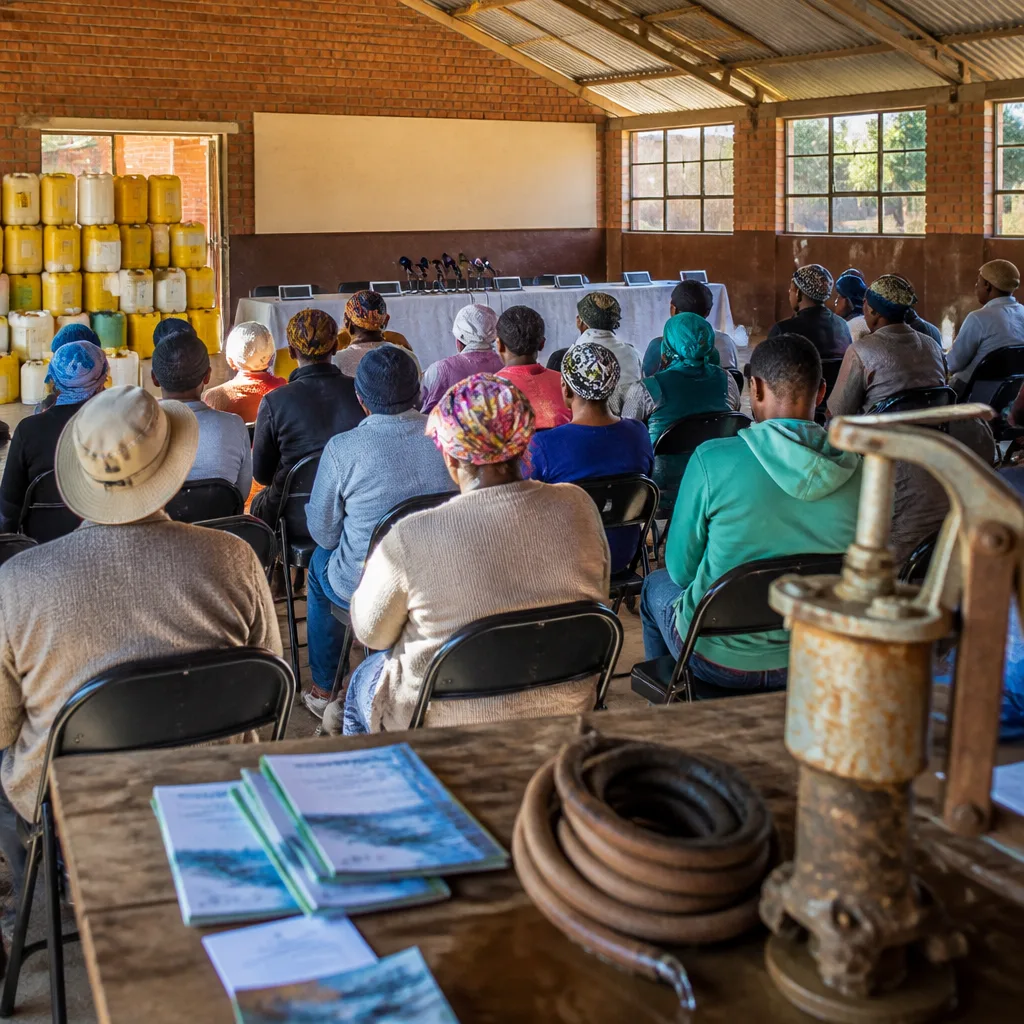
Water emerged as the dominant public concern in August as Parliament’s portfolio committee on water and sanitation went on the road to hear testimony from communities battling failing infrastructure.
Residents report chronic failures at Graskop hearing
At a public hearing in Graskop, Mpumalanga, residents laid out a catalogue of service breakdowns that community members say have become routine: leaking pipes, pumps that do not work, insufficient water tanker deliveries and boreholes that fail to supply water.
The hearings, held as part of a nationwide consultation on the Water Services Amendment Bill, form part of a process running between 14 and 16 August. The Portfolio Committee on Water and Sanitation, chaired by Leon Basson, convened the session to hear how the proposed law might address “inadequate management and maintenance of water infrastructure, declining water quality, accountability gaps and weak enforcement mechanisms.”
Residents described receiving water delivery by tanker only on weekends, repeated failed complaints to officials and slow implementation of promised projects. These accounts, committee members were told, reflect both operational failures and long-standing funding and capacity constraints.
"The word 'water' has been the centre of discussion at conferences and public meetings in South Africa during August 2026."
Proposed amendments and competing views
The Department of Water and Sanitation has proposed amendments to the National Water Act through the Water Services Amendment Bill that would, among other changes, allow for the apportionment of liability and the potential for holding directors or officials personally liable for service failures and pollution.
Officials from the department, represented at a sector consultation in Pretoria on the proposed Raw Water Use Charges for 2027/2028, said the changes aim to bolster accountability and enforcement where poor maintenance and mismanagement have harmed service delivery.
But the South African Local Government Association (Salga) warned that emphasising individual liability risks ignoring systemic problems. Salga pointed to historical backlogs, insufficient funding and ageing infrastructure as central drivers of the crisis, arguing that penal measures alone could be counter‑productive if they do not address root causes.
What communities told Parliament
Common complaints reported at the hearing included:
- Intermittent or weekend-only water deliveries from tankers.
- Non-functional boreholes and pumps despite promises of repairs.
- Leaking distribution pipes and slow project implementation.
- Residents’ repeated complaints failing to produce timely responses from officials.
Committee members signalled that these testimonies will inform further amendments to the Bill and the committee’s recommendations to the department. Public hearings form a statutory part of the legislative process, allowing affected communities to influence the shape of the law before it proceeds through Parliament.
Implications and next steps
If enacted, the proposed amendment to allow personal liability could change the incentives for municipal managers and private contractors, but it also raises questions about capacity to implement and enforce such liability fairly. Parliament will need to weigh the need for stronger accountability against the practical realities of funding, technical skills and maintenance budgets at municipal level.
The department’s consultations on raw water charges for the 2027/2028 financial year are ongoing. The committee’s Mpumalanga hearing is the first in a broader national participation process. Further hearings are expected to feed into the committee’s deliberations and into subsequent revisions of the Bill.
Lawmakers, municipal representatives and civil society will now have to reconcile competing assessments of blame and remedy — and do so under public scrutiny. The question facing Parliament is whether legislative amendments can be designed to strengthen accountability while also securing the investment and technical support communities say they urgently need.














