
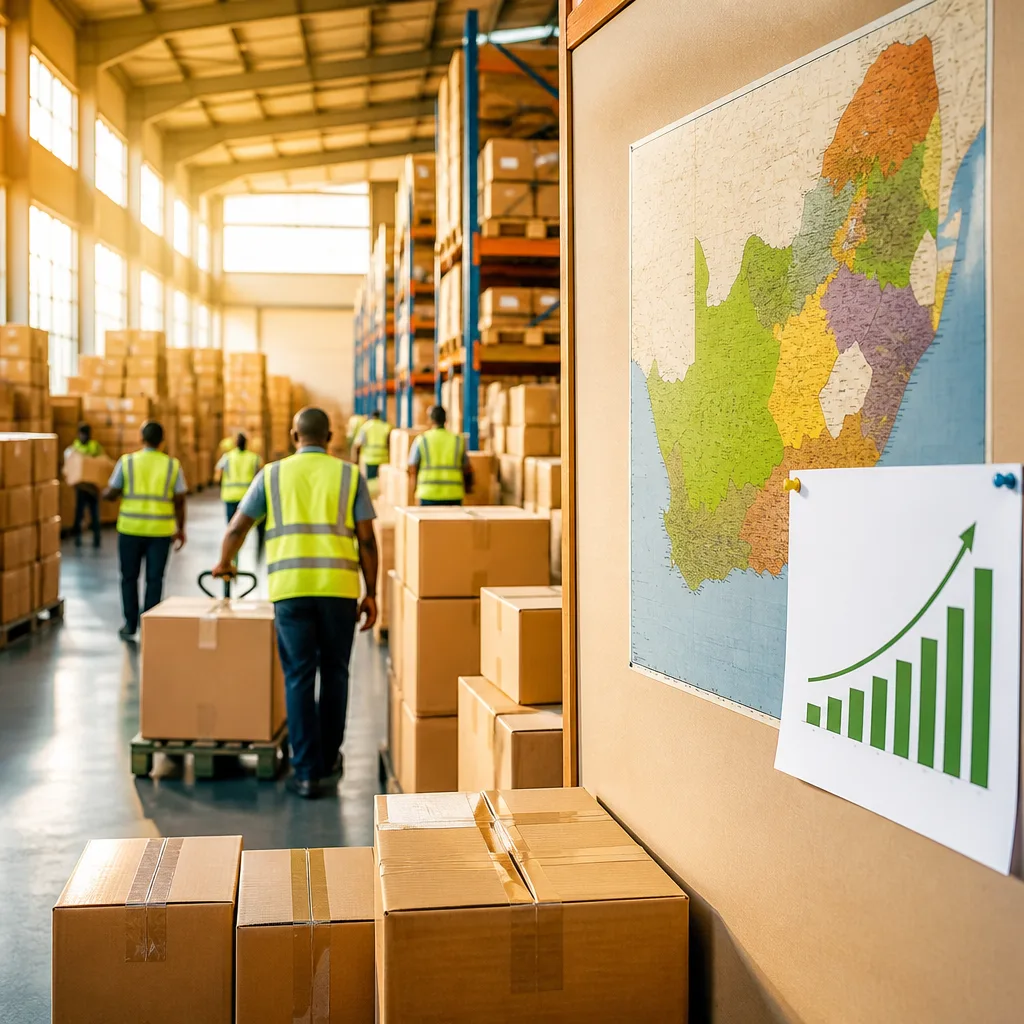
Amazon says it has invested more than R54 billion in South Africa over the past decade and supports over 20,000 jobs locally, the company’s global affairs and legal chief wrote in Business Day.
Claims on investment, jobs and skills
David Zapolsky said Amazon’s activity in South Africa spans employees, contractors, seasonal and other temporary workers, and includes substantial investment through its cloud business, Amazon Web Services (AWS), and its e‑commerce marketplace Amazon.co.za.
Zapolsky wrote that third‑party consultancy Keystone Strategy estimated Amazon’s investments had contributed R33 billion to South Africa’s gross domestic product. He also said the company’s wider training programmes have reached more than 350,000 South Africans since 2017 and are supported by an equity equivalent investment programme valued at R365 million since 2018.
“We support more than 20,000 jobs around the country, including employees, an extended workforce of contractors, seasonal workers, and other temporary positions,” Zapolsky wrote.
The company is already active in Cape Town through AWS and has run Amazon.co.za for two years, Zapolsky said, adding that the local marketplace has seen strong growth since launch.
How Amazon frames its South African strategy
Zapolsky argued Amazon’s model in South Africa follows a patient, long‑term approach used elsewhere: build logistics, hire locally and offer training to help small businesses sell online. He pointed to the company’s experience in Spain as an illustrative case.
- Amazon’s Spanish experience: small businesses selling on Amazon contributed about €2.4 billion to Spain’s GDP and supported more than 45,000 jobs, Zapolsky wrote.
- He said 75% of Spanish small businesses selling on Amazon export, versus 9% of Spanish small businesses overall, and that these sellers generated more than €1.2 billion in international sales in 2024.
- In South Africa, he flagged cloud and AI training as particular areas where Amazon is building skills for a range of people.
What is clear and what remains to be confirmed
The figures and projections presented are drawn from Zapolsky’s commentary and cited studies such as Keystone Strategy. They reflect Amazon’s corporate perspective on its contribution to South Africa’s economy and labour market.
Key details that would need independent confirmation include:
- how the claimed R54 billion investment is accounted for (direct capital expenditure, local procurement, taxes or cumulative operational costs);
- detailed breakdown of the 20,000‑plus jobs by permanent, contract and seasonal roles and their geographic distribution; and
- independent assessment of the long‑term impact of Amazon.co.za on South African small businesses compared with the Spanish experience.
Government departments, industry bodies and small business representatives will likely scrutinise the claims as Amazon expands operations. The company’s evidence on training reach and the equity equivalent programme will be of interest to policymakers focused on skills, youth employment and digital inclusion.
Context for policymakers and businesses
South Africa is competing with other markets to attract digital investment, tech skills and logistics infrastructure. A large multinational citing multi‑billion‑rand investment and tens of thousands of jobs adds to a national debate about how foreign direct investment translates into sustained local economic benefits.
| Metric | Amazon claim |
|---|---|
| Ten‑year investment | R54 billion |
| Jobs supported | 20,000+ |
| GDP contribution (Keystone Strategy) | R33 billion |
| People reached by training | 350,000+ |
| Equity equivalent investment | R365 million since 2018 |
Amazon’s claims come as local stakeholders evaluate the balance between immediate job creation, skills development and the longer term health of South African retail, logistics and digital sectors.
Zapolsky framed the company’s involvement as more than commercial expansion, emphasising training and small business support. The actual macroeconomic and employment outcomes will depend on implementation, regulatory engagement and how many South African sellers convert short‑term gains into sustainable exports and growth.
Further reporting is required to independently verify the figures and to gather reactions from government agencies, business groups and small traders affected by Amazon’s growth in South Africa. This article will be updated as those responses become available.















