
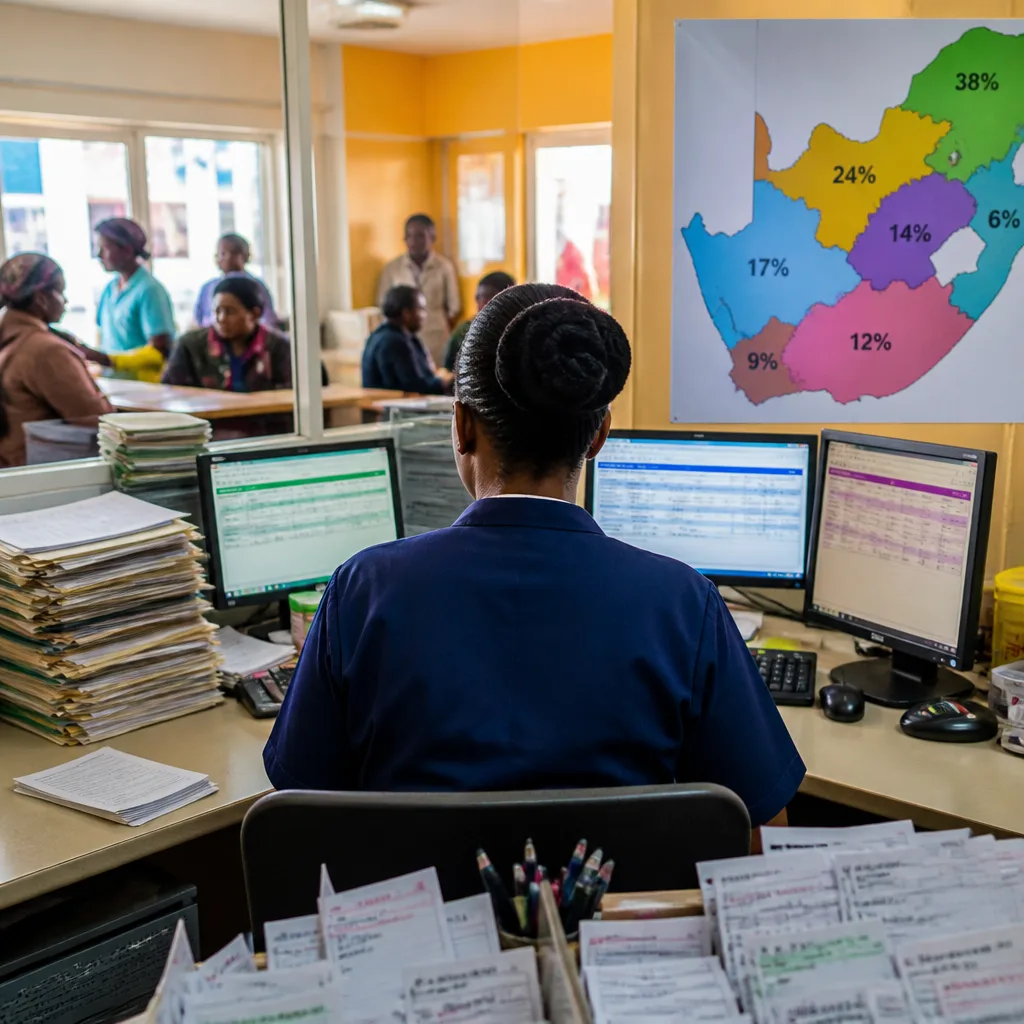
When patients move between clinics, district hospitals and specialist centres, their clinical information often does not move with them. That fragmentation — incomplete referral notes, laboratory results stuck in separate systems and medication histories that must be reconstructed — creates delays and uncertainty for clinicians and patients alike.
Unequal access compounds information gaps
Statistics South Africa reported in March 2026 that 14.1% of the population had medical aid cover. Provincial variation was substantial: the Western Cape recorded 23.8%, Gauteng 19.6%, Limpopo 7.3% and Mpumalanga 8.4%. Those figures underline how location and income shape access to healthcare and the options available when a patient needs care beyond their local facility.
For many people in rural areas and township communities, public facilities provide care across long distances and with limited specialist access. Workforce shortages and high demand are common. In that context, fragmented information makes continuity of care harder to maintain: clinicians may have to make decisions without a complete patient history, earlier test results may not be available when needed, and follow-up can weaken when referral information does not move cleanly between facilities.
Interoperability is central to continuity
Connected healthcare records can give care teams a more complete view of a patient's journey — including clinical history, laboratory results, medication and referral details — presented in ways that can be used at each handover. Interoperability allows different clinical and laboratory systems to exchange information without losing meaning or context, the source material argues, enabling safer and faster decision-making by clinicians.
Where data are siloed, the practical consequences are tangible: repeated tests, delayed diagnoses, missed medications and inconsistent follow-up. Those outcomes not only increase pressure on an already strained health system but also risk poorer clinical outcomes for patients who are often the most vulnerable.
- Incomplete referral notes can force clinicians to treat without crucial background.
- Disconnected laboratory systems delay access to test results at the point of care.
- Fragmented medication histories increase the risk of errors and duplications.
What stronger interoperability would look like
Interoperability is not simply moving files from one server to another. It requires agreed standards so that data retain clinical meaning when transferred, and systems that present relevant information to the clinician in usable formats. That includes records of previous treatment, referrals, consent and laboratory results that can be accessed promptly across levels of care.
Improved connectivity can help clinicians understand what has already happened and what should happen next, reducing delays and enabling better-coordinated follow-up care. For patients who travel between provinces for work, family or referrals, this continuity is especially important.
| Measure | Statistic |
|---|---|
| National medical aid coverage (March 2026) | 14.1% |
| Western Cape | 23.8% |
| Gauteng | 19.6% |
| Limpopo | 7.3% |
| Mpumalanga | 8.4% |
Any move towards interoperable records must also consider practical constraints facing public facilities: limited IT infrastructure, workforce capacity to capture and use data, and the need to protect patient privacy. Standards and technical solutions will mean little without investment in training and systems at the point of care.
For clinicians and patients confronting gaps in records today, the immediate priority is safer handover practices: clearer, more complete referral documentation and reliable processes to transmit essential test results and medication histories. Over the longer term, national action on interoperability and shared standards could reduce duplication, speed diagnoses and improve continuity, particularly for patients who frequently cross provincial boundaries.
Patients should continue to consult their healthcare providers for clinical advice rather than attempting to interpret records themselves. Where possible, keeping personal copies of recent test results and referral letters can help clinicians provide timely care while broader systems are strengthened.
Connected information is not an end in itself but a tool to support clinical decisions. As South Africa grapples with unequal access to care, ensuring that information travels with the patient is a practical and necessary step towards safer, more continuous healthcare.











