
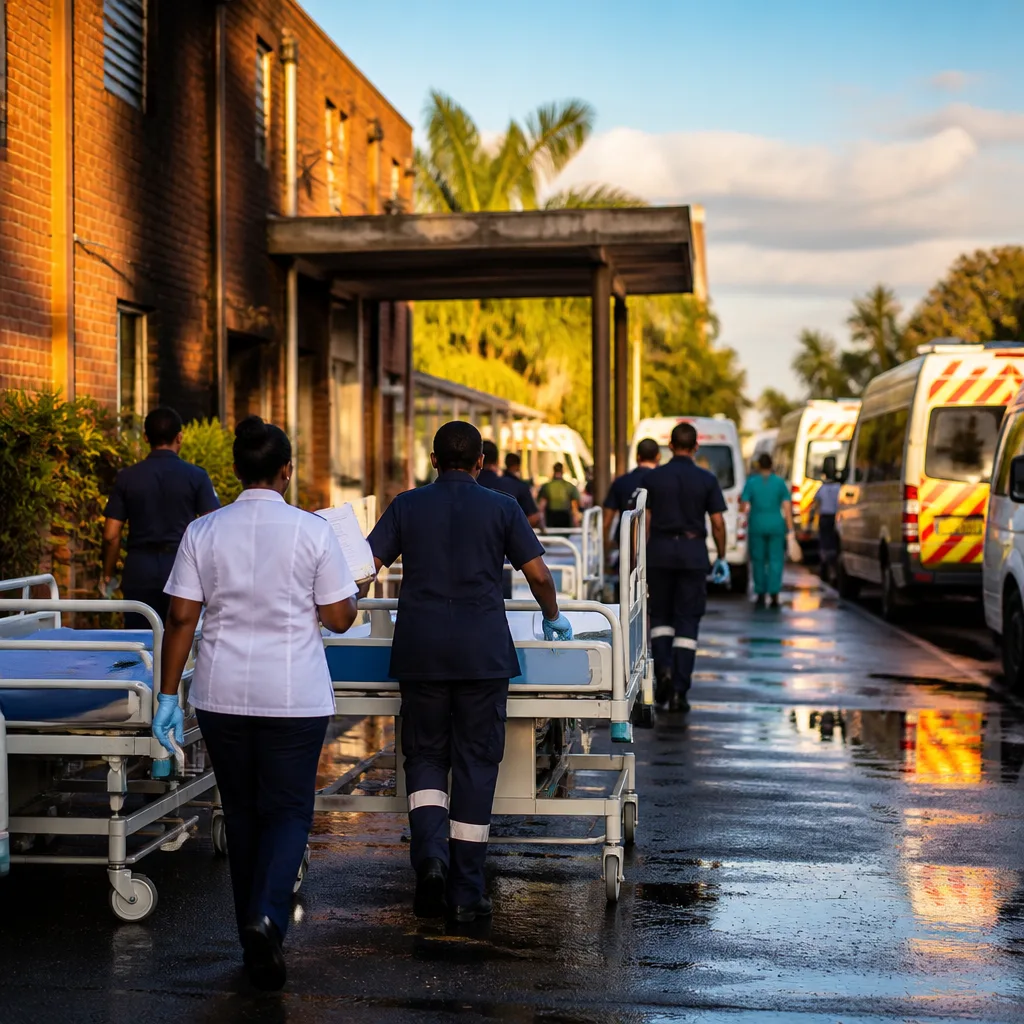
A fire at Spencer Clinic, the only specialised public mental health facility serving north‑west Tasmania, has left the service unable to admit patients and deepened existing bed shortages after all 19 occupied beds were evacuated on Saturday evening, health officials and unions said.
Patients moved as services reach capacity
The blaze, which damaged one section of the clinic and spread smoke through much of the premises, prompted an immediate evacuation. Police charged a 28‑year‑old woman with arson, according to reporting by ABC News Australia. Tasmanian Department of Health Secretary Dale Webster said
"no one was injured"in the incident.
Under temporary arrangements, the evacuated patients were transferred to North West Private Hospital and Launceston General Hospital, with some planned transfers to Royal Hobart Hospital. The Health and Community Services Union warned that the move would intensify pressure on other hospitals, which are already close to capacity.
- 19 — number of occupied beds at Spencer Clinic at time of the fire.
- 22 — planned number of beds for the state government’s replacement mental health complex.
- A$40 million — budget previously announced for the new mental health complex scheduled to open by mid‑2028.
Union warns of compounding pressures
Robbie Moore, a representative of the Health and Community Services Union, told reporters the clinic had been operating above capacity for much of the past 12 months. He said the two public hospitals accepting transfers were themselves operating at the limits of their capacity, leaving few spare beds for acute or continuing care needs.
Moore also emphasised the human cost: staff at Spencer Clinic had experienced a traumatic event and required support. He highlighted a need to consider alternative models of care to relieve inpatient pressure, naming the expansion of hospital‑in‑the‑home programmes — virtual or community‑based clinical care delivered outside traditional inpatient wards — as one such option.
Rebuilding and service continuity
Webster said the clinic would likely be unable to admit patients again for an extended period. At the time of his statement, the fire service had not yet handed the premises back to health authorities, which delayed inspections by building assessors and insurance representatives. Until those inspections are completed, authorities cannot determine the scope or timing of repairs.
The Tasmanian government had previously announced plans to replace Spencer Clinic with a new mental health complex, budgeted at A$40 million and designed to accommodate 22 patients, with an intended opening by mid‑2028. The immediate impact of the fire, however, removes an essential regional resource while that longer‑term project remains in development.
Broader implications for mental health services
Regional specialised mental health units serve as hubs for assessment, crisis care and step‑down support; their sudden loss can force redistribution of patients into general hospitals or private facilities, with knock‑on effects for emergency departments and community services. The union’s account that Spencer Clinic has been operating above capacity for months underscores systemic shortfalls in bed availability and workforce strain.
For patients and families, relocation to other facilities can disrupt continuity of care and therapeutic relationships. For staff, an event that damages a workplace and displaces colleagues can increase moral injury and burnout, reducing retention in an already stretched workforce.
Health services must balance immediate patient placement and safety with longer‑term planning to rebuild capacity. Options cited by the union, such as expanding hospital‑in‑the‑home models, require resourcing, clinical governance and community supports to be effective substitutes for inpatient beds.
Anyone affected by the incident, including former patients and staff seeking support, should contact local mental health services or their clinician. Readers are reminded that mental health and treatment decisions should be discussed with qualified healthcare professionals rather than through self‑diagnosis.











