
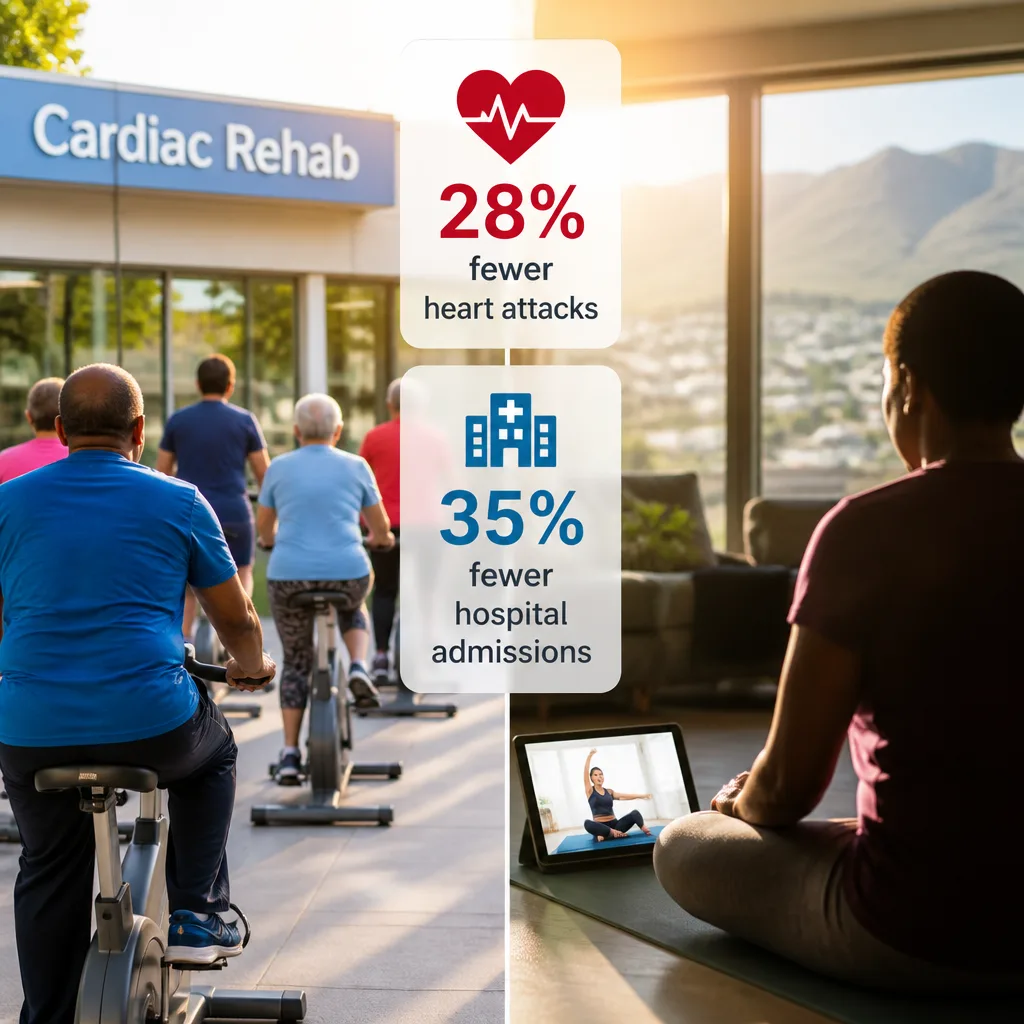
Exercise-based cardiac rehabilitation substantially lowers the risk of subsequent heart attacks and hospital admissions, and delivers lasting improvements in quality of life, according to a new Cochrane review led by researchers at the University of Glasgow.
Large review finds clear benefits
The analysis pooled data from 107 randomised controlled trials including 26,886 people with coronary heart disease. Most participants had experienced a heart attack, undergone cardiac procedures, or reported angina.
Compared with no rehabilitation, the review reports:
- 28% reduction in subsequent heart attacks;
- 35% reduction in all‑cause hospital admissions;
- probable reduction in deaths;
- improvements in physical functioning, general health, vitality, social functioning and mental wellbeing on validated quality‑of‑life measures.
The review also incorporated 22 new trials with just under 3,500 participants, adding more recent evidence and participants from low‑ and middle‑income settings.
Modern delivery models are effective
Importantly for health services looking to broaden access, the evidence suggests that home‑based and digitally supported cardiac rehabilitation programmes can be as effective as traditional centre‑based services. This is significant for patients who face barriers to attending centre programmes, including transportation, work commitments, or living in remote areas.
“Many people lose confidence after a heart attack or cardiac procedure and worry that physical activity could be dangerous,” Dr Grace Dibben, lead author from the University of Glasgow, said. “Appropriately prescribed exercise is not only safe for most patients, but can play a vital role in recovery and long‑term heart health.”
Gaps and implications for practice in South Africa
The review highlights an important equity gap: women comprised only 17% of participants despite being eligible for most studies. That underrepresentation raises questions about whether programme design, referral practices or uptake differ by sex and whether outcomes are generalisable across all patient groups.
For South Africa, where coronary heart disease remains a leading cause of morbidity and places pressure on hospitals, the findings have several implications:
- Expanding access to cardiac rehabilitation could reduce readmissions and the burden on inpatient services.
- Supporting home‑ and digitally delivered rehabilitation may improve reach, particularly in peri‑urban and rural communities where centre‑based services are scarce.
- Programmes should monitor and address inequalities in referral and participation, including low female participation.
What clinicians and patients should know
Exercise is a core component of cardiac rehabilitation and, when prescribed appropriately, is safe for most patients recovering from a cardiac event. The review underlines that rehabilitation is not simply exercise: programmes typically combine physical training with risk‑factor management, education and psychosocial support.
Health professionals should assess individual patient needs and risks before starting exercise programmes, and reinforce that supervised or structured rehabilitation—whether in‑person, at home with remote support, or via digital platforms—can improve recovery and long‑term health.
Patients recovering from heart attacks or cardiac procedures who are considering cardiac rehabilitation should consult their cardiologist, GP or local clinic to discuss suitable programmes and referral options rather than attempting unsupervised intense exercise.
Summary of key trial data
| Metric | Result |
|---|---|
| Trials analysed | 107 |
| Participants | 26,886 |
| Heart attack reduction | 28% |
| All‑cause hospital admission reduction | 35% |
| Women participants | 17% |
The Cochrane review strengthens the evidence base for exercise‑centred rehabilitation after cardiac events and supports broader adoption of flexible delivery models. For individual patients, the safest course is to seek a medical assessment and a tailored rehabilitation plan from a qualified clinician or cardiac rehabilitation service.
Consult a clinician or your local clinic for personalised advice on cardiac rehabilitation and before starting any new exercise programme.











