
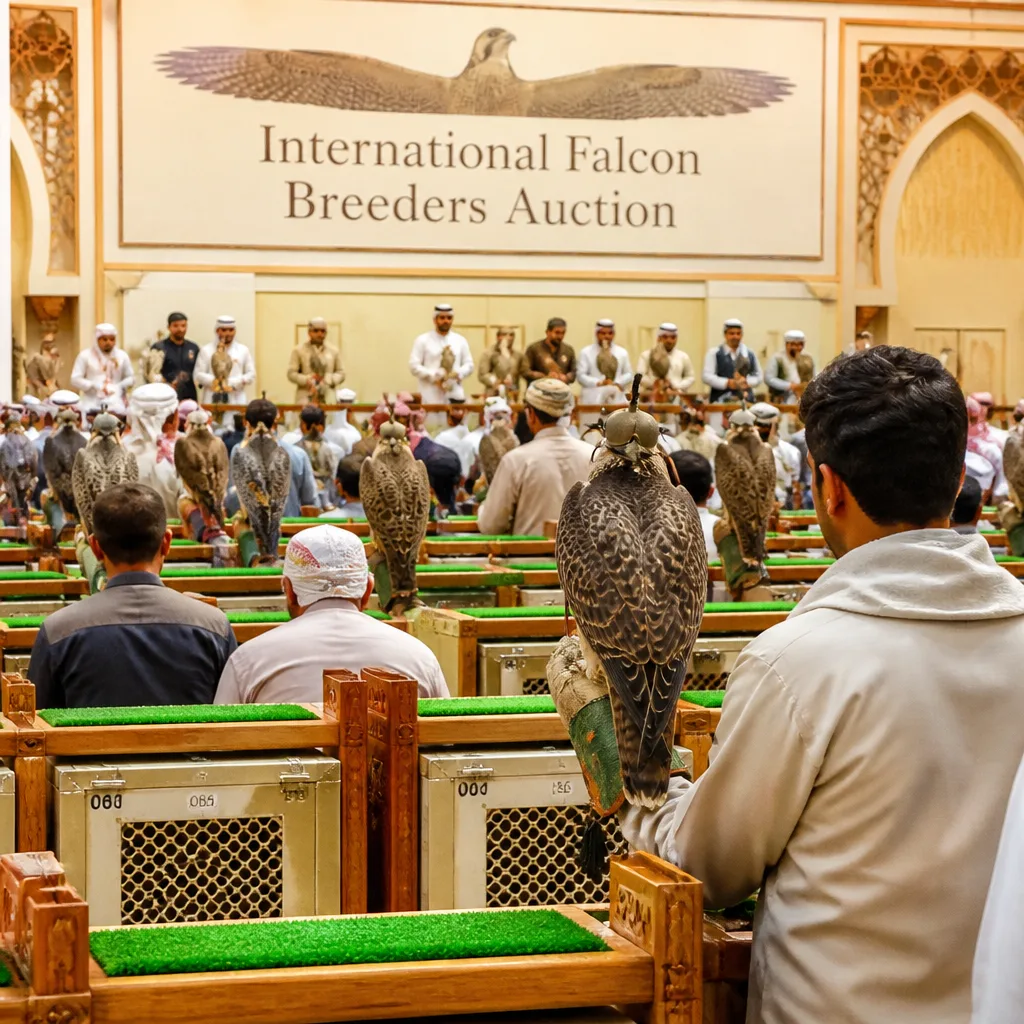
RIYADH — European falcon breeders from France, Austria, Britain, Germany and Slovakia are among those expanding their participation at this year’s International Falcon Breeders Auction in Riyadh, organisers said on 16 August 2026. The gathering is being billed as a major conduit between European producers and Gulf buyers, reinforcing the auction’s growing status as a global marketplace for trained and bloodline falcons.
Growing commercial and cultural exchange
Organisers told news agencies the increased international turnout broadens the selection available to purchasers and strengthens direct trade links between European breeding operations and Gulf customers. The event brings together breeders, falconers and buyers against a backdrop of hospitality and heritage that organisers say has helped position Saudi Arabia as an international falconry destination.
"Saudi Arabia had become an international destination for falconry through its combination of organisation, hospitality and traditional heritage," said Sandra Baum, owner of France-based SB Falcons, inviting enthusiasts and visitors to the auction.
Competing cultural and sporting incentives are built into the auction’s structure. The National Center for Falcons has tied juvenile-category rounds in Al-Melwah racing competitions to birds sold via the auction, giving newly purchased falcons immediate competitive opportunities and adding to their appeal for buyers seeking performance as well as pedigree.
Breeding strategies and market drivers
Participants at the auction emphasised the premium placed on careful genetic selection and rearing. Portuguese breeder Henrique Cania described his operation’s focus on robust bloodlines when discussing the farm’s decade-long breeding programme. He cited the inclusion of Canadian, Finnish and Scottish ancestry among gyrfalcon and peregrine lines as central to his centre’s approach.
Austrian falconer Ali Mughal, who operates Valley Club Falcon, said last year’s experience encouraged a larger shipment this year: he is bringing 100 birds to the Riyadh sale. Such volumes indicate the event’s commercial value to European suppliers and its capacity to channel large numbers of birds into Gulf markets.
- Participants: Breeders from several European countries, including France, Austria, Britain, Germany and Slovakia.
- Incentives: Juvenile racing rounds in Al-Melwah assigned to auctioned birds to boost competitive value.
- Breeding focus: Emphasis on established gyrfalcon and peregrine bloodlines from diverse northern stocks.
The auction therefore functions on multiple levels: as a commercial sale, a feeder for competitions and a platform for breeders to showcase genetic lines and husbandry techniques. For buyers in the Gulf region, the direct access to European bloodlines helps meet demand for birds that are competitive in racing and prized for pedigree.
Implications for specialised trade and cultural ties
While falcon auctions are a niche segment of the wider animal trade, they are culturally significant across the Gulf and parts of Europe. Events such as the Riyadh auction serve as points of cultural diplomacy and bespoke commerce: they draw tourism, event-related services and sustained contact between traders, trainers and regulators. For European breeders, the Gulf’s market size and purchasing power are attractive; for Gulf falconers, the auction offers curated access to sought-after bloodlines and racing prospects.
Organisers and participants alike framed the auction as a maturing market mechanism that strengthens international relationships around a shared cultural practice. The increased European presence this year suggests organisers have succeeded in positioning Riyadh as an established hub for falconry commerce and competition.
For South African observers, the development underlines how specialised animals and cultural sports can form meaningful strands of international trade and soft diplomacy, channels that may complement wider economic and tourism ties between regions.









