
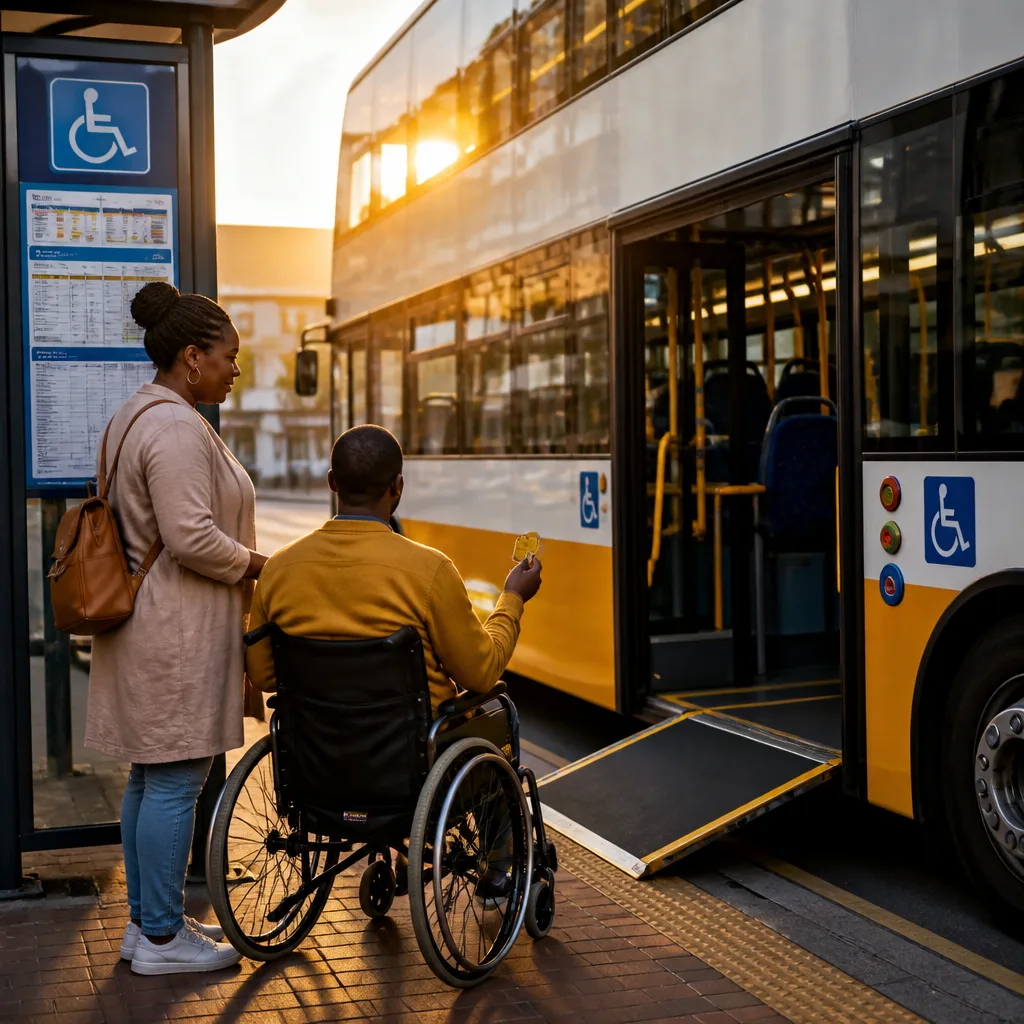
Disabled people in England will be able to use bus passes for free at any time of day from April, the BBC reported, marking an end to weekday time restrictions that currently limit use to between 09:30 and 23:00. The change is intended to improve access to work, training and evening activities for those who rely on buses.
What is changing
At present, disabled concessionary bus passes in England generally allow free travel on weekdays only between 09:30 and 23:00, although passes are already unrestricted at weekends and on bank holidays. From April, the government will remove those weekday time limits so passes can be used 24 hours a day, seven days a week, according to the BBC.
| Current rules | From April | Estimated affected |
|---|---|---|
| Free travel weekdays 09:30–23:00; unrestricted at weekends | Free travel any time, any day | About one million people |
Why it matters
Transport is often the lifeline to employment, education and social life, and advocates have long argued that the weekday restrictions create unnecessary barriers. The BBC reported that the government framed the measure as part of wider attempts to reduce the pressure of the cost of living and to encourage people into work.
- Access to work: Removing time limits will make it easier for disabled people to travel for shifts that start early or finish late.
- Equality of service: The change aims to end a postcode lottery where local authorities set different rules across areas.
- Social inclusion: Unrestricted travel supports attendance at evening events and community activities.
Reaction
The move drew praise from disability organisations and campaigners. The disability charity Scope described the policy as a step that would "remove barriers to everyday life", the BBC reported. James Barber of the disabled-led charity Transport for All called it a "real win for disabled people" and said the change would help end confusing variations in rules between different areas.
"Buses are a lifeline for so many people – making it easier to get to work, education and healthcare. It’s simply not right that many disabled people cannot travel using their pass during certain times of the day,"
The BBC attributed that comment to Prime Minister Andy Burnham, who noted he had previously ended time restrictions on disabled passes in Greater Manchester while serving as mayor, and said he was extending that approach nationally.
Tom Gordon, Liberal Democrat MP for Harrogate and Knaresborough and a long-time advocate for the policy, described the decision as a "huge win for the disabled community", reporting that it capped two years of campaigning, the BBC said. The BBC also reported a Conservative Party spokesman questioned how the measure would be funded and described it as reshuffling departmental budgets.
Personal impact
The BBC included individual perspectives to illustrate the change's personal effect. Kurtis Crossthorn, who is registered blind and lives in Sheffield, told the corporation the change would be "very welcome" and would make many disabled people feel "relieved" and "heard".
For South African readers, the policy change in England is a reminder of how public transport concessions can affect everyday life and economic participation. Many of the underlying issues are familiar here: reliable, affordable transport is essential for people to access jobs, education and healthcare. The English decision also highlights the role of campaigning and local pilots — like the Greater Manchester example — in shaping national policy.
As the measure is rolled out, practical questions will remain about implementation: how operators will adjust schedules and revenue arrangements, and whether local authorities and bus companies will need additional support to manage the change. The BBC report suggests the government is framing the move as part of a broader package to ease living costs, but details on funding and the mechanics of the transition will be watched closely by campaigners and transport bodies.
Ultimately, the policy promises more freedom for disabled passengers to plan their days without being constrained by weekday time windows—a change campaigners say will make ordinary tasks and opportunities more accessible.











