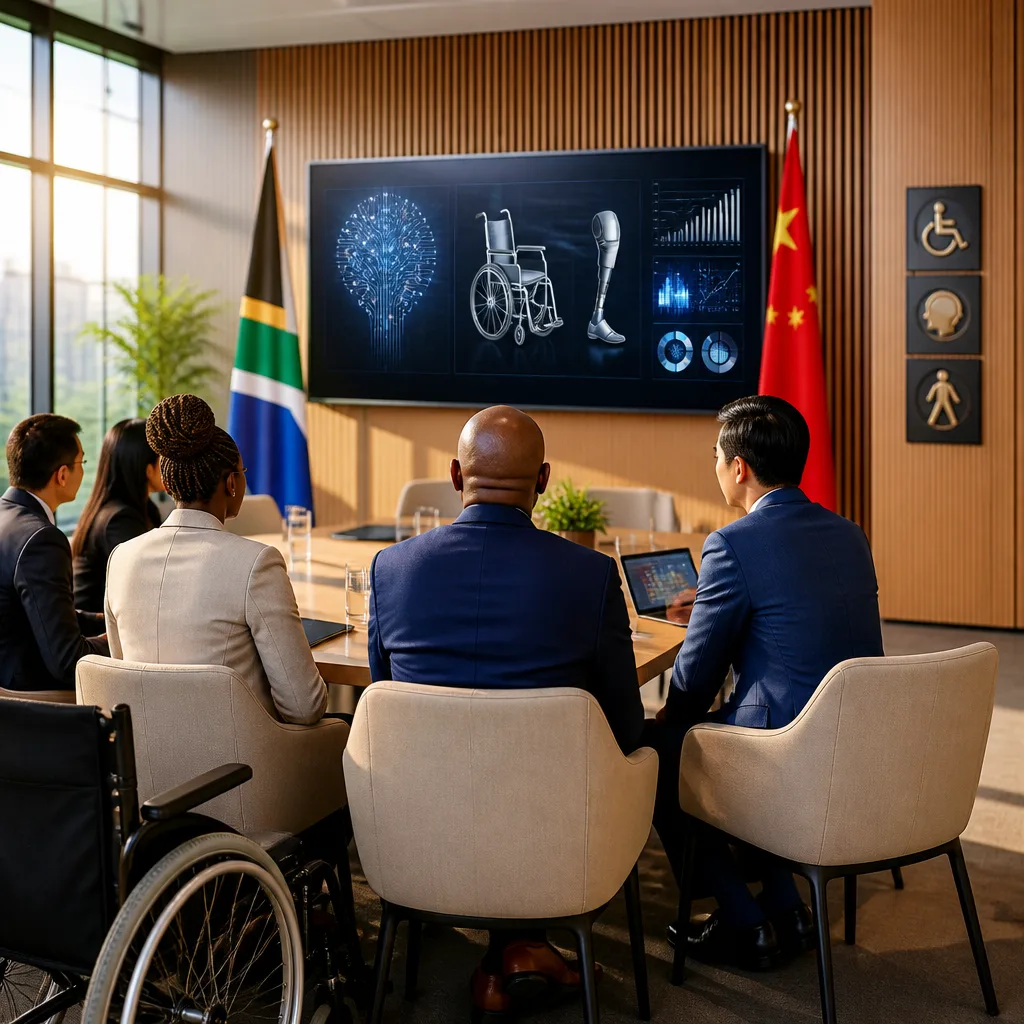
South Africa and China are shifting from high-level talks to concrete cooperation on disability inclusion, with a particular emphasis on using data, universal design, artificial intelligence (AI) and assistive technology to expand access and opportunity for persons with disabilities.
From rights framework to measurable action
The proposed collaboration was highlighted during a visit by a delegation from the China Disabled Persons’ Federation (CDPF) and outlined by the Minister in the Presidency responsible for Women, Youth and Persons with Disabilities, Sindisiwe Chikunga. Chikunga described the visit as a continuation of discussions that took place in October 2025, and said both countries were now seeking practical, measurable ways to implement earlier commitments.
Central to the partnership is an explicit rights-centred approach. The plan recognises persons with disabilities not merely as beneficiaries of services, but as rights-holders, economic contributors, innovators and equal citizens. That framing aligns with the United Nations Convention on the Rights of Persons with Disabilities and South Africa’s national White Paper on the Rights of Persons with Disabilities.
Embedding inclusion in government planning and digital transformation
Chikunga told the visiting delegation that disability inclusion must be integrated across government planning, budgeting and digital transformation rather than treated as an isolated programme. The emphasis is on mainstreaming accessibility into the design of services and infrastructure so that disability considerations shape policy from the outset.
Part of the practical work under discussion is improved data collection and use. South Africa is exploring the establishment of a Disability Nerve Centre of Excellence designed to strengthen disability data and support evidence-based planning. Reliable, disaggregated data is seen as essential for understanding who is being excluded and for targeting interventions effectively.
- Key cooperation areas highlighted include: disability data, universal design, artificial intelligence and assistive technology.
- The partnership builds on legal and policy frameworks endorsed internationally and nationally.
- Government integration means disability must inform budgeting and digital programmes rather than being treated separately.
| Focus area | What it aims to do |
|---|---|
| Disability data | Improve evidence for planning via a proposed Disability Nerve Centre of Excellence |
| Universal design | Ensure environments and services are accessible from the start |
| Artificial intelligence | Explore ethical, inclusive AI applications that enhance accessibility |
| Assistive technology | Promote tools and devices that enable participation and independence |
Those leading the engagement say practical measures should include capacity building and technology transfer where relevant, enabling South African institutions and providers to scale inclusive solutions locally.
Why this matters for technology and public services
Integrating disability into digital transformation has several concrete effects for South Africans. When governments design services and platforms with accessibility in mind, fewer retrofits are needed and fewer people are excluded from essential services. For the technology sector, an inclusive approach signals opportunities for locally developed assistive products and services that meet national standards and needs.
But implementation will hinge on two things: consistent, high-quality data to identify gaps and robust cross-government budgeting that treats accessibility as a core requirement rather than an optional add-on. The Disability Nerve Centre proposal is intended to tackle the first of those obstacles by pooling resources and expertise to produce the evidence planners need.
As international partnerships move from pledges to projects, the practical test will be whether the cooperation delivers scalable, affordable solutions that reach people living with disabilities across urban and rural contexts.
Chikunga framed the collaboration as part of a broader effort to make inclusion central to development planning and economic participation. Moving beyond dialogue, the two countries will now need clear milestones and public reporting if the promise of improved accessibility and rights for persons with disabilities is to be realised.