
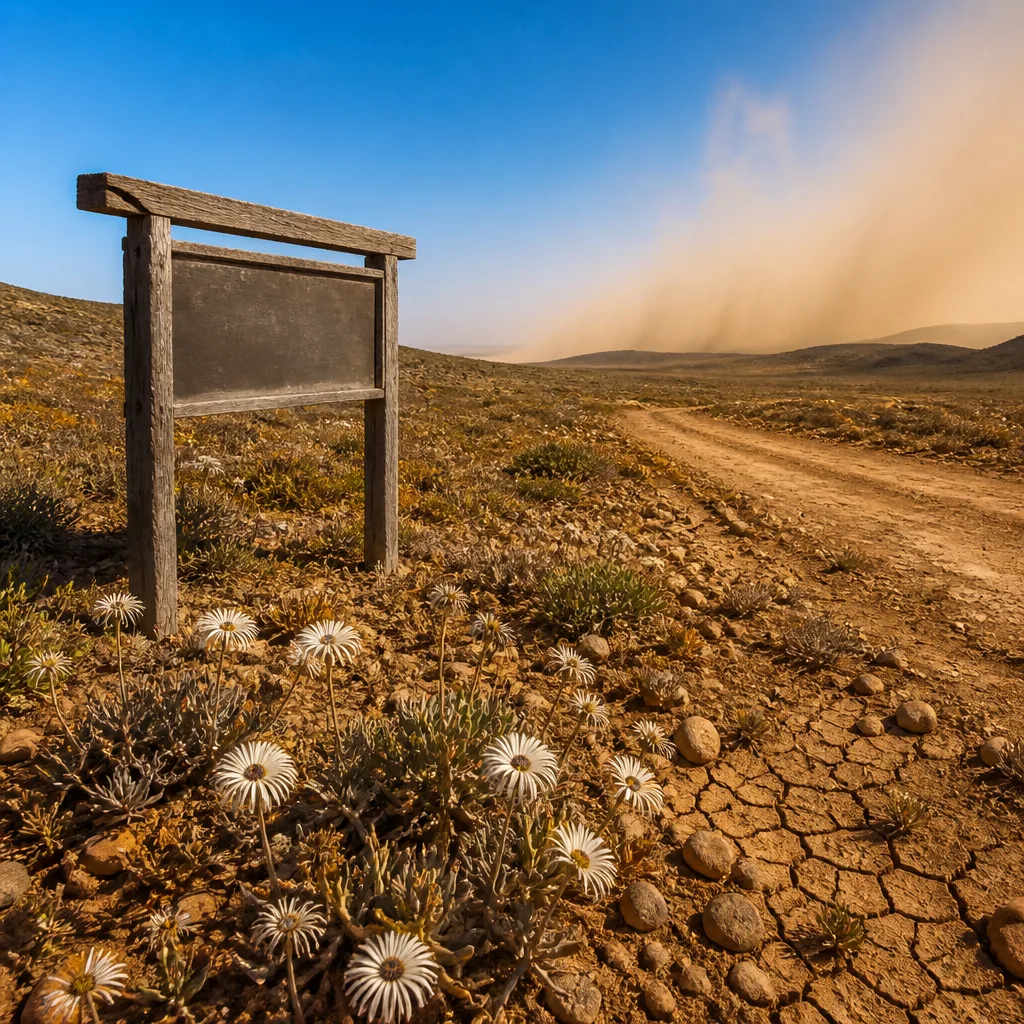
Namaqualand’s famed wildflower season has been sharply curtailed this year after one of the driest winters in decades left too little moisture for the blooms to sustain themselves, Namaqua National Park officials and weather authorities said.
Early promise, rapid decline
Staff at Namaqua National Park in the northwestern Cape reported that the season began with early flowers opening, but that the display faded quickly when rains failed to continue. Park official Oscar Osborne told Anadolu Agency the first flowers emerged as expected, but that the lack of follow-up rainfall ended the season prematurely.
“The first flowers bloomed but then the rains stopped, and we've had almost no rain since May,”
Osborne said hot, dry easterly winds that followed pushed the few blooms that did appear to seed more quickly than usual. As a result, the typical weeks-long carpets of daisies and succulents in Namaqualand lasted far less time than visitors and park staff had hoped.
Weather data and causes
The South African Weather Service (SAWS) reported a rainfall deficit that began in June and deepened through July. Parts of the Western Cape, including areas around Cape Town, recorded their driest July on record, according to SAWS. Weather officials attributed the shortfall to a persistent high-pressure system over the Atlantic Ocean that diverted the rain-bearing systems that normally sweep across the country’s western regions.
| Month | Condition reported |
|---|---|
| May | Almost no rain since May, according to park official |
| June | Rainfall deficit began |
| July | Parts of Western Cape recorded driest July on record |
The interaction of low rainfall and warm, drying winds reduced soil moisture reserves required to trigger the germination and sustained flowering of dormant seeds in the semi-arid environment. Namaqualand’s bloom depends on steady winter rainfall to coax a brief but intense flush of flowers from bulbs and annuals.
Consequences for biodiversity and tourism
The shorter and sparser display has implications beyond the visual spectacle. Namaqualand is celebrated for its succulent-rich biodiversity and for attracting local and international visitors each August and September. A diminished season affects tourism income for communities and businesses that depend on the annual influx of travellers, and shortens the period during which pollinators and other species can interact with the flowers.
- Biodiversity: Plants and dependent insects will see a compressed growing and pollination window.
- Tourism: Shorter flowering periods reduce visitation days and could hit local businesses.
- Future seasons: Park staff will monitor whether next year’s conditions allow recovery.
Park authorities said they are watching soil moisture and seasonal forecasts closely to assess prospects for the next bloom. Osborne said the park will monitor conditions and is hoping for improved winter rainfall next year, but did not offer a projection.
Experts from SAWS and park staff linked the poor season to a large-scale atmospheric pattern: a persistent high-pressure cell over the Atlantic Ocean that redirected weather systems away from South Africa’s western seaboard. The pattern reduced the frequency and intensity of cold fronts that typically bring western and south-western Cape rainfall in winter.
Officials emphasised that while the event is localised to Namaqualand and parts of the Western Cape, it forms part of broader concerns about variability in seasonal rainfall and the risks that such variability poses for livelihoods, biodiversity and tourism.
At present, park staff and authorities continue to record conditions on the ground and at weather stations. Further details on how local communities and tourism operators will be affected, and whether any support measures will be offered, were not immediately available.
This account is based on reporting by Anadolu Agency and statements from Namaqua National Park and the South African Weather Service; some details are still developing.














