
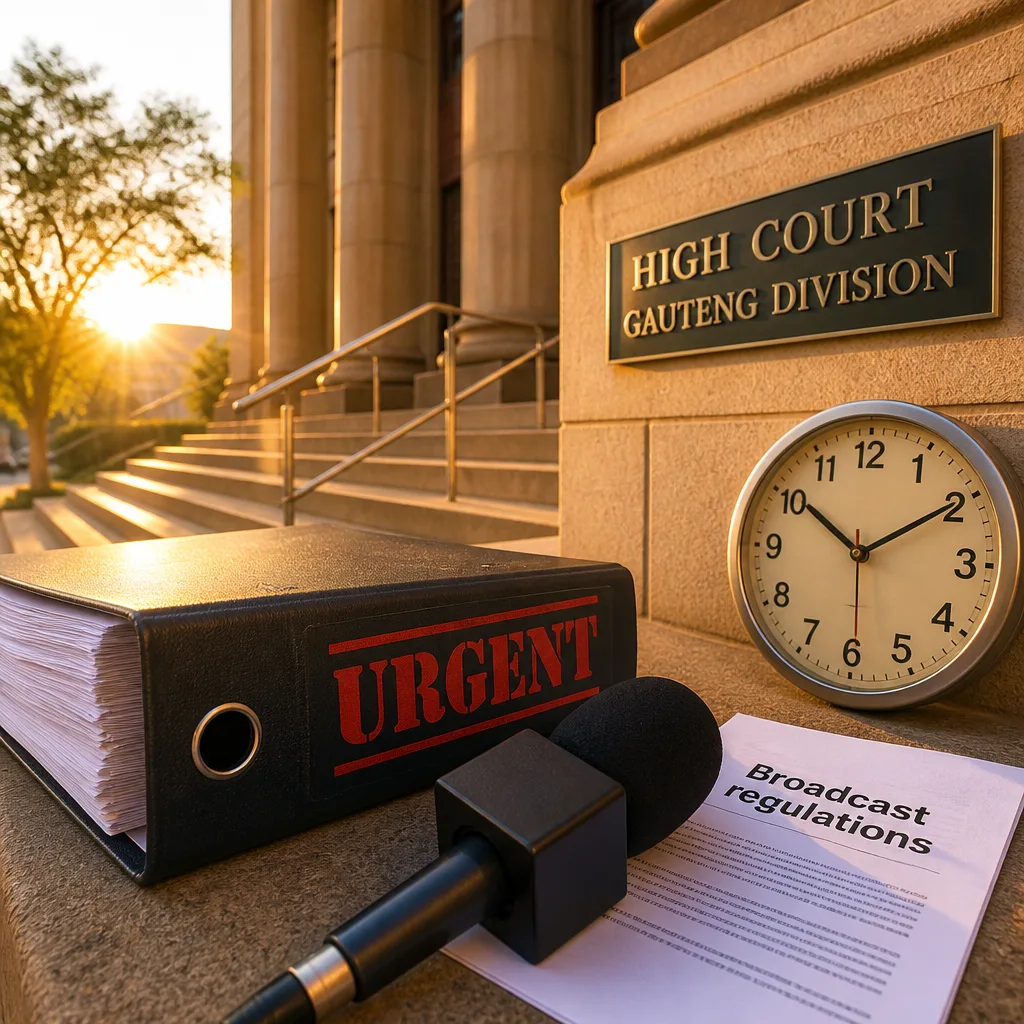
The Gauteng High Court has declared key aspects of the Independent Communications Authority of South Africa’s (ICASA) election broadcasting regulations unlawful and unconstitutional, and has imposed an urgent dispute-resolution mechanism that requires rapid decisions on rejected political advertisements, the Democratic Alliance (DA) said on Monday.
What the court ordered
According to the DA, the court set strict timelines for complaints about rejected political advertising and party election broadcasts. Complaints to ICASA’s Complaints and Compliance Committee must be heard within 48 hours, with a ruling delivered within a further 12 hours. If ICASA fails to meet these deadlines, the broadcaster must air the rejected material.
“This judgment ensures that this cannot happen again,” the DA said, referring to instances in which broadcasters rejected its election material and legal relief arrived only after the election had passed.
The court also found it unlawful and unconstitutional to exclude members of the public and public-interest organisations from challenging the rejection of political broadcasts. ICASA has been ordered to amend the defective regulations. The court awarded costs against ICASA and its chairperson, the DA reported.
Immediate implications
The judgment changes the balance of power between broadcasters, the regulator and political actors during election campaigns. For political parties and public-interest groups it reduces the risk that a rejected broadcast will effectively be silenced by procedural delay until after an election.
For broadcasters — particularly public service broadcasters such as the SABC, which has been cited in previous disputes — the ruling creates a legal obligation to carry content if the regulator does not resolve complaints within the court-prescribed timeframes. For ICASA, the judgment imposes a tight operational burden: complaints must be assessed and decided in a combined window of no more than 60 hours.
- Complaints heard by ICASA’s Complaints and Compliance Committee within 48 hours.
- Ruling delivered within a subsequent 12 hours.
- If ICASA misses the deadlines, the broadcaster must air the contested material.
| Stage | Time limit |
|---|---|
| Hearing by Complaints and Compliance Committee | 48 hours |
| Decision delivery | 12 hours |
Who benefits and who pays?
Voters and political parties benefit from faster remedies against wrongful refusals to broadcast political material: the ruling is aimed at preventing broadcasters from using administrative delay to limit access to campaign messages. The court’s finding that public-interest organisations may challenge rejections widens the circle of actors who can seek enforcement of political-speech rights.
ICASA will bear the immediate operational cost of revising its regulations and implementing the new procedure. The court’s costs order against ICASA and its chairperson means the regulator will also face legal costs, though the DA’s statement did not specify the amount. Broadcasters could face practical and reputational costs if they are obliged to transmit material they previously rejected while legal processes are completed.
Context and potential consequences
The DA framed the judgment as a defence of free political expression and the integrity of elections, saying broadcasters should not be allowed to act as gatekeepers by suppressing campaign material and then running down the clock until an election is over. The party noted earlier disputes with broadcasters, including refusals to air its adverts in the 2024 election cycle, where legal remedies arrived too late to remedy lost broadcast opportunities.
ICASA must now amend the defective provisions of its regulations. Practically, the regulator will need to set up or reconfigure complaint-handling procedures to meet the court’s expedited timetable. That may require additional staffing, revised internal processes and closer coordination with broadcasters during election periods.
The judgment could prompt broadcasters to adopt clearer internal rules about the rejection of political advertising, in order to avoid being compelled to transmit contested material under court-mandated time pressure. It may also lead to further legal challenges as stakeholders test the contours of the new fast-track mechanism.
For now, the ruling stands as a reminder that the courts will police the boundary between regulatory discretion and constitutional rights to political expression — and that delays in that policing can be fatal to the practical exercise of those rights during an election campaign.












