The Democratic Republic of Congo (DRC) has begun vaccinating health workers and other frontline staff in the worst-affected zones of Ituri province as the country battles the fastest-growing and deadliest Ebola outbreak in its history.
Who is being vaccinated and why
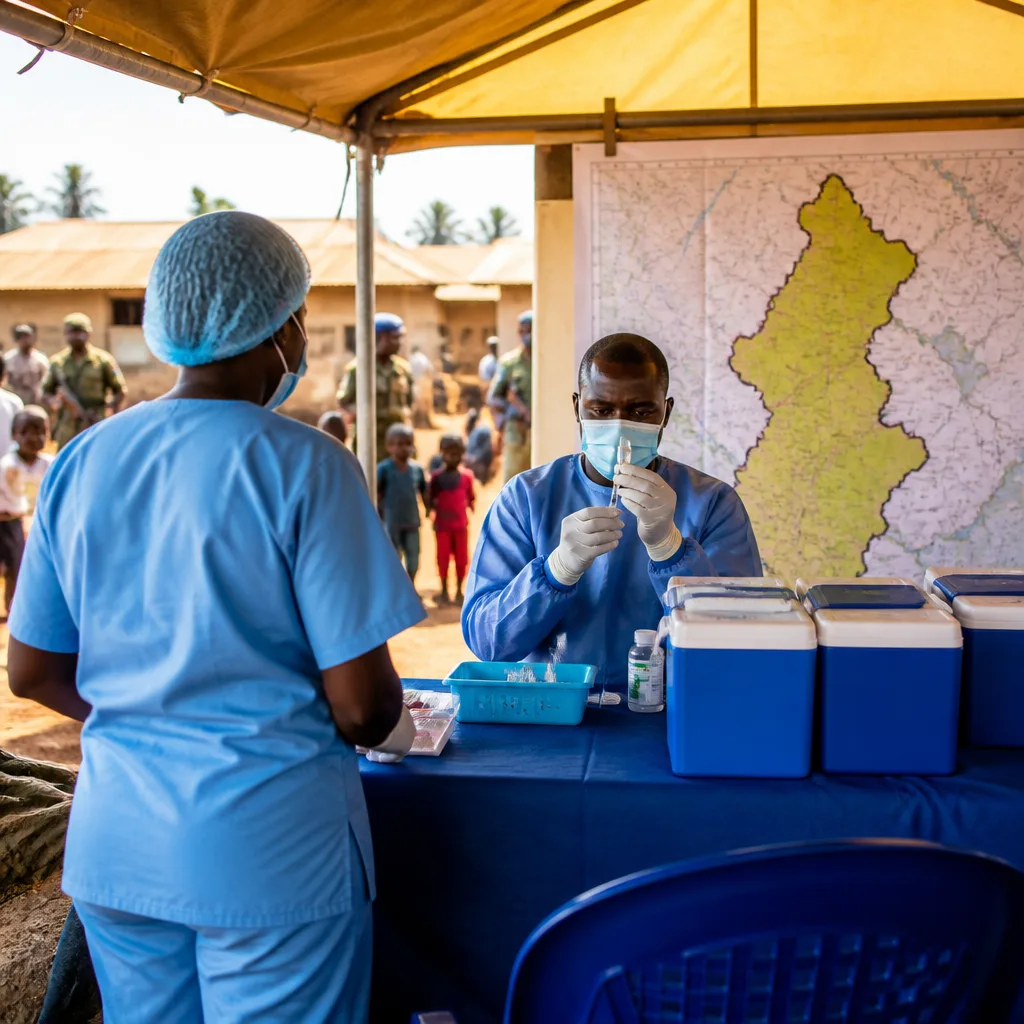
Health authorities said the initial rollout targets frontline personnel in the Bunia and Mongbwalu zones — among the hardest-hit areas — where response teams face intense exposure while caring for patients and conducting containment operations.
"Our collective duty is to protect life. Launching this vaccination drive for front-line staff in Ituri is not an arbitrary choice, as these workers are particularly exposed and deeply involved in the response," Maj. Gen. Gaby Kasongo Mulumba, the military governor of Ituri, said.
The vaccine being offered is Ervebo, which has shown effectiveness in past Ebola outbreaks caused by a different species of the virus. Clinical trials are under way to develop and license a vaccine specifically for the current outbreak, which is caused by the Bundibugyo virus — a strain for which there is currently no licensed vaccine or approved treatment, authorities said.
Scale and progress of the outbreak
According to government figures reported on Saturday, the DRC has recorded 7,541 confirmed cases, including 3,639 deaths, with 1,823 recoveries. The World Health Organization (WHO) has described the outbreak as "out of control" and warned it could surpass the 2014–2016 West Africa epidemic, which killed more than 11,000 people in Guinea, Liberia and Sierra Leone.
Health officials have set a target to vaccinate approximately 20,000 frontline workers across Ituri and neighbouring North Kivu over a period of six to nine months, prioritising those most at risk during clinical care and community engagement activities.
Operational challenges complicating response
The outbreak has been spreading under severely difficult conditions. Authorities and international observers point to multiple complicating factors:
- Insecurity: Active conflict and armed-group activity impede safe access for health teams.
- Displacement: Large-scale population movement increases transmission risk and complicates contact tracing.
- Health workers' strike: Industrial action among medical staff has reduced service capacity at crucial moments.
- Intense population movements: Mobility within and between provinces challenges containment efforts.
The Associated Press reported that Dr Jeannot Elua, seen at a health facility in Bunia, described the vaccine as "beneficial" and said staff there were preparing to receive it, noting that some had previously received the prior vaccine that had been used in other outbreaks.
What the vaccination means — and what it does not
Offering Ervebo to frontline workers is intended to protect those at highest risk and to preserve response capacity. However, health authorities caution that Ervebo was developed for a different Ebola species and that the current outbreak is driven by Bundibugyo virus, for which there is no licensed vaccine yet. Clinical trials aiming to establish effectiveness and safety for the present strain remain under way.
Given the scale of the outbreak and operational hurdles, vaccination of health staff is one component of a wider response that must include robust surveillance, safe patient care, infection prevention and community engagement. The WHO and DRC health authorities continue to call for secure access to affected areas so response teams can reach patients, trace contacts and deliver essential services.
As the situation evolves, health systems and international partners face the twin tasks of expanding protective measures for frontline workers and accelerating vaccine research specific to the Bundibugyo virus. For individuals in affected areas, public‑health guidance remains: seek care promptly at health facilities, follow infection‑prevention advice provided by authorities, and avoid self‑diagnosis. Clinicians and clinics are the appropriate sources for testing and treatment decisions.