Philadelphia health authorities have issued a public health advisory after a person with measles travelled through Philadelphia International Airport, potentially exposing other travellers in multiple terminals over a period spanning Sunday evening into the early hours of Monday.
Where and when the exposure occurred
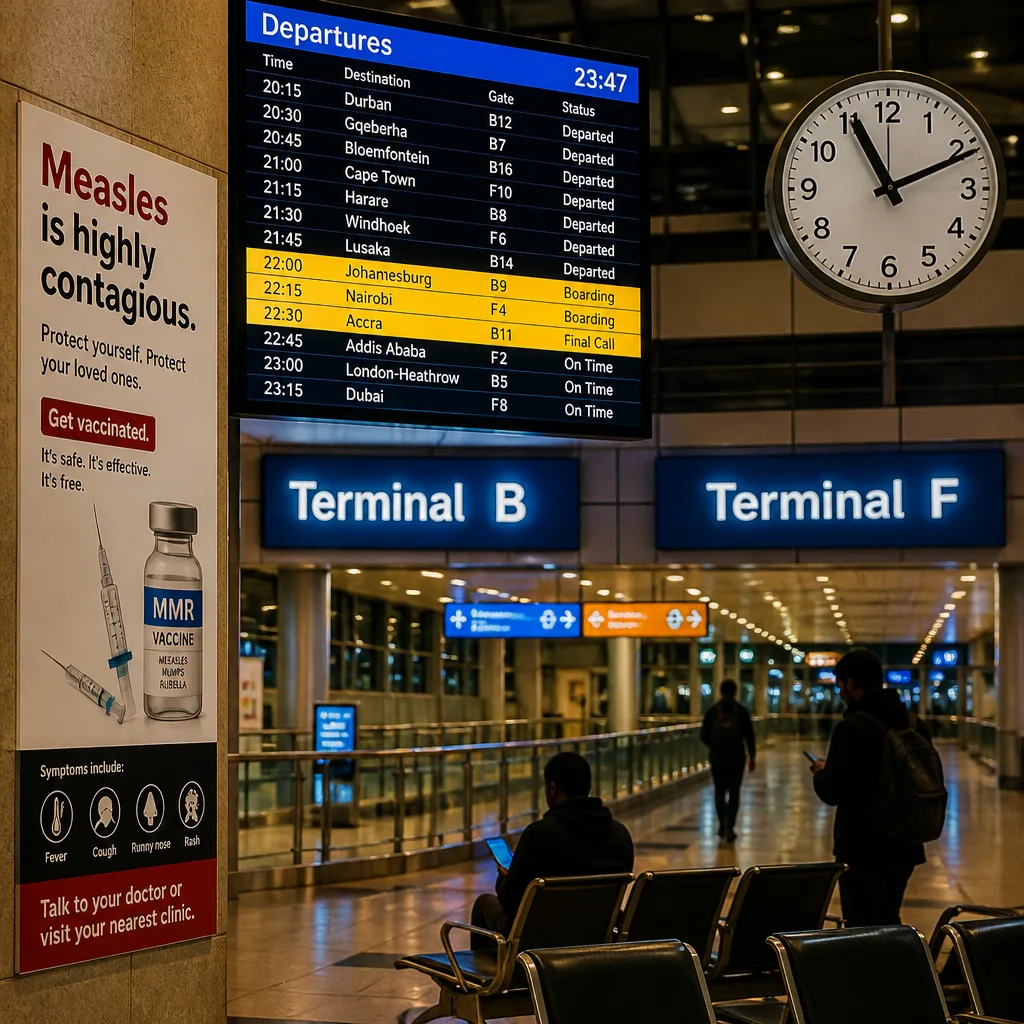
The Philadelphia Department of Public Health said the exposure took place at PHL terminals B and F and in areas used to connect to other terminals C, D and E. The department specified the timeframe as from 7:25pm on Sunday, 13 September to 12:05am on Monday, 14 September. According to the department, the infected individual remained within the airport and did not leave the facility.
| Detail | Information |
|---|---|
| Location | Philadelphia International Airport (PHL) — Terminals B, F; connecting areas for C, D, E |
| Timing | 13 September, 19:25 to 14 September, 00:05 |
| Mobility of case | Individual remained in the airport and did not leave PHL |
What travellers should do
The health department is urging anyone who may have been in the specified areas during the listed times to:
- check their measles vaccination status;
- watch for symptoms, particularly fever, runny nose, cough, red watery eyes and the characteristic rash; and
- call ahead before visiting a healthcare facility and tell staff about the possible exposure.
“This week's measles exposures are a reminder of how important it is for all of us to be up to date on our vaccinations,” said Health Commissioner Dr Palak Raval‑Nelson, adding that fully vaccinated people have “little to fear” and that vaccination helps protect the most vulnerable.
About measles and the public‑health risk
Measles is a highly contagious viral infection spread through the air when infected people cough, sneeze or talk. The Philadelphia Department of Public Health reiterated that people who are not protected against measles can contract the virus up to two hours after an infected person has left the same room or airspace.
Early symptoms typically include fever, runny nose, cough and red, watery eyes, followed by a rash. The department warned that, in some cases, measles can lead to serious complications such as pneumonia and encephalitis (brain infection).
Context and precautionary note
The airport advisory follows another recent exposure in the city at Children’s Hospital of Philadelphia; officials said the airport warning is unrelated to that incident. Health authorities highlighted ongoing measles activity in Pennsylvania and elsewhere, underscoring the importance of up‑to‑date immunisation.
Public‑health responses to airport exposures typically focus on identifying potentially exposed individuals, confirming immunisation status, and offering post‑exposure advice or vaccination where appropriate. Because air terminals are high‑traffic environments with people from many locations, exposures in airports carry a heightened risk of wider geographic spread.
Health departments and clinicians caution that people who suspect they have measles should not present unannounced to emergency rooms or clinics, to avoid exposing others. Calling ahead enables healthcare providers to arrange safe, isolated assessment and testing.
If you may have been exposed and are unsure about your vaccination history, contact your local clinic or health department for guidance. Vaccination remains the most effective protection against measles; anyone uncertain about their status should seek advice from a healthcare professional rather than self‑diagnose.
For more information, the Philadelphia Department of Public Health directs the public to its measles information resources online.