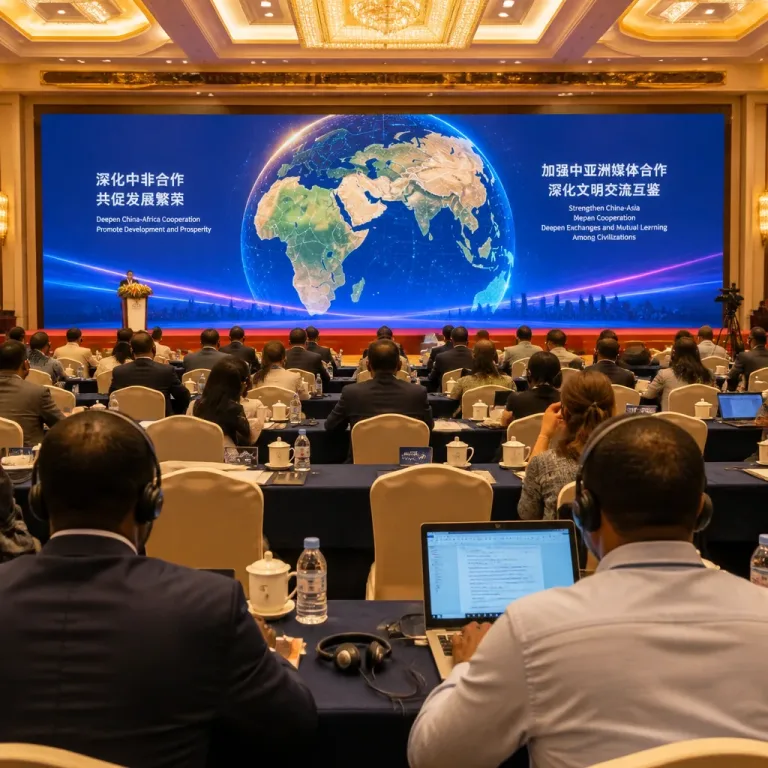
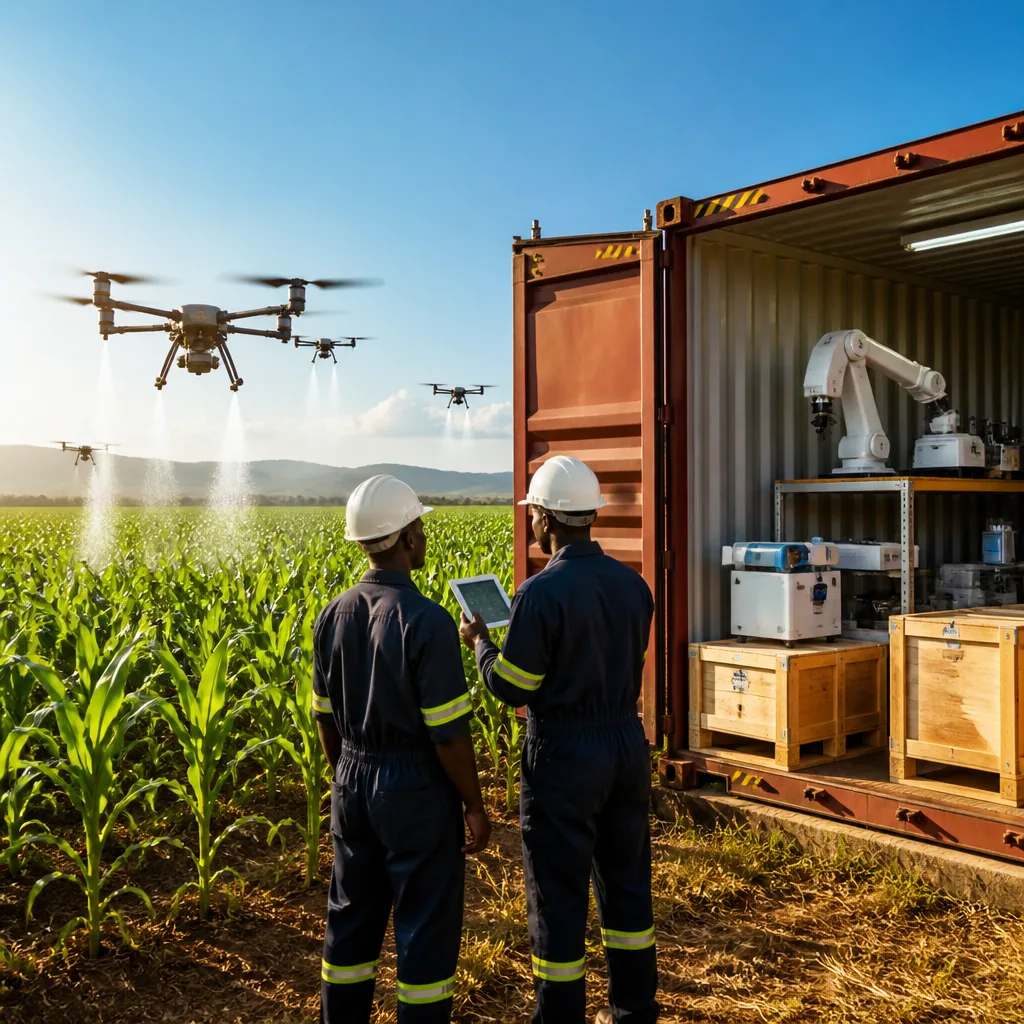
Chinese-manufactured robotics, drones and biomedical tools are playing an expanding role across African agriculture, industry and health systems, a recent report said, signalling a shift in China’s engagement from selling goods to transferring technological capability.
China’s industrial evolution reaches African markets
The report, published by the original outlet, said Chinese companies are supplying agricultural drones to countries including Ghana, Mozambique, Ethiopia, Kenya and South Africa, where they are used to support precision agriculture amid climate stress, land degradation and water shortages. These drones are presented as a lower-cost option for resource-constrained governments and farmers seeking to reduce water, pesticide and fertiliser use.
China’s recent industrial evolution was described as moving beyond the traditional exports of clothing, furniture and household appliances towards higher-technology sectors. The piece identifies a new set of industrial champions for 2026: robotics, artificial intelligence (AI) and innovative drugs. It noted that China now accounts for at least 97% of global humanoid robot shipments.
Scale and trade in industrial robotics
On trade volumes, the reporting said that in the first five months of 2026 China exported 10.377 million robot units with a value of around US$3 billion worldwide. The story links the spread of Chinese industrial hardware — from robotic arms to automation platforms — to manufacturing and research collaborations across developing regions, including Africa.
| Period | Units exported | Estimated value |
|---|---|---|
| First five months of 2026 | 10.377 million | US$3 billion |
Technology transfer, research partnerships and health
The report highlights collaborative research and joint laboratories as mechanisms through which China is helping Africa “break through its own industrialisation”, including suggestions of technology transfer in fields such as medical robotics and biotech. It referenced China’s Health Silk Road as a channel delivering medical robotics and other health technologies to African partners.
China’s biotech advances in 2026 were described as particularly notable in their African impact, though the reporting did not list specific projects by country or clinical outcomes. The broader point made was that China’s industrial strategy now emphasises knowledge-based technological capabilities alongside physical exports.
What this means for South Africa and the region
For South Africa and neighbouring economies, the reported trends raise several practical considerations:
- Opportunities for local manufacturing: increased availability of Chinese industrial hardware could support local assembly and manufacturing if paired with meaningful technology transfer.
- Skills and labour: robotics and automation shift the skills demanded in factories and farms; retraining and technical education will be important to capture value locally.
- Regulation and standards: new imports in AI, drones and medical devices will require regulatory oversight to ensure safety, data protection and clinical standards.
These implications follow from the report’s description of China moving from exporting finished goods to offering more sophisticated technological capabilities and collaborations.
While the reporting emphasises scale and reach, it does not offer a detailed assessment of long-term effects on African industrial sovereignty, supply-chain dependency, or the balance between foreign-led assembly and genuinely localised manufacturing. Those remain open questions for policymakers and industry planners.
As African governments weigh procurement and partnership options, the reported rise of affordable Chinese robots and drones illustrates how rapidly available technologies can change the economics of agriculture, manufacturing and health services — but also how important accompanying policies on skills, regulation and local value capture will be.