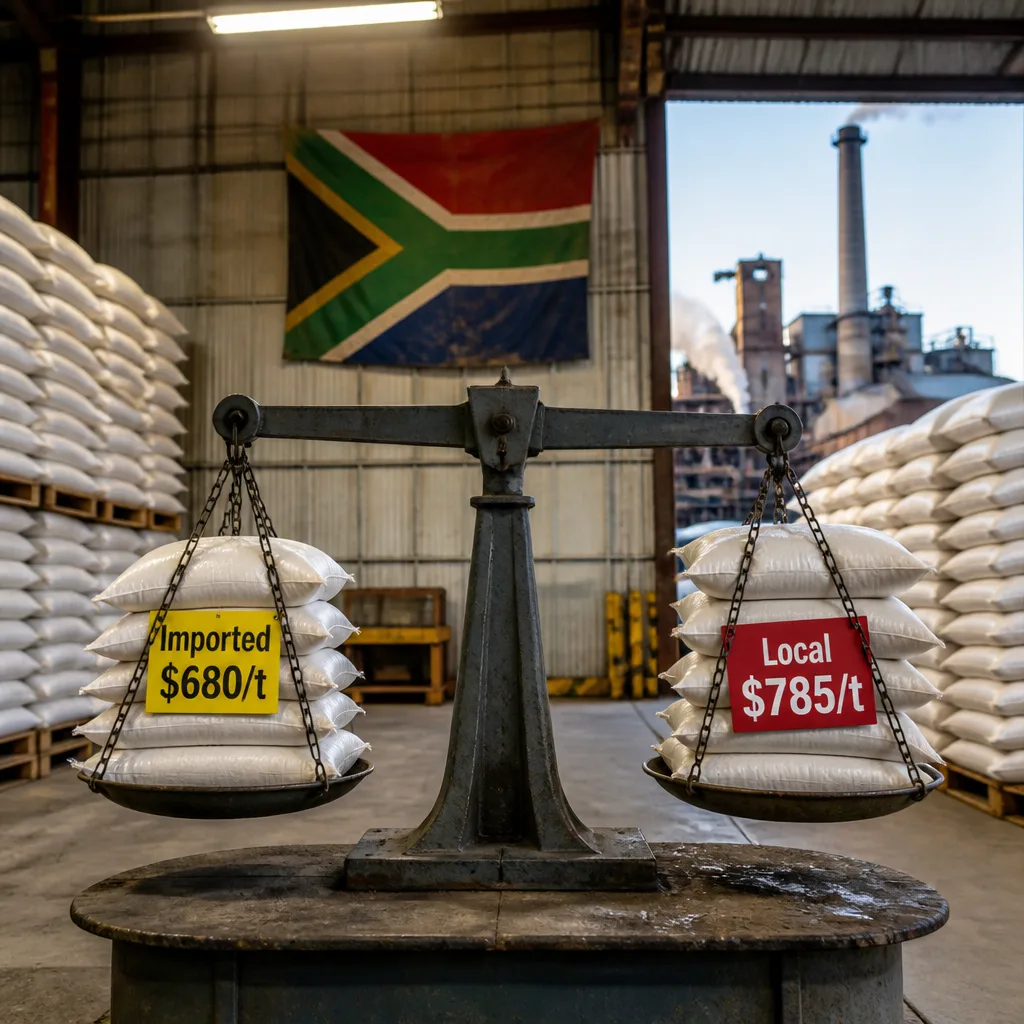
JOHANNESBURG — The International Trade Administration Commission of South Africa (ITAC) has approved a rise in the dollar-based reference price for sugar imports to $785 per metric tonne from $680, the regulator said on Friday. ITAC said the move is intended to bolster tariff protection for domestic sugar producers amid rising import penetration and weakening industry profitability.
ITAC cites industry strain, seeks middle ground
ITAC said the higher reference price will help local producers recover costs, stabilise volatility and support employment and investment while seeking to limit the effect on downstream users. The regulator noted a combination of falling international sugar prices, rising imports, lower production volumes, weakening capacity utilisation and deteriorating profitability in the domestic sugar industry.
The decision follows contrasting submissions from industry stakeholders. The South African Sugar Association had proposed a higher Dollar-Based Reference Price of $905 per tonne, saying that level was needed to shield local producers from subsidised imports. The Beverage Association of South Africa, representing downstream users, had argued for a reduction in the reference price.
ITAC said it rejected both extreme positions and adopted an intermediate increase intended to protect local sugar production while limiting cost pressures for processors and consumers.
Economic pain and job risk
The South African Sugar Association told ITAC it lost R1.6 billion during the 2025/26 season because of the import crisis. The loss figure was included in the association’s submission to the regulator.
"I will cut about 20 workers this season due to cheap imports and U.S. tariffs creating a ‘double whammy’ for my operation," said Nkosinathi Msweli, a grower from KwaDukuza, in reporting connected to the industry’s difficulties.
ITAC said the new reference level aims to support the sustainability of the domestic sugar industry, protect jobs and encourage investment, but it also signalled sensitivity to downstream industries that rely on sugar as an input.
- Old dollar reference price: $680 per tonne
- New dollar reference price: $785 per tonne
- Industry proposal: $905 per tonne (South African Sugar Association)
- Reported industry loss: R1.6 billion in 2025/26 season
| Item | Value |
|---|---|
| Previous reference price | $680/tonne |
| Approved reference price | $785/tonne |
| Industry-requested level | $905/tonne |
Balance between protection and costs
ITAC framed its decision as an attempt to strike a balance: provide enough protection to sustain domestic producers and employment while preventing unduly large cost increases for downstream processors and consumers. The regulator noted the need to limit the effect on downstream users, implicitly acknowledging concerns raised by the beverage and food-processing sectors.
Observers will watch for the impact of the new reference price on import volumes and local production in the coming months, and whether the increase is sufficient to arrest job losses and encourage investment in the sector. ITAC’s decision comes amid wider global pressure on commodity prices and a sustained surge in cheaper shipments into South Africa, notably from Brazil, according to the regulator’s findings.
For context, the source reporting converted the industry’s reported loss to U.S. dollars, indicating R1.6 billion is approximately $100 million at the exchange rate cited in the submission.
The decision is effective immediately, ITAC said, and stakeholders across the sugar value chain will need to adapt to the adjusted tariff protection level as the sector seeks stability.