
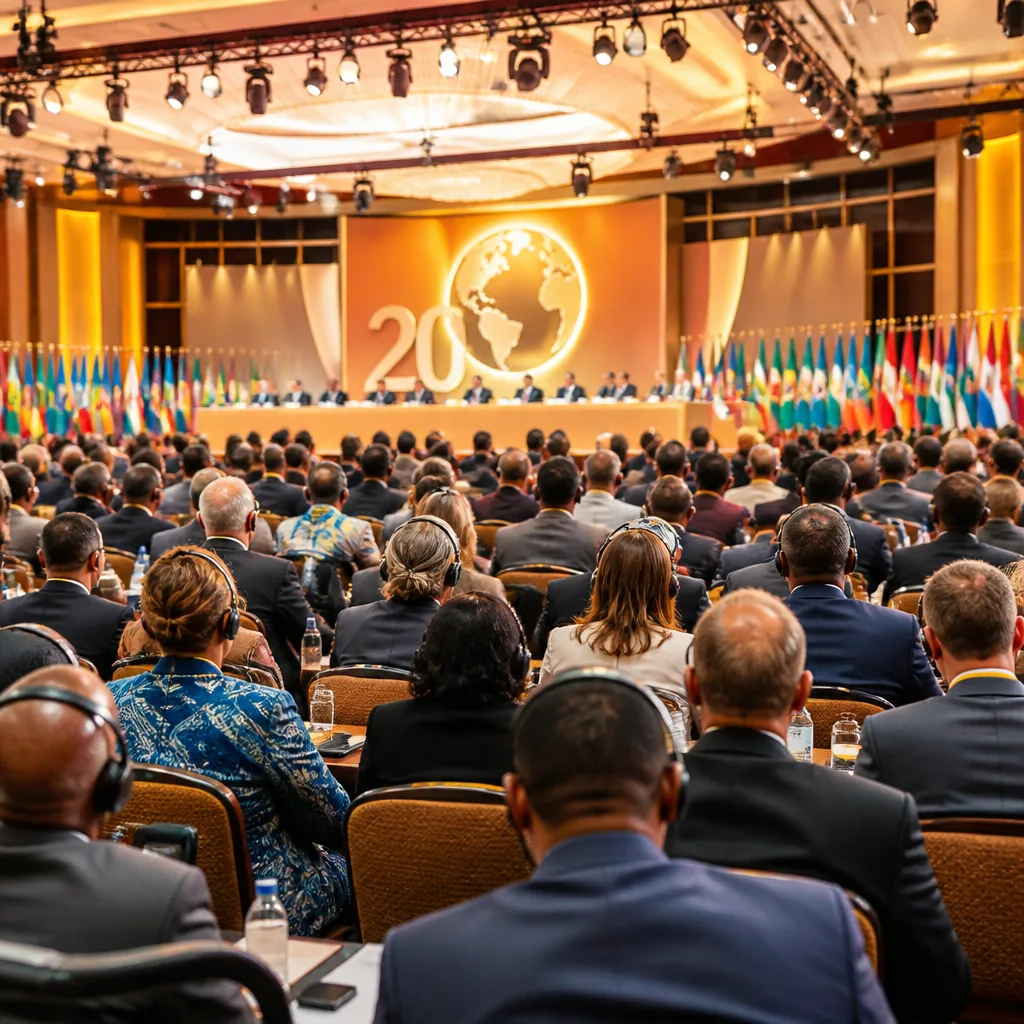
China’s Minister of National Defence, Dong Jun, used the closing sessions of the 13th Beijing Xiangshan Forum to call for collective responses to global security threats and for greater multilateralism in shaping international security governance, according to reporting from the event.
Beijing frames security as a shared responsibility
Nearly 2,000 official representatives, scholars and observers from more than 100 countries, regions and international organisations attended the three‑day forum, which delegates said concluded on Thursday. The Xiangshan gathering, launched in 2006 as a track‑two exchange, marked its 20th anniversary this year and focused on themes such as strategic stability, maritime security, the security implications of emerging technologies, and the shifting structure of global power.
In meetings with defence officials from the Democratic People’s Republic of Korea, Mauritania, Gabon and Somalia who attended the forum, Dong argued that deeper cooperation among states would make the world safer and pledged that the Chinese military was willing to contribute to safeguarding what he termed international fairness and justice.
“We should bear in mind the security and well‑being of all humanity, respect one another, and enhance exchanges and mutual learning, while working to make the international security order more just and equitable,” the minister said, according to the report.
Delegates at Xiangshan discussed the trend toward a multipolar world and the implications for the international order, including major‑country relations, sea‑lane security, and the governance of military applications of emerging technologies. The forum has increasingly been a platform for Beijing to present alternatives to Western approaches to global governance.
Context: the Global Governance Initiative and Beijing’s priorities
Speakers at the forum linked the event’s themes to the Global Governance Initiative (GGI) that China proposed in 2025. Proponents at the meeting argued the GGI rests on principles such as sovereign equality, respect for international law, multilateralism and broader inclusion of developing countries in decision‑making.
Participants described multilateralism as a mechanism that could give more countries a role in shaping security governance and allow a wider set of security concerns to be taken into account. Some observers at the forum framed this as Beijing asserting its vision of a rebalanced global order where Western dominance in security institutions is moderated by a greater voice for other regions.
- Attendance: Nearly 2,000 delegates from over 100 countries and organisations.
- Key themes: Multipolarity, maritime security, strategic stability, military uses of new technologies.
- Policy anchor: China’s Global Governance Initiative, advanced in 2025.
| Item | Detail |
|---|---|
| Forum | 13th Beijing Xiangshan Forum |
| Anniversary | 20th anniversary since 2006 launch |
| Delegates | Nearly 2,000 from 100+ countries |
For South Africa and other middle powers, Xiangshan’s discussions are relevant in two ways: they signal Beijing’s preferred language for dealing with security problems, and they offer an alternative framework for engaging on contentious issues such as maritime rights and the military use of emerging technologies. South African foreign policy has long expressed support for multilateral solutions and greater representation for developing countries in international institutions; the Xiangshan agenda resonates with those priorities.
However, analysts at the forum and elsewhere have noted tensions in translating broad commitments to multilateralism into concrete mechanisms that protect shared interests while managing strategic competition. Questions remain about how competing visions for order — those emphasising alliances and those emphasising sovereign equality — will interact in practice on issues like maritime security or the regulation of dual‑use technologies.
The Xiangshan Forum continues to operate as a mix of formal and informal exchanges. While it is not a decision‑making body, its scale and the participation of defence officials from many countries mean its statements and themes are closely watched by capitals weighing their security partnerships and diplomatic posture.
As Beijing advances the language of the GGI and presses for a larger role for non‑Western voices in security governance, countries such as South Africa will face choices about where their interests lie: in adapting existing institutions, joining new frameworks, or attempting to bridge the two. The Xiangshan discussions make clear that debates over the shape of the international security order will continue to be prominent on the world stage.









