
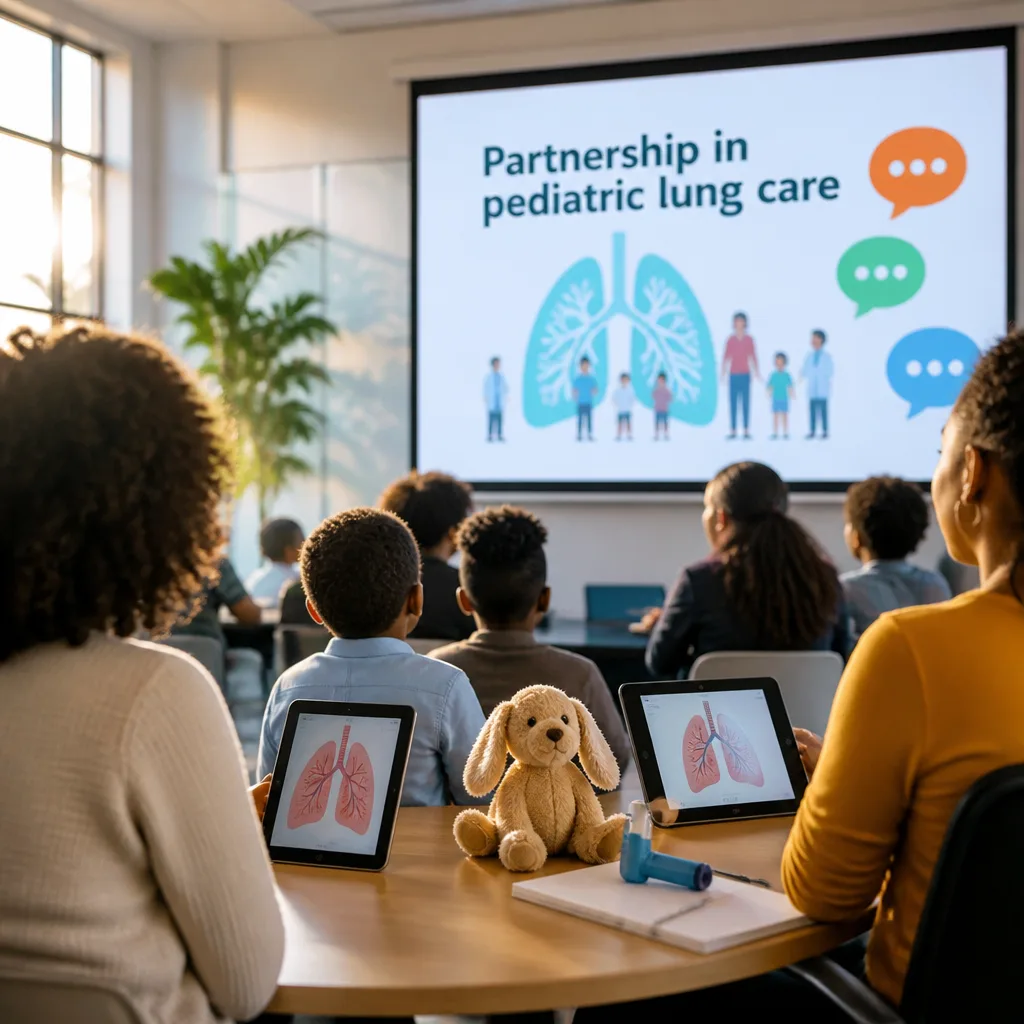
The European Lung Foundation (ELF) and the European Respiratory Society (ERS) told delegates at a pre-Congress webinar on 30 July 2026 that children, adolescents and their caregivers ought to be treated as active partners in healthcare decision-making and research. The session, part of the “United for better breathing: partnership between patients, clinicians and researchers” series, underlined that involvement can improve care quality and research relevance for childhood lung disease.
Patients with lived experience bring expertise
Speakers included members of the ELF Youth Group and representatives who participate in international networks such as the Children’s Bronchiectasis Advocacy Research Network (Child-BEAR-Net). The panel emphasised that children and young people are experts in their own lived experience and that their contributions can shape clinical consultations, care plans and research priorities.
The webinar stressed that involvement should be offered routinely while respecting that individuals will want different levels of engagement according to their age, maturity and circumstances. A recurring theme was the importance of allowing time and space for young people to reflect and respond during consultations.
“They gave me time to think. They asked me questions about my asthma and how it affected my daily life. It made me feel like my opinion was very important.”
The quote came from a young person living with severe asthma who described how clinicians’ efforts to include her in discussions improved her sense of agency and the quality of the consultation.
Research that reflects daily life and priorities
Speakers also highlighted the benefits of involving caregivers and young people in research design and delivery. When people with lived experience help define research questions, select outcomes and design study materials, studies are more likely to address priorities that matter to patients and families, and the findings are more likely to translate into better care.
The webinar showcased international collaboration through Child-BEAR-Net, which brings families, clinicians and researchers together to improve care and research for childhood bronchiectasis. While the session focused on lung conditions, the principles apply across paediatrics: participation can improve recruitment, retention and the relevance of interventions.
Practical considerations for clinicians and policymakers
Although the webinar was organised by European bodies, the messages are pertinent to health systems worldwide, including South Africa’s. Key operational points discussed included:
- Offer participation opportunities to children and young people but respect varied levels of desired involvement.
- Build consultation time and communication aids into clinical practice to give young patients time to consider and answer questions.
- Include caregivers as partners, recognising their central role in day-to-day care and decision-making for younger children.
- Engage people with lived experience at all stages of research—question setting, design, recruitment and dissemination.
These practical measures require system support: training for clinicians in youth-centred communication, research funders recognising the value and resource needs of co-production, and governance frameworks that enable safe and ethical participation of minors in research and service design.
| Area | Expected benefit |
|---|---|
| Clinical consultations | Improved patient engagement and adherence |
| Research design | More relevant outcomes and higher recruitment |
| Advocacy networks | Stronger policy influence and knowledge sharing |
Implications for South African practice
South African paediatric and respiratory services face challenges including resource constraints and high burdens of respiratory disease. Adopting patient and caregiver participation principles does not require wholesale restructuring but does demand changes in clinician practice, research culture and funding approaches. Embedding simple steps — such as asking children directly about symptoms and daily impact, offering age-appropriate information, and involving caregivers in research planning — can strengthen care and equity.
International examples such as Child-BEAR-Net show that networks which link families, clinicians and researchers across countries can accelerate learning and improve care standards. South African clinicians and researchers concerned with childhood lung disease may find value in engaging with similar networks or adapting their approaches locally.
The ELF/ERS webinar concluded that listening to children, young people and caregivers leads to better decisions, more relevant research and ultimately improved outcomes. As always, individuals with health concerns should consult their own healthcare providers or clinics for personalised advice rather than rely solely on general information.
Authorities and organisations mentioned: European Lung Foundation (ELF), European Respiratory Society (ERS), Children’s Bronchiectasis Advocacy Research Network (Child-BEAR-Net).











