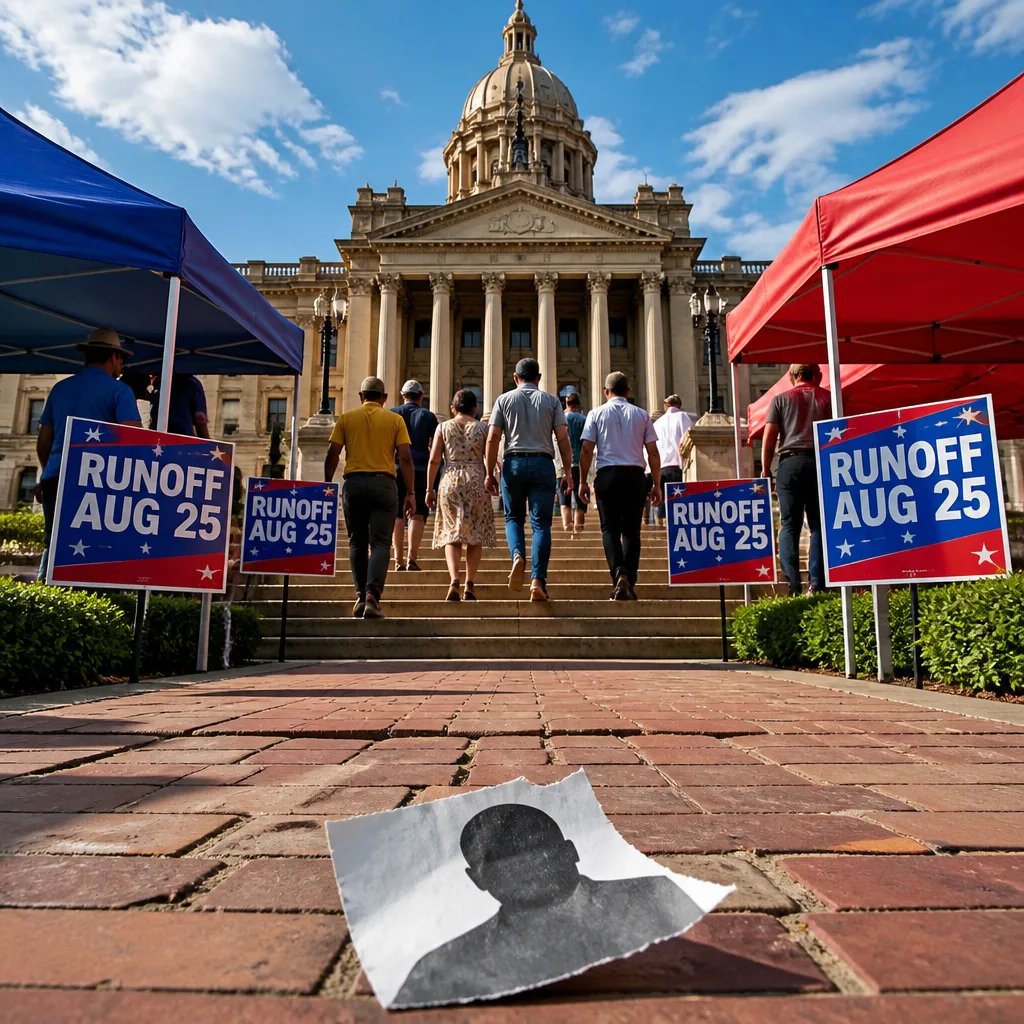
Appointed Senator Darline Graham failed to win outright in South Carolina’s crowded Republican primary on Tuesday and will face Representative Ralph Norman in a runoff on 25 August, prolonging a contest that had been expected to consolidate quickly behind the governor’s pick.
Appointment, endorsement and the limits of imprimatur
Graham, 62, was appointed this summer by Governor Henry McMaster to fill the seat left vacant by the death of her brother, Senator Lindsey Graham. President Donald Trump publicly encouraged her candidacy and formally endorsed her, but that backing proved insufficient to secure a majority in a field of 10 Republican contenders — among them Representatives Russell Fry and former governor Mark Sanford.
The result underlines how endorsements from national figures do not guarantee victory in competitive primaries. The winner of the Republican runoff will go on to face Democrat Annie Andrews, a physician who won her party’s primary in June. In a state that has not elected a Democrat to the Senate since 1998, the eventual Republican nominee will enter the general election as the clear favourite.
Voter sentiment and the campaign terrain
Graham’s status as an appointee and as the first woman to serve South Carolina in the Senate were evident features of the contest. But she has never previously held elected office, a factor that evidently influenced some voters in the first round. Republican voters interviewed during reporting suggested sympathy for Graham’s recent bereavement but questioned whether appointment and endorsement justified automatic elevation to the ballot.
“I understand that she’s lost a brother and lost someone very special to her, and I sympathize with that, but at the same time, I don’t think that it’s necessary just to give it to her,” said Republican voter Bob Howell in Lexington, South Carolina.
Howell added that while he likes President Trump, the endorsement was not decisive for his vote. The episode echoes other recent Republican primaries where the former president’s preferred candidates have not always prevailed: earlier this year, Trump’s favoured candidate for governor, Lieutenant‑Governor Pamela Evette, was pushed into a runoff with Attorney‑General Alan Wilson.
- Runoff date: 25 August
- Republican runoff candidates: Darline Graham (appointed incumbent) and Ralph Norman (U.S. Representative)
- Democratic nominee: Annie Andrews (physician)
| Item | Detail |
|---|---|
| Number of Republican primary candidates | 10 |
| Senate seat origin | Appointment after the death of Senator Lindsey Graham |
For Republicans, the runoff represents both a risk and an opportunity. A prolonged primary can drain resources and create intra‑party divisions, but it also offers a chance to test messages and mobilise voters heading into November. For Democrats, the extended contest among Republicans can be a source of material to contrast candidates, though in South Carolina the general election picture still favours the GOP.
What is at stake
Beyond the state, the result will slightly alter the arithmetic and the narrative heading into the autumn. If Graham prevails, her victory would validate the governor’s appointment and Trump’s endorsement in this instance; if Norman prevails, it would be another example in 2026 of Republican voters rejecting a candidate preferred by the former president.
Voters will return to the polls on 25 August to decide who will be the Republican standard bearer. The winner will be strongly favoured in November to claim a full six‑year term in the U.S. Senate in a state that has trended reliably Republican at federal level for decades.
The contest also leaves open questions about candidate readiness and experience. Graham’s lack of prior elected office was raised by voters as a deciding factor, while Norman’s congressional tenure gives him a different résumé to present to primary voters.
As the runoff approaches, observers will watch whether national endorsements, local loyalties and campaign organisation determine the outcome — and which coalition of Republican voters ultimately coalesces behind the nominee who will almost certainly be the next senator from South Carolina.