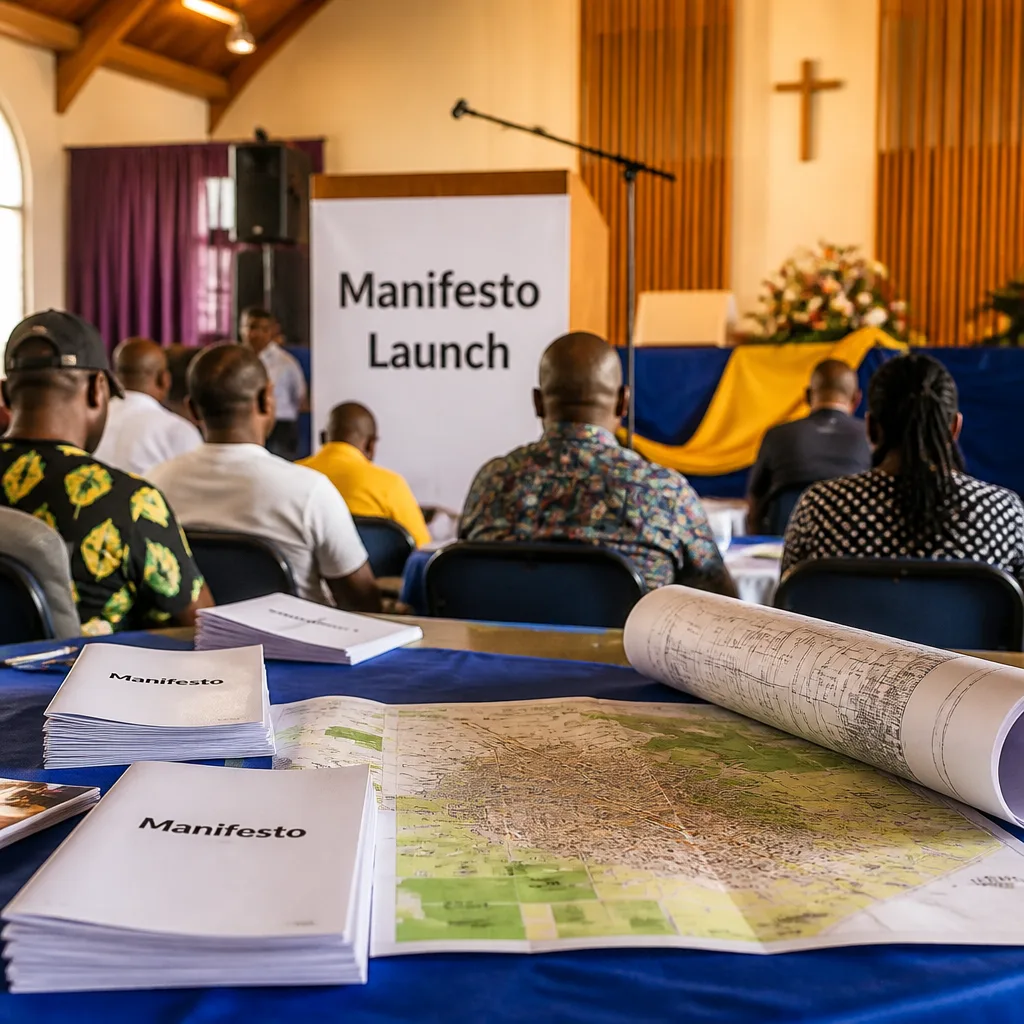
The African Christian Democratic Party (ACDP) will on Saturday unveil its manifesto and present mayoral candidates for several municipalities at an event in Benoni, party organisers said. The launch will be held at the eMseni Christian Centre as the party prepares to contest the November local government elections.
Party platform and themes
Founded in 1993, the ACDP is a conservative political formation that frames its policy positions in explicitly Christian terms. The party’s leadership signalled that the upcoming manifesto will reprise longstanding priorities emphasised in its 2021 local government manifesto, notably:
- clean, ethical governance and improved municipal administration;
- targeted infrastructural upgrades in struggling municipalities;
- continued opposition to pandemic-era mandates.
Those themes align with the ACDP’s effort to present itself as a governance-focused conservative alternative to larger national parties, appealing to voters for whom faith-based values are central to political choice.
Timing and electoral context
The manifesto launch comes amid an early flurry of pre-election activity by smaller and mid-sized parties that are attempting to secure mayoral positions or be kingmakers in hung councils after the November polls. The ACDP joins a number of political organisations that have already announced mayoral slates and local manifestos in the run-up to local government voting.
For the ACDP, the announcement of mayoral candidates is as much about signalling its readiness to govern municipal portfolios as it is about expanding its negotiating leverage in coalition scenarios. Smaller parties can extract policy concessions and portfolio positions from larger partners when councils are fragmented; the ACDP’s emphasis on administrative competence and ethical conduct is intended to strengthen its hand in those talks.
Who benefits and who pays
Voters in municipalities where the ACDP fields credible candidates could benefit from sharper focus on service delivery and infrastructure repairs if campaign promises translate into actionable programmes and competent management. However, the party faces the perennial challenge of converting national or provincial support into effective municipal capacity.
If the ACDP secures mayoralties or key coalition roles, taxpayers will ultimately underwrite any new municipal initiatives through existing revenue streams — municipal rates and service charges — and allocations from provincial and national transfers. The practical constraint for many municipalities is not policy ideas but available funding and the administrative ability to deliver projects on time and within budget.
| Fact | Detail |
|---|---|
| Party founded | 1993 |
| Launch venue | eMseni Christian Centre, Benoni |
| Key focus areas (2021 manifesto) | Ethical governance; infrastructural upgrades; opposition to pandemic mandates |
Observers will watch whether the ACDP’s platform offers concrete fiscal plans or implementation proposals that address municipal revenue shortfalls and capacity constraints. Absent such detail, pledges risk being absorbed into routine post-election bargaining rather than resulting in measurable improvements in service delivery.
What to expect from the launch
The public unveiling will likely include a written manifesto, the naming of mayoral candidates for several municipalities and public comment from party leaders. The ACDP has historically used manifesto launches to articulate distinctive moral and governance messages aimed at both faithful constituencies and voters dissatisfied with municipal performance.
Saturday’s event will therefore serve three functions: to define the ACDP’s policy priorities for the local elections, to present mayoral candidates who can be deployed in coalition negotiations, and to pitch the party’s brand of faith-based conservatism to voters ahead of a tightly contested municipal polling calendar.
As parties across the spectrum prepare for November, the ACDP’s success will depend on whether its message resonates beyond its core religious base and whether it can demonstrate practical plans that match the urgent service delivery needs of many municipalities.