The Democratic Alliance (DA) unveiled its 2026 manifesto in Johannesburg on Saturday, offering voters three central guarantees and a suite of municipal‑level reforms focused on procurement, service delivery and local policing.
What the DA pledges
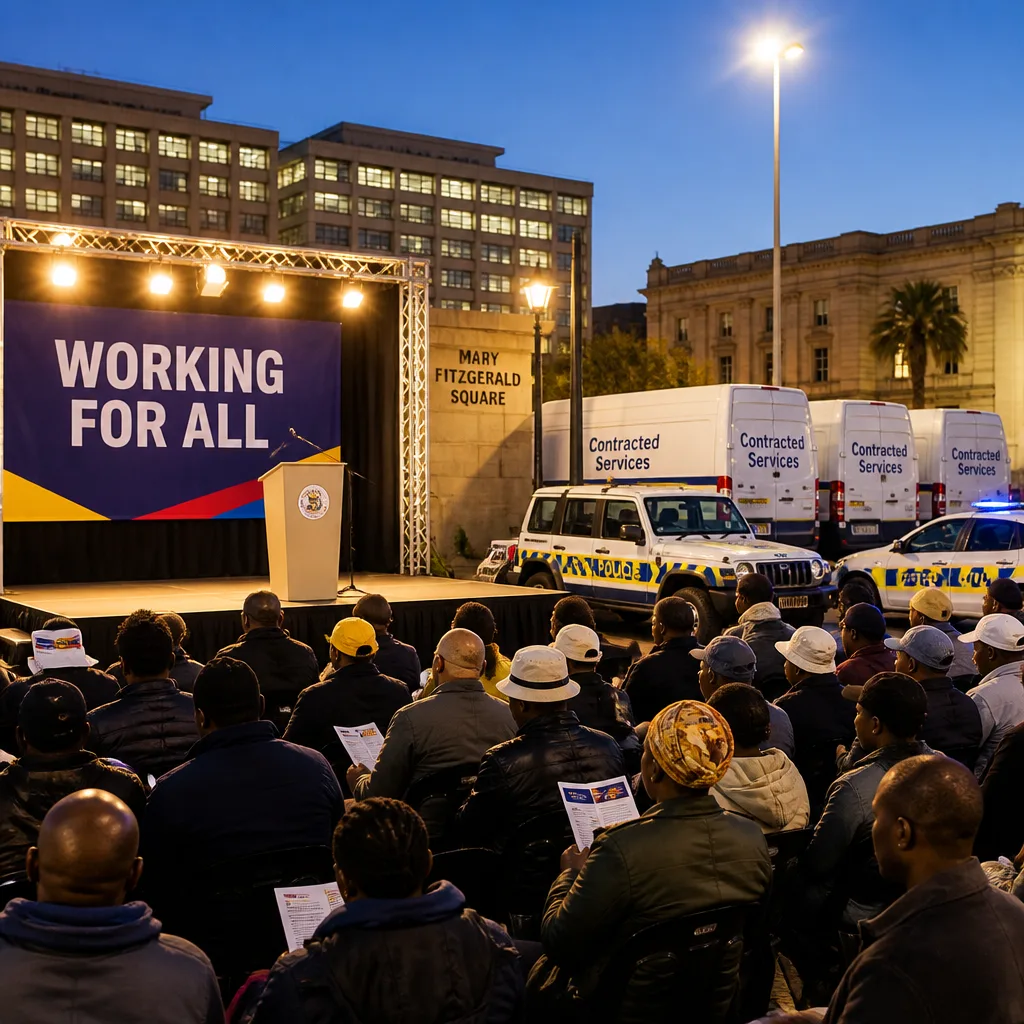
In a speech at Mary Fitzgerald Square, DA leader Geordin Hill‑Lewis framed the manifesto around a simple premise: “An ordinary life should not be a privilege.” The document, the DA said, makes three clear promises: a government South Africans can trust; services they can rely on; and communities in which people can advance.
“Working for All,” the DA manifesto says, promising to protect public money and to end what it calls cadre deployment where it comes into government.
Key proposals outlined in the speech include:
- Ring‑fencing municipal revenue so that money collected for water and electricity is spent only on those services.
- Transparent procurement and ending cadre deployment, with an emphasis on appointing people with the requisite skills rather than political connections.
- Allowing private companies to deliver municipal services under strict, competitive contracts while municipalities retain policy, pricing and oversight authority.
- Strengthening municipal policing so local police forces can investigate crime and support the conversion of arrests into convictions.
Who benefits — and who pays?
The DA presents its approach as centred on protecting public money and improving basic services. Under ring‑fencing, revenue earmarked for specific services would be preserved for infrastructure maintenance and operations rather than diverted to other municipal priorities, the party said.
Allowing private firms to deliver services is pitched as a way to bring in technical capacity and efficiency. The manifesto says municipalities will keep control over policy, prices and performance, while procurement becomes subject to open competition.
That model changes who delivers services and how risks and rewards are shared. Potential beneficiaries, according to the policy framing, include:
- Households and businesses that rely on steady water and electricity supply, if ring‑fencing and reinvestment reduce outages and bursts in infrastructure.
- Private contractors and service providers who win municipal contracts under competitive procurement rules.
- Municipal administrations that secure outside expertise to manage technical systems.
Costs and trade‑offs flagged by the manifesto — though not quantified in the speech — are implicit. Contracting out services requires robust procurement oversight, contract management capacity within municipalities and independent regulation to ensure public interest is protected. Ring‑fencing also narrows municipal budget flexibility, potentially complicating responses to unforeseen events.
Political context and likely flashpoints
The DA’s anti‑corruption and competency agenda is familiar from previous campaigns, but the manifesto seeks to translate those themes into operational changes at the municipal level. Two areas stand out as likely sources of contestation:
- Procurement and outsourcing: Moves to open municipal contracts to private companies will attract scrutiny from labour groups, civic organisations and other parties concerned about jobs, accountability and the capacity of municipalities to police contract performance.
- Municipal policing powers: Expanding functions of municipal police to investigate crime and assist in achieving convictions could lead to disputes over jurisdiction with the South African Police Service (SAPS) and the national justice system, as well as debates about training, oversight and civil liberties.
Local elections and service delivery performance historically drive voter sentiment in South Africa. By focusing on municipal repair and anti‑corruption measures, the DA is betting that tangible improvements in water, electricity and local safety will translate into broader electoral gains. Whether that vote‑calculation holds will depend on implementation capacity and the political bargaining required in provinces and metros where the DA does not hold outright power.
| Promise | Main mechanism | Primary implication |
|---|---|---|
| Government you can trust | Transparent procurement; end cadre deployment | Potential reduction in corrupt appointments and leakages |
| Services you can rely on | Ring‑fencing revenue; private delivery under contract | More predictable funding for infrastructure, but requires contract oversight |
| Community where you can get ahead | Cut red tape; municipal policing | Simpler business permits; contested policing roles |
The manifesto sets out a clear alternative to the current governing coalition’s approach to municipalities. Implementation would depend on the DA’s ability to govern either alone or in coalitions at national and provincial levels, as well as on municipal administrative capacity. For voters, the question will be whether these promises are plausible fixes for everyday problems — and who ultimately bears the cost of contracting, oversight and regulatory change.
The speech and accompanying manifesto PDF were released by the DA during the Mary Fitzgerald Square event on 8 August 2026, the party said.