MIAMI — An Oglethorpe University graduate who joined the tournament operations staff at Miami Stadium played a central role in managing media access and day-of-game communications during the FIFA World Cup held in the United States. Working with FIFA’s communications team and U.S. Soccer, she oversaw accreditation processing, supervised on-site media spaces and directed postmatch press activity at one of the tournament’s busiest venues.
Managing access for hundreds of journalists
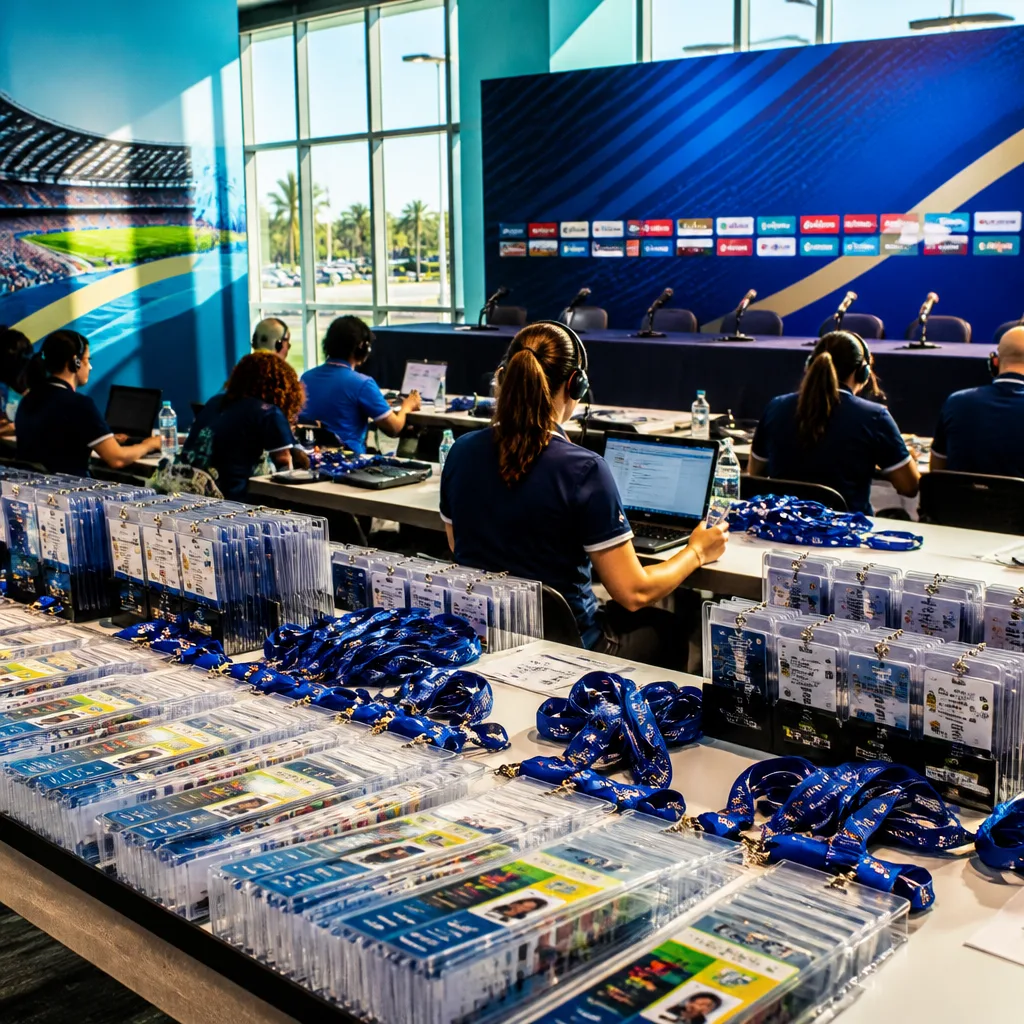
Marissa Romaine, a 2023 graduate of Oglethorpe University with a degree in business administration and a minor in communication studies, served as Senior Coordinator of Media Services and Venue Media Coordinator for Miami Stadium. Her responsibilities included reviewing media accreditation applications from U.S.-based reporters and photographers, verifying eligibility and issuing approvals ahead of matches.
“With the Media Services team, my main project was media accreditation applications,” Romaine said. “I managed the U.S. media accreditation process, which consisted of reviewing hundreds of applications from journalists and photographers, verifying eligibility and sending approvals.”
Those accreditation duties placed her at the center of efforts to control who gained entry to press areas and how media coverage was conducted inside the venue. She worked as a liaison for traveling and local media, coordinating with FIFA and U.S. Soccer to resolve operational questions before credentialed personnel arrived at the stadium.
Running match-day logistics
On game days, Romaine held a venue-based role leading media operations at Miami Stadium. She directed a team of more than 40 media operations volunteers and managed the physical and logistical spaces used by journalists, broadcasters and photographers: press conference rooms, mixed zones where players speak to reporters, and media work areas distributed throughout the stadium.
Romaine described long match days that began hours before kickoff and often extended well after the final whistle. She frequently moderated the two official postmatch press conferences featuring each team’s head coach and then moved to the mixed zone to facilitate player interviews. According to her account, media operations could continue for up to three hours after a match ended, requiring continuous coordination across several departments.
- Managed U.S. media accreditation applications and approvals
- Led a 40-plus volunteer media operations team at Miami Stadium
- Oversaw press conferences, mixed zones and postmatch interviewing logistics
Coordination and global teamwork
The tournament brought together media, officials and operations staff from around the world. Romaine’s work required frequent collaboration with FIFA’s communications office and representatives of U.S. Soccer to ensure accredited media had the appropriate access and support. Her role underscored the scale of behind-the-scenes staffing necessary to stage a global sporting event in U.S. venues.
| Area | Romaine’s Responsibilities |
|---|---|
| Accreditation | Reviewing applications, verifying credential eligibility, issuing approvals |
| Venue Operations | Managing press rooms, mixed zones and media work areas |
| Staffing | Leading more than 40 media operations volunteers |
| Matchday Duties | Moderating press conferences, facilitating player interviews, postmatch coordination |
Her account highlights the practical steps tournament organizers take to maintain orderly coverage and media access at major sporting events. It also illustrates how recent graduates can occupy critical roles in large-scale international operations, drawing on academic backgrounds in business and communications to manage complex logistical and interpersonal demands.
As the U.S. continues to host high-profile international sports competitions, the experiences of venue-level coordinators like Romaine demonstrate the detailed planning required behind the scenes to deliver secure, efficient and media-friendly events.