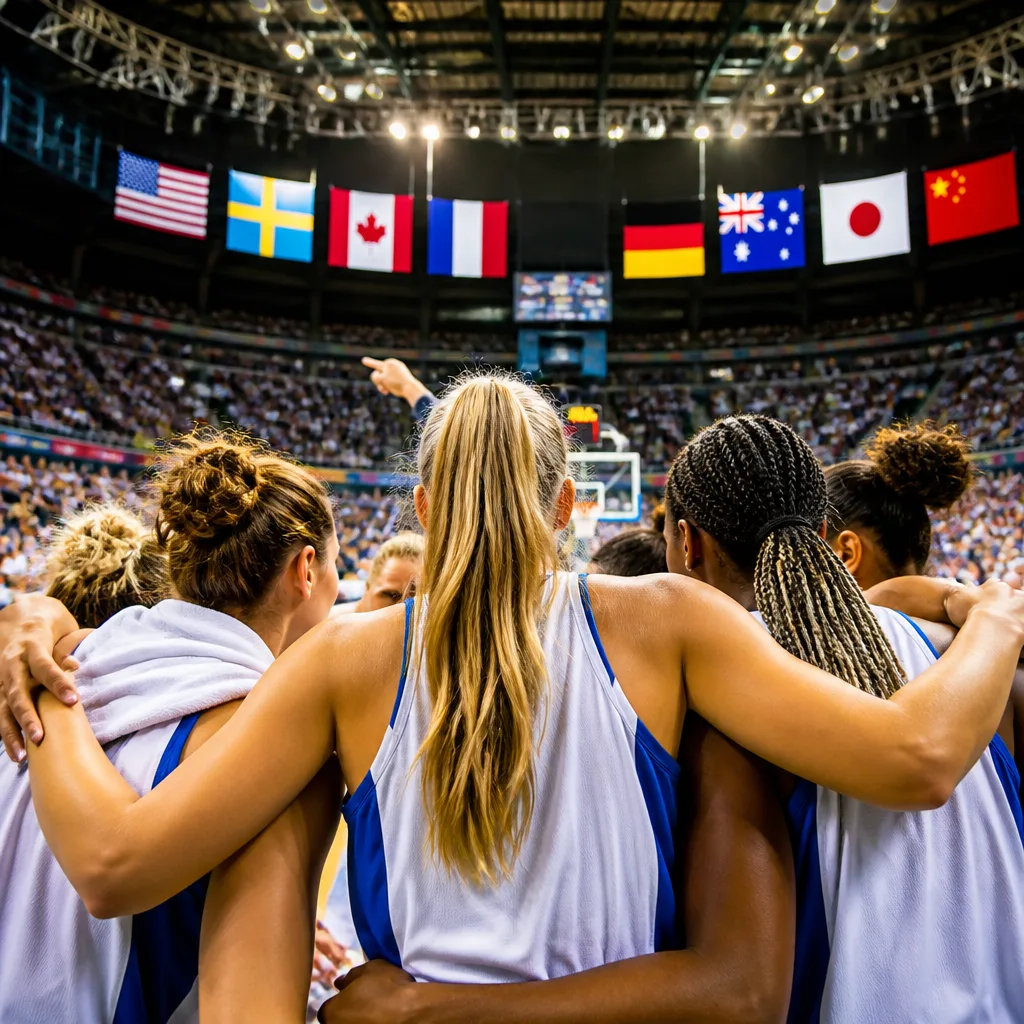
The United States women’s basketball team, coached by Kara Lawson, finished group play unbeaten and advanced to the quarterfinals of the 2026 FIBA Women’s World Cup in Berlin, where eight nations remain in contention for medals.
How the field shapes up
With the knockout rounds set, the quarterfinal bracket features a mix of traditional powers and teams that earned their spots through decisive qualifying victories. The eight quarterfinalists are United States, France, Belgium, Spain, Hungary, Germany, China and Australia. Among them, the U.S., France and Belgium entered the quarterfinals without a loss in group play.
Several late group games determined the final lineup. On Tuesday, Hungary defeated Japan and Germany beat Korea to secure their berths. On Wednesday, China advanced by beating Puerto Rico, while Australia captured the final spot with a narrow victory over Italy.
U.S. performance and personnel
The Americans navigated a mixed group schedule that included a particularly tight contest with Italy. In that matchup, the U.S. managed a 55-52 win — the team’s lowest-scoring World Cup output since 1971 — illustrating both defensive resilience and offensive strain in a high-pressure environment.
Coach Lawson has emphasized a rotation that blends experienced floor leaders with high-end depth. The five returning senior players — Napheesa Collier, Kahleah Copper, Chelsea Gray, Breanna Stewart and Jackie Young — started each game in Berlin. That approach has allowed emerging stars such as Caitlin Clark, Paige Bueckers, Aliyah Boston and Angel Reese to provide impact minutes off the bench, creating a bench-to-starter dynamic many opponents have struggled to counter.
"Watching the United States at its best — as ESPN colleague Michael Voepel put it during the 94-61 win over China — is like watching a movie in which every role is played by an Oscar winner."
Depth has been the defining characteristic of the U.S. entry: when the veterans faltered in stretches, other players have stepped up to close games and preserve the unbeaten record. That collective talent pool gives Lawson flexibility in matchups and lineups as the tournament moves into single-elimination play.
What to watch in the knockout rounds
The quarterfinals will sharpen focus on matchups of style and personnel. Teams that relied on a single star now face lineups with multiple scorers and deeper rotations. Key themes to monitor:
- Depth versus continuity: Can teams with shorter rotations offset the U.S. bench’s scoring and playmaking?
- Defensive adjustments: Will opponents find new schemes to disrupt the U.S. senior starters or the bench contributors?
- Game tempo: Which teams force transition play, and which prefer halfcourt control?
How those factors play out in the quarterfinal matchups will determine which squads reach the semifinals and remain in medal contention.
| Quarterfinalists | Notable characteristic |
|---|---|
| United States | Unbeaten; deep rotation with veteran starters |
| France | Unbeaten through group play |
| Belgium | Unbeaten through group play |
| Spain | Qualified with a 2-1 record |
| Hungary | Beat Japan to qualify |
| Germany | Defeated Korea to secure a spot |
| China | Advanced with a win over Puerto Rico |
| Australia | Held off Italy to clinch final berth |
The transition to single-elimination will magnify every decision, from rotations to tactical adjustments. For the United States, the challenge will be to maintain offensive fluidity and defensive intensity while managing minutes for a roster built to withstand long tournaments.
As the World Cup moves into Thursday’s quarterfinals, fans and analysts will be watching whether continuity among the veterans or the depth behind them proves decisive. The tournament’s remaining games will test coaching, conditioning and bench contributions in ways group play did not.