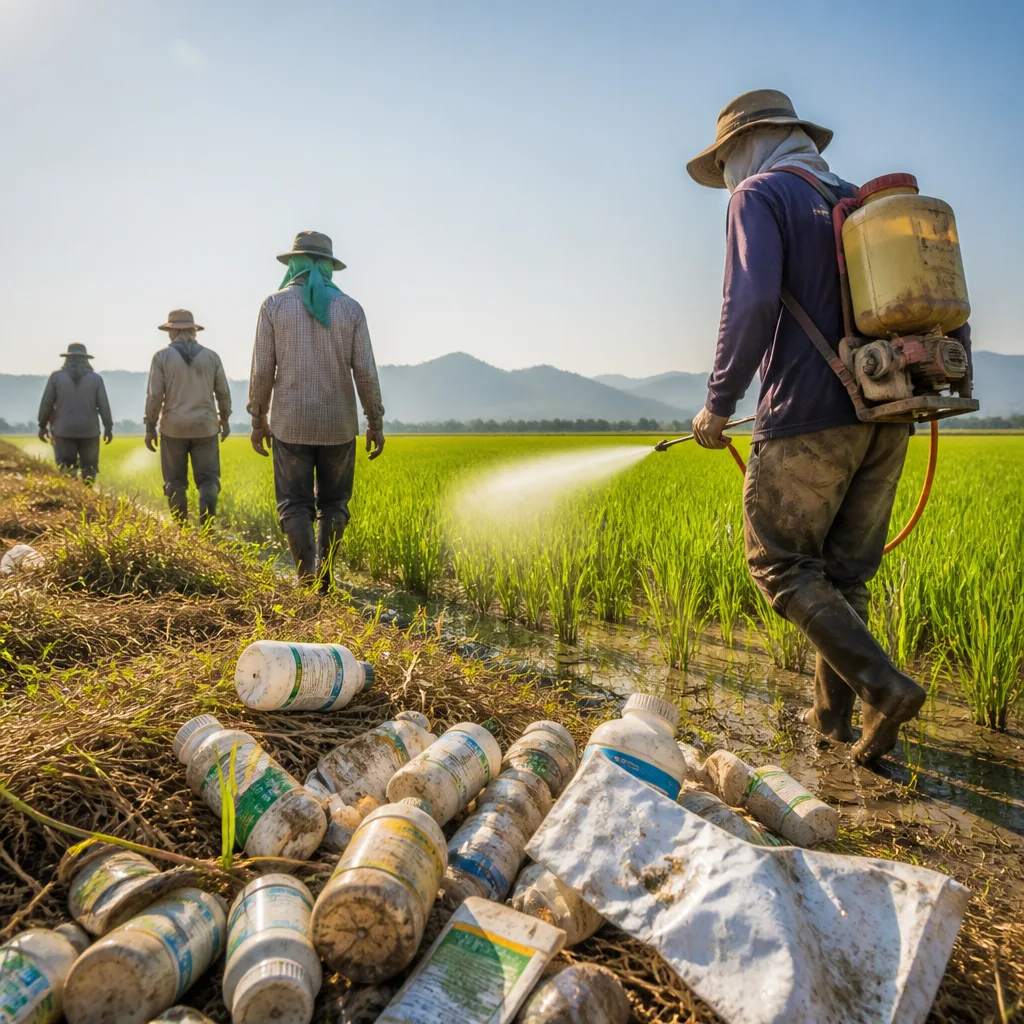
A major review of publicly available data has concluded that almost half of the world’s farmers and farm workers experience acute pesticide poisoning each year, underscoring a widespread occupational health crisis in agriculture. The study, commissioned by Pesticide Action Network and published in Frontiers in Public Health, estimates between 402 million and 433 million cases annually among a global farming population of roughly 934 million.
Scale and geographic patterns
The analysis covers data from 2006 through 2023 and finds that approximately 46% of all farmers are affected by unintentional acute pesticide poisonings each year. Regional estimates show the highest burden in southern Asia, followed by south-east Asia and east Africa. At the national level, Burkina Faso was reported to have the highest incidence, with nearly 84% of farmers and farm workers said to have experienced poisoning.
The authors also estimate about 11,000 deaths annually attributable to pesticide poisoning, with close to 60% of those fatalities occurring in India. The report’s figures reflect only acute poisoning — illnesses or health effects that manifest soon after exposure — and do not capture potential long-term consequences or developmental impacts on children exposed to pesticides while working on farms.
Calls for urgent policy responses
Researchers and public health advocates who commissioned the study are urging immediate steps to reduce harm, including implementation of a United Nations recommendation to phase out highly hazardous pesticides. Advocacy groups emphasized that global pesticide use has continued to rise despite longstanding warnings: the study notes that roughly 3.8 million tonnes of pesticides were used in 2023, about double the volume reported in 1990.
“Now that the scale of suffering has been revealed, farmers must be supported to access safer alternatives to protect their health and that of their families,”
That assessment came from an international program lead at Pesticide Action Network UK, reflecting the study’s broader plea for safer pest-management options and expanded protections for agricultural workers.
- Estimated annual acute poisonings: 402–433 million
- Global farming population used in estimate: 934 million
- Estimated annual deaths: 11,000 (nearly 60% in India)
| Region or Country | Relative burden |
|---|---|
| Southern Asia | Highest estimated number of poisonings |
| South‑east Asia | Second highest |
| East Africa | Third highest |
| Burkina Faso | Highest national incidence (~84%) |
Limitations and gaps
The authors underscore several limitations in current knowledge. The report did not examine the exposure and health outcomes of children working in agriculture — estimated at about 84 million worldwide — nor did it assess chronic or long-term health effects tied to repeated pesticide exposure. The study’s focus on acute events means its totals likely understate the broader disease burden linked to pesticides over a lifetime.
Experts argue that the persistence of rising pesticide use, despite decades of warnings about their hazards, reflects gaps in regulation, access to safer alternatives and resources for farmers to adopt non-chemical pest management techniques. The researchers and campaigners recommend policy measures to reduce reliance on the most hazardous substances and to expand training, protective equipment and monitoring for agricultural workers.
The study’s findings are likely to intensify calls by health advocates and some governments for stronger controls on pesticide sales and use, and for international coordination to accelerate safer farming practices. As policymakers consider responses, public health officials say better surveillance and standardized reporting will be crucial to track progress and protect those who grow the world’s food supply.