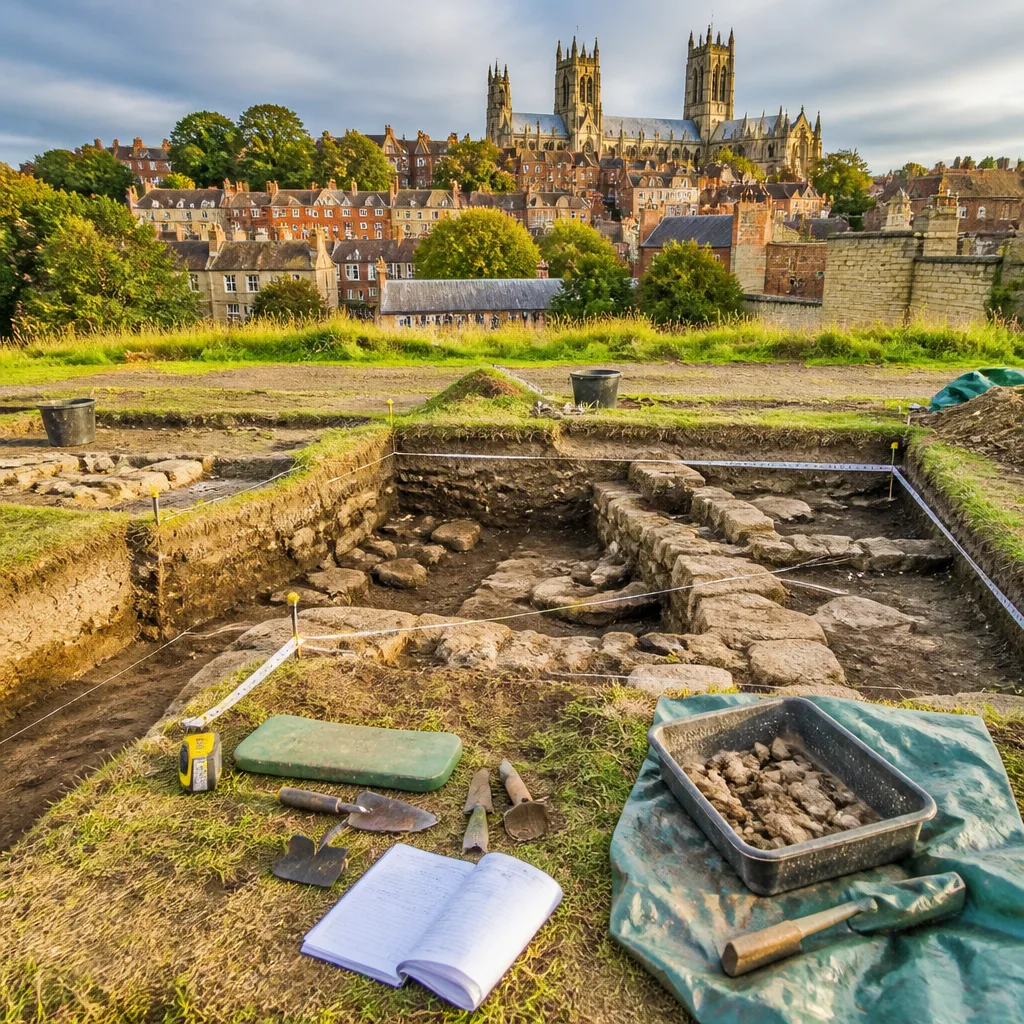
Archaeologists in Lincoln will open larger trenches next month at the site believed to house the Hospital of the Holy Innocents, a medieval institution founded around the year 1100 to shelter people affected by leprosy. The work aims to recover the hospital’s walls and layout and to test long-held ideas about how society treated individuals with the disease.
Reassessing medieval care and community
The hospital is thought to have been in use for about five centuries, though no visible remains survive above ground today. Researchers say the institution may offer a more nuanced view of medieval responses to leprosy than the prevalent narrative of isolation and exclusion.
Samantha Tipper, a senior lecturer in forensic science at Anglia Ruskin University, urged caution about simplistic impressions of the past:
"We have this idea that individuals with leprosy were ostracised or shunned, that's a very Victorian view. Actually, places like this may have been nice religious communities and a lovely place to live... apart from the leprosy."
Archaeologists plan to open trenches where preliminary investigations located structural features, hoping to reveal the plan and construction of the hospital. Scholars note that English leprosaria did not follow a single architectural model, so excavation could yield unexpected arrangements of dormitories, chapels or service buildings.
Historic significance and contemporary context
The Lincoln hospital was mapped on the city’s South Common into the 19th century, indicating the memory of its location persisted even after its visible fabric disappeared. Excavation could illuminate how a religiously run institution accommodated care, ritual, and daily life for residents diagnosed with a chronic infectious disease.
Leprosy, a chronic infection that affects the skin, peripheral nerves and mucous membranes, can produce distinctive symptoms such as discolored patches, numbness and muscle weakness. While treatments and public-health responses have changed dramatically since the Middle Ages, the disease persists globally.
| Metric | Figure |
|---|---|
| People living with leprosy (approx.) | 3 million |
| New cases detected annually (approx.) | 200,000 |
Those figures, reported by the World Health Organization and cited by the excavation team, underline that leprosy remains a global public-health issue even as the Lincoln project concentrates on medieval experience.
- Objective: Locate and expose the hospital’s foundations and internal layout.
- Significance: Challenge assumptions about medieval ostracism and document the lived environment of medieval care institutions.
- Method: Expand trenching in areas where structural remains were earlier identified.
Researchers emphasize that interpretation must proceed from the material evidence uncovered in the ground. Finds such as building foundations, burials, and artefacts could reveal whether the hospital’s routine resembled a cloistered religious community, a medical facility, or a hybrid form of care.
The excavation will add to a modest but growing body of archaeological study on medieval leprosaria in England, where surviving plans and material traces vary widely. By recovering physical remains at Lincoln, scholars hope to place local practice in a broader historical framework and to inform how institutions for disease were organized socially and spatially.
The dig also raises questions of conservation and interpretation: if substantial remains are uncovered, local and national bodies will need to consider how to preserve and present the site for public education about both medieval life and the long history of responses to disease.
As the trenching begins, the team in Lincoln will balance careful excavation with the task of translating fragile, centuries-old features into an evidence-based narrative that informs modern understanding of care, community and contagion.