California Gov. Gavin Newsom told world and business leaders Wednesday that President Donald Trump has abandoned federal responsibility on climate change, saying state and local governments must fill the void as the Biden-era clean energy agenda is reversed.
Newsom presses climate action as federal policy shifts
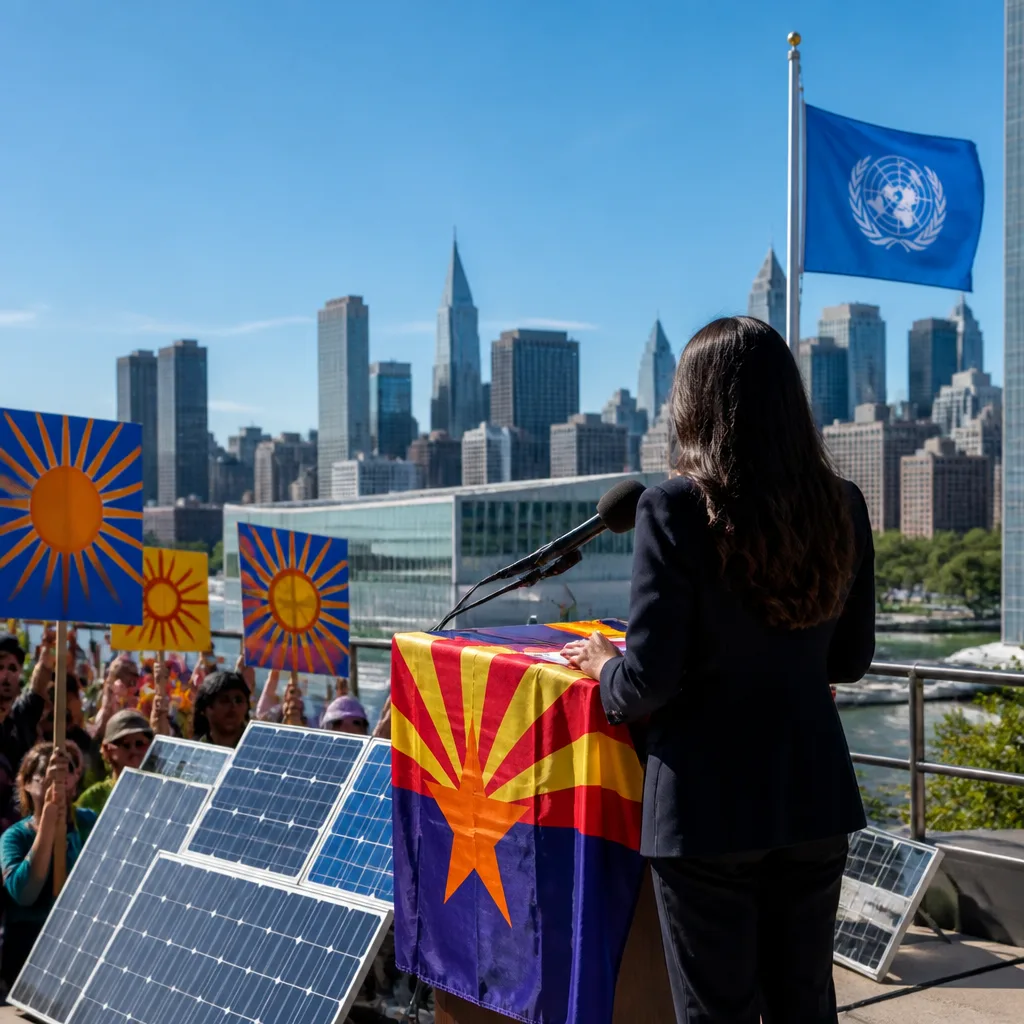
Speaking on the sidelines of the U.N. General Assembly in New York, Newsom framed his remarks as a response to what he described as a federal retreat from climate commitments. He criticized Trump’s prioritization of fossil fuels, including moves to reopen coal plants and pursue new oil drilling — proposals that, Newsom said, run counter to the clean-energy investments he was advancing in discussions with international and corporate officials.
Newsom, a Democrat who is widely viewed as a potential 2028 presidential contender, argued that subnational actors are now leading on climate policy because the White House has “abdicated” responsibility. He cast Trump’s energy strategy as an attempt to turn back the clock on environmental progress and warned of economic risks from doubling down on fossil fuel production.
“He’s doubling down on stupid, and he’s putting the American economy at risk,”
Newsom went further in his remarks, calling Trump “the most destructive environmental president in American history” and referring to him as “an invasive species.”
White House response and political fallout
The White House responded through spokeswoman Taylor Rogers, who used a derogatory nickname for the governor and dismissed Newsom’s criticism as misplaced. In an email, Rogers attacked Newsom’s climate advocacy as an extension of what she called “Biden’s unpopular, unreliable and costly Green New Scam,” and accused him of neglecting state problems such as crime, homelessness and wildfire recovery.
Rogers also accused Newsom of “whining about the climate change hoax at another conference” instead of focusing on California’s domestic challenges — a comment reflecting the sharp partisan tone that has accompanied national debate over energy policy.
Context: policy divergence and global energy trends
Newsom’s criticism underscores a widening policy gap between the federal administration under Trump and many state governments and international partners on climate priorities. Under Trump, the federal government has moved to reverse several clean-energy policies enacted earlier, including measures that encouraged renewable energy development. Critics say some of those reversals have specifically hindered technologies such as offshore wind.
The contrast was on display at the U.N. last year when Trump called climate change the “greatest con job ever perpetrated on the world,” a remark that signaled his administration’s skepticism of international climate efforts. Newsom has previously attended international climate forums — including U.N. talks in Belém, Brazil, in 2025 that Trump skipped — as part of an effort to maintain U.S. engagement on climate issues at subnational and international levels.
International implications
Observers say the policy divergence affects U.S. credibility in global clean energy competition. The reporting notes that China is currently leading global capacity additions in wind and solar power, even as it also added substantial coal capacity last year. The international context for these energy debates was heightened this week by the arrival of Chinese President Xi Jinping for a state visit to Washington, underscoring the intersection of climate policy and broader U.S.-China economic and technological rivalry.
Newsom’s statements and the White House’s rebuttal reflect more than rhetoric: they highlight competing visions for how the United States should balance energy, economic and environmental priorities — an argument that will shape both domestic politics and international negotiations in the months ahead.
- Newsom urged subnational climate leadership amid federal policy rollbacks.
- White House spokeswoman Taylor Rogers strongly rejected Newsom’s criticisms and pointed to California’s domestic challenges.
- The dispute highlights tensions in international energy competition, including China’s expanding renewables and coal fleets.
| Actor | Position or action (as reported) |
|---|---|
| Gavin Newsom | Advocates clean energy and says state/local governments must lead after federal abdication |
| Donald Trump / White House | Prioritizes fossil fuels, reversed prior federal clean-energy policies; called climate skepticism at U.N. |
As the U.S. debates its role in global climate leadership, subnational actors and international partners will continue to test how far state-level initiatives can compensate for federal policy changes.