
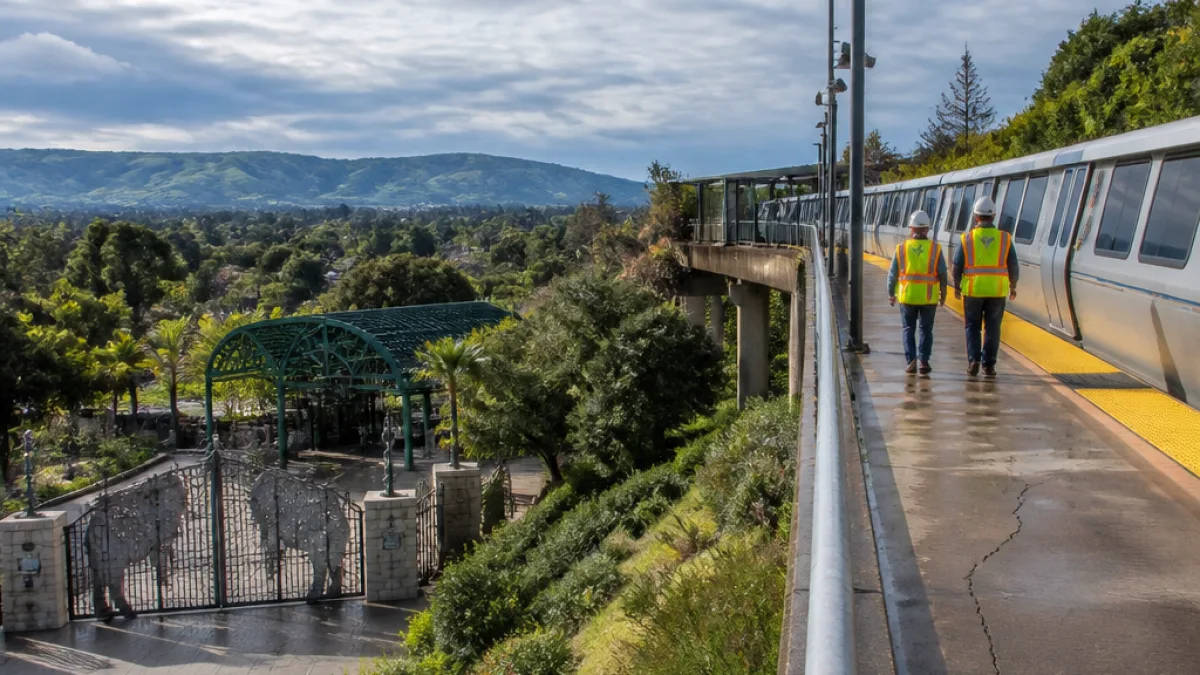
A magnitude 3.8 earthquake struck the San Francisco Bay Area on Thursday morning with an epicenter just north of the Oakland Zoo, producing noticeable but light shaking across much of the city and prompting safety checks on regional transit systems.
Where and how strongly it was felt
The U.S. Geological Survey reported the quake at 8:30 a.m., initially measured as larger before being revised to 3.8. In Oakland and nearby cities such as San Leandro and Alameda, residents and workers experienced what the USGS classifies as light shaking — typically strong enough to rattle dishes, windows and picture frames. Farther away, in cities including San Francisco, Berkeley, San José, San Mateo and Santa Cruz, people reported weak shaking that may feel similar to the passing of a heavy truck.
“Whoa! We are having an earthquake. Our whole studio just shook. That was pretty big, I can tell you. The desk shook, the lights shook,”
The comment, made live on air by anchors at KTVU-TV Channel 2, captured the immediate reaction in one Oakland newsroom as overhead lights trembled and an anchor said they felt a little dizzy.
Immediate local impacts and response
Bay Area Rapid Transit officials said trains ran at reduced speeds after the quake while crews completed safety inspections, and warned riders to expect delays of about 20 minutes. There were no initial reports of major damage, injuries or fires in Oakland associated with the event.
- Epicenter: just north of the Oakland Zoo
- Time: 8:30 a.m. (Thursday)
- Magnitude: revised to 3.8 by USGS
- Immediate transit effect: BART reduced speeds and inspected lines, short delays reported
Context: Oakland’s place on regional fault lines
The quake’s epicenter was close to the Hayward fault, one of the Bay Area’s most closely watched and hazardous faults. Federal seismic projections published by the USGS in 2015 estimated a 72% chance the Bay Area will experience a magnitude 6.7 or greater earthquake by 2045. Those projections also assign a 14.3% chance that such a quake would occur on the Hayward fault, compared with 7.4% on the Calaveras fault and 6.4% on the San Andreas fault.
| Fault | Chance of M6.7+ by 2045 |
|---|---|
| Hayward | 14.3% |
| Calaveras | 7.4% |
| San Andreas | 6.4% |
Historically, the Hayward fault produced a destructive quake in 1868 estimated at magnitude 6.8, which caused fatalities and heavy damage across Alameda County. USGS modeling of a potential future magnitude 7 event on the Hayward fault suggests substantial human and structural losses, including a projection of hundreds of deaths and thousands of injuries in a worst-case scenario.
What Oakland residents should know
Although this event was minor, seismic activity near Oakland serves as a reminder for local preparedness. Officials recommend that residents:
- Secure heavy furniture and household items that can fall during shaking.
- Have an emergency kit with water, food, and a battery-powered radio.
- Know and practice "Drop, Cover and Hold On" procedures for earthquakes.
As of the latest reports there were no major disruptions to city services, utilities or widespread structural damage in Oakland. BART and emergency crews completed inspections and service adjustments in response to the quake; riders should check system alerts for any further changes. The USGS continues to monitor seismic activity in the region and will issue updates if aftershocks or other notable events occur.
Local authorities encourage residents to report any damage to municipal hotlines and to stay informed through official channels should additional advisories be issued.















