
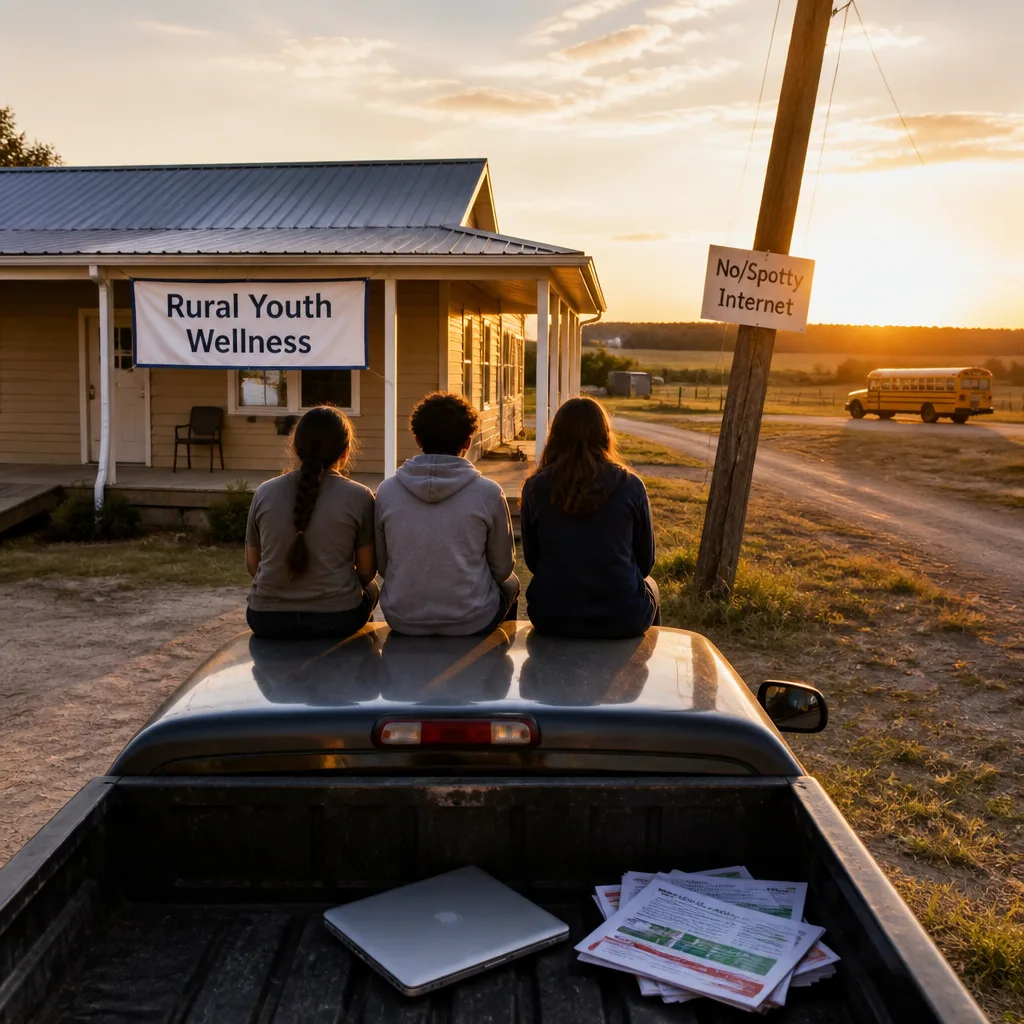
Rural youth in the United States face sharply higher risks of suicide and stark barriers to care, and a nonprofit-backed program is moving to expand resources nationwide to meet that need.
National rollout follows pilot informed by rural teens
Rural Minds, the only nonprofit dedicated exclusively to rural mental health, is launching a national expansion of its Rural Youth Mental Wellness program after piloting the initiative with input from rural young people. The program — which provides practical, anonymous and free mental health resources — is intended to overcome obstacles that frequently prevent rural teens from getting help.
The move comes amid sobering federal data: the Centers for Disease Control and Prevention found the suicide rate for rural youth ages 15–19 is 74% higher than that of urban peers. Program supporters say the new rollout is designed to address a constellation of barriers that contribute to that disparity, including limited insurance coverage, unreliable internet service that hampers telehealth use, a shortage of clinicians, long travel distances and poor public transportation.
“A young person’s ZIP code should never determine whether they can access meaningful mental health support where and when they need it,” said Jessica L. Schleider, Ph.D., director of the Lab for Scalable Mental Health at Northwestern University.
Why barriers persist in rural communities
Rural communities often confront both structural and cultural challenges. Structurally, fewer practicing mental health providers and longer drive times make in-person care difficult. Technological barriers such as unreliable broadband can limit use of telehealth, which expanded widely during the pandemic but has not been equally available to all communities. Financial barriers, including gaps in insurance and higher uninsured rates in some areas, further restrict access.
Culturally, many rural areas prize self-reliance and may stigmatize help-seeking. That stigma, community leaders and health advocates say, can make young people reluctant to disclose struggles or pursue support — exactly when early intervention is most effective.
Program development and support
The Rural Youth Mental Wellness program began as a pilot shaped by a youth advisory committee composed of rural young people who identified what would actually be useful to their peers. The pilot was initially supported by Boehringer Ingelheim. Following iterative feedback, the program’s updated version is launching nationally with support from the Sompo Foundation and partnerships with research groups focused on scalable mental health tools.
Advocates emphasize the program’s focus on accessibility and anonymity — features intended to lower the threshold for help-seeking in communities where privacy concerns and stigma are common.
- Access: Free resources designed to be used without an in-person appointment.
- Anonymity: Tools that allow youth to seek support without public disclosure.
- Youth-led design: Content and delivery informed directly by rural adolescents.
Implications and next steps
Public health experts say programming like Rural Minds’ expansion can reduce barriers and complement clinical services, but they caution that wider systemic changes are also needed. Investments in rural broadband, recruitment and retention of behavioral health clinicians in underserved areas, insurance reforms that broaden coverage for mental health care, and community-based stigma reduction efforts are all part of the larger picture.
For families and community members concerned about a young person’s safety, advocates urge taking warning signs seriously and connecting youth with local or national crisis resources. The program’s leaders framed the national rollout as one step toward ensuring that teenagers in rural areas can access meaningful support regardless of where they live.
| Metric | Finding |
|---|---|
| Suicide rate, rural youth (ages 15–19) | 74% higher than urban counterparts (CDC) |
The national expansion aims to put evidence-based, low-barrier resources into the hands of more rural young people, but experts say it will need to be part of sustained, multi-pronged efforts to close the gap in mental health outcomes between rural and urban communities.
















