
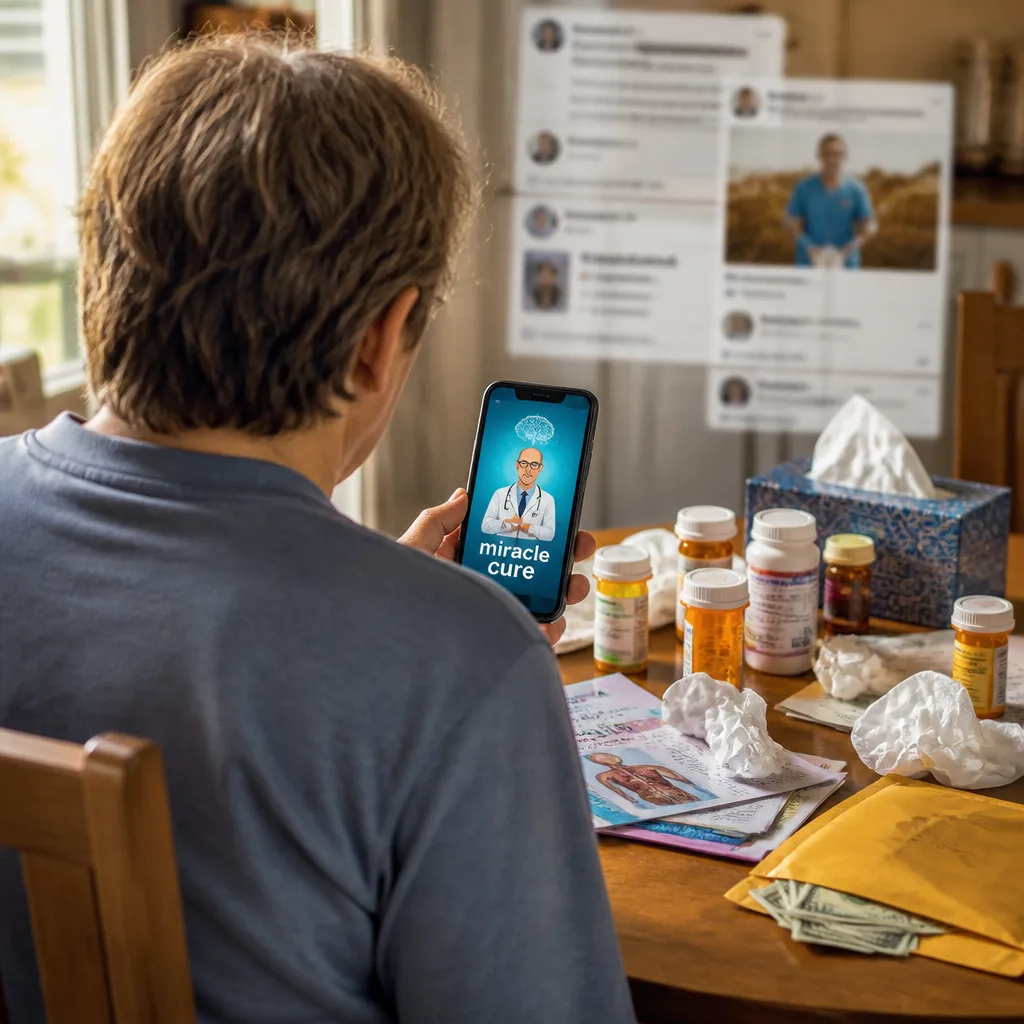
Health-related falsehoods continued to make up a persistent slice of online disinformation in recent months, with monitoring showing social media ecosystems enabling a growing industry of "miraculous cure" claims, fake medical experts and AI-generated content that prey on people in crisis.
Monitoring finds steady share of health falsehoods
Data compiled by an EU disinformation monitor indicate that health-themed misinformation accounted for about 7% of all detected disinformation in both July and August. COVID-19-specific falsehoods were tracked separately and represented roughly 2% of detections in July and 4% in August.
| Category | July | August |
|---|---|---|
| All health-related disinformation | 7% | 7% |
| COVID-19-specific disinformation | 2% | 4% |
Scams target the vulnerable with fabricated expertise
The monitor's analysis describes a disturbing pattern: as people confront serious illness or life-threatening circumstances, they may become more susceptible to unproven remedies and conspiracy narratives. Bad actors exploit that vulnerability, using social platforms to promote false claims about treatments, circulation of doctored images or videos, and, increasingly, profiles presented as medical professionals who do not exist.
"There are no atheists in foxholes," the report notes, using the adage to illustrate how crisis can drive people toward any source of hope.
Those manufactured authorities can lend apparent credibility to unsupported therapies, the monitor said, and the rise of generative artificial intelligence makes producing seemingly professional materials cheaper and faster. The tools can create convincing videos, images and written material that imitate medical opinion or endorse miracle cures.
Range of false claims spans common screenings to exotic threats
The report highlights a spectrum of recurring themes in health misinformation circulating through the summer months, including misleading assertions about routine cancer screening and sensationalized claims tied to seasonal pathogens. Examples cited in the monitoring include falsehoods alleging that sunscreen causes cancer, waves of fearmongering around hantavirus, and long-standing myths that link mammography or vaccines to cancer or autism, respectively.
- Some narratives recycle longstanding medical myths (for example, anti-vaccine claims).
- Others latch onto seasonal or emerging threats to rapidly amplify fear (as happened with hantavirus-related posts).
- Commercial scams market "miracle cures," often using fabricated credentials or AI-generated testimony to pressure vulnerable people into buying ineffective or dangerous products.
That last category—the marketing of supposed miraculous cures—is singled out in the analysis as especially exploitative. It targets people facing grave diagnoses or chronic suffering and monetizes false hope on a large scale, the monitor's assessment says.
Implications for public health and platforms
Public-health officials and clinicians caution that misinformation can deter people from proven prevention and treatment measures, delay diagnosis, and steer sufferers toward ineffective or harmful interventions. The emergence of AI-augmented deception complicates efforts to verify sources and remove fraudulent content at scale.
Social media platforms face criticism for failing to sufficiently stem the viral spread of these narratives, the monitor reported, and the phenomenon is not limited to any single country. While the monitoring referenced here covers European data, the mechanisms—algorithmic amplification, commercial incentives and emotional targeting—are shared across platforms used by audiences worldwide, including the United States.
Effective responses, based on the monitor's findings and broader public-health guidance, include strengthening verification of medical accounts, improving the speed and accuracy of content moderation around health claims, investing in clear, accessible communications from reputable medical sources, and educating patients about how to evaluate health information online.
As tools that can fabricate convincing medical authority become more widely available, experts say both policymakers and platform operators will need to move more aggressively to limit the harm caused by this kind of exploitative misinformation.
















