
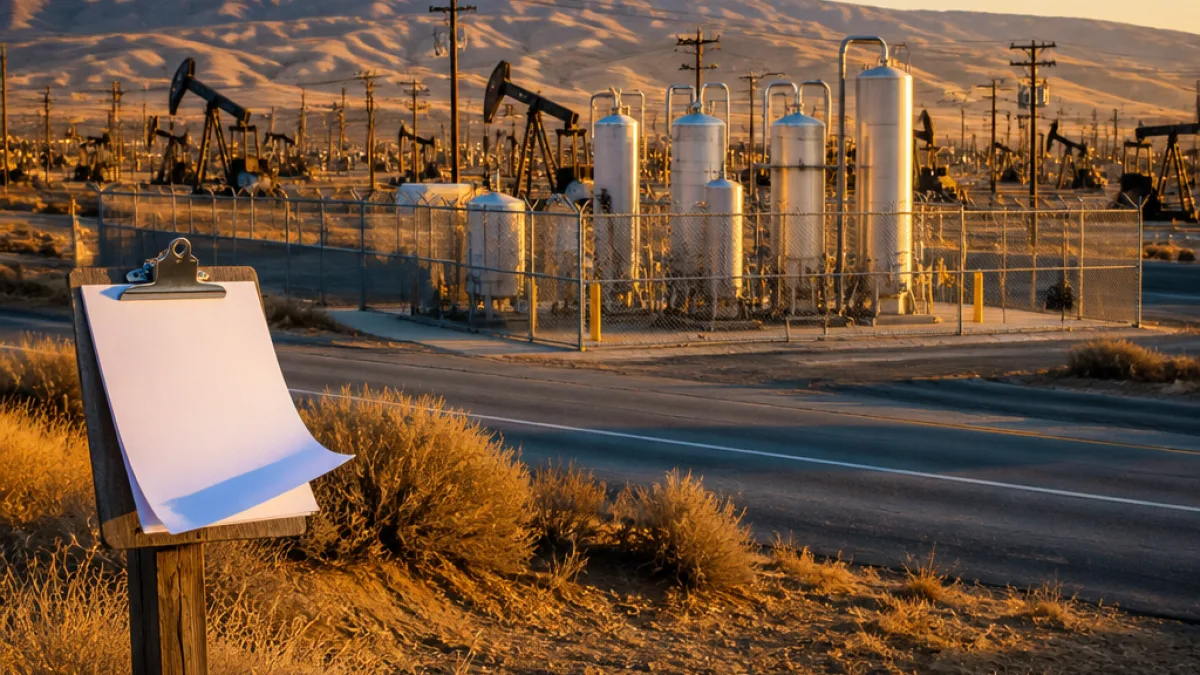
SACRAMENTO — California has allowed underground injections of carbon dioxide at the Elk Hills oil field to proceed even though the state has not finalized the rules governing long-term carbon storage, leaving uncertainty about who would be held accountable if something goes wrong.
Project proceeds amid regulatory delay
In May, California Resources Corp., the state’s largest oil producer, began injecting carbon dioxide into Elk Hills, a long-operating oil field in rural Kern County. The U.S. Environmental Protection Agency approved those injections, making the project a high-profile test of carbon storage in the United States. But more than a year after a state deadline to write rules, California has not adopted the regulatory framework lawmakers ordered.
The law required state regulators to establish procedures for monitoring stored carbon, responding to leaks or other failures, proving companies can pay for cleanup, and creating a single, coordinated permitting application across agencies. A statutory deadline of January 2025 for those rules has passed without final regulations in place.
Accountability questions loom
Without state rules, California is limited to the federal standards the EPA set. That has raised concern among environmental groups and some scientists who worry the state cannot impose stricter conditions or ensure robust financial assurances beyond what federal approval requires.
“If something does go wrong, there are a lot of really important questions about who would actually address those concerns and impacts,” said Michelle Ghafar, an attorney with Earthjustice, which is among groups opposing the Elk Hills injections in court. “And we have a history of oil companies not taking responsibility for cleaning up their messes.”
Why the rules matter
Carbon dioxide stored underground must remain sequestered for decades to help reduce atmospheric greenhouse gases. But CO2 is also a hazardous gas at high concentrations. State rules would typically address:
- monitoring systems and frequency,
- protocols for detecting and responding to leaks,
- financial assurance mechanisms to pay for remediation and long-term stewardship, and
- which state agencies will coordinate oversight and enforcement.
Those safeguards are meant to protect communities, groundwater and the climate. Advocates for carbon capture argue the technology is essential for meeting California’s ambitious emissions targets because it can reduce emissions from hard-to-decarbonize industries such as cement and heavy manufacturing.
State leaders defend the project
Supporters in state government have hailed Elk Hills as an example of California innovation. Gov. Gavin Newsom described the injections as “proof that innovation and ambition are the California way,” framing the project as part of a larger strategy to meet statewide climate goals. State Sen. Anna Caballero, who authored the law mandating the rules, said she did not intend for the statute to block projects already underway.
Where things stand
Despite legislative direction and public debate, the California Air Resources Board has indicated that meeting an 85% emissions reduction target compared with 1990 levels may be difficult without some deployment of carbon removal and storage technologies. Still, the absence of finalized state rules leaves regulators with limited leverage to add protections above the federal baseline.
| Milestone | Action |
|---|---|
| Nearly four years ago | Legislature orders state agencies to prepare carbon storage rules |
| January 2025 | Statutory deadline to adopt rules (missed) |
| May (this year) | CRC begins injecting CO2 at Elk Hills with EPA approval |
Legal and practical implications
The regulatory gap has spurred litigation and heightened scrutiny. Environmental groups are challenging the project in court, arguing the approvals were premature without state-level safeguards. Plaintiffs contend federal approval alone does not address the statewide responsibilities and risks associated with long-term carbon storage.
For residents near storage sites, the practical questions are immediate: who pays if monitoring fails, who cleans up if contaminants reach groundwater, and what mechanisms govern liability decades after injection ceases. Those questions also affect how insurers, lenders and communities evaluate the risks of hosting carbon storage projects.
Next steps
State agencies and the Legislature will face pressure to finish the rulemaking process and clarify oversight roles. Until then, projects like Elk Hills will press forward under federal authority, while the state’s ability to shape the safety and financial structure for carbon storage remains incomplete.
The outcome will influence California’s strategy for meeting climate targets and could set precedents for how other states balance rapid deployment of climate technologies with robust environmental safeguards.
Kevin Nakamura is a state correspondent for WE NEWS.















