Brazil’s Federal Police have begun a coordinated upgrade of forensic equipment across the country’s laboratory network, introducing next-generation technologies from Regula to improve examinations of forged identity documents and counterfeit banknotes.
Nationwide renewal of examination tools
The modernization effort, announced 12 August 2026, replaces and supplements existing Regula systems that have been in use for more than a decade in some facilities. Authorities say the refreshed equipment is intended to standardize procedures and raise the speed, consistency and precision of forensic document analysis across the federal laboratory system.
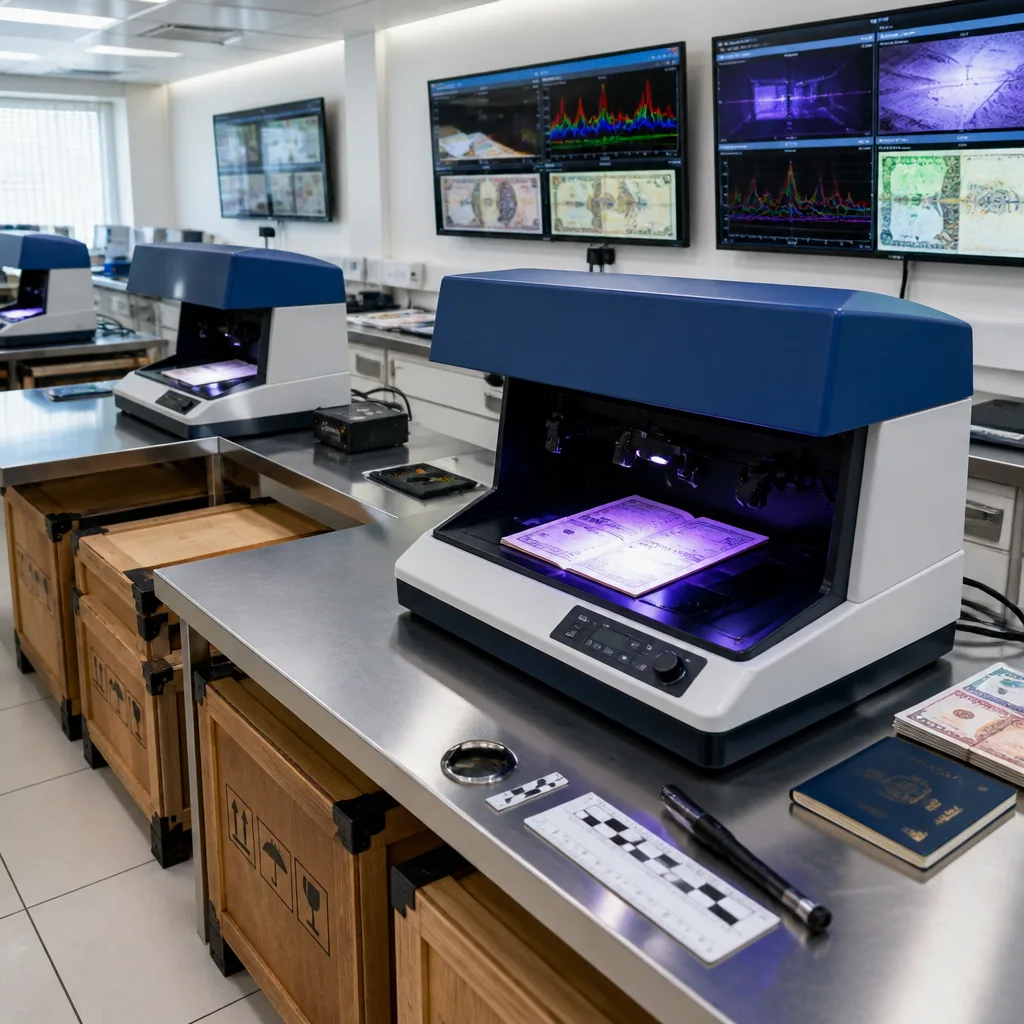
The program centers on deployment of the Regula 4308 dual-video spectral comparator, a device designed to let specialists view and compare documents under multiple lighting conditions and spectra. Officials characterized the step as a continuation of a long-standing collaboration between the federal police and the Russian-based developer of forensic instruments and identity-verification solutions.
Why the upgrade matters
Forensic laboratories worldwide contend with increasingly complex document-fraud techniques, and the Federal Police framed the investment as necessary to keep pace with those evolving threats while maintaining operational efficiency across a distributed lab network.
- Scope: Deployment across the national laboratory network.
- Main tool: Regula 4308 dual-video spectral comparators.
- Purpose: Support investigations of forged identity documents and counterfeit banknotes and standardize examination workflows.
The agency noted that many federal laboratories had used Regula equipment in daily operations for more than ten years, and the current phase serves to renew part of that installed base rather than to introduce an entirely new vendor or system.
Capabilities and operational impact
The devices are intended to provide a broader field of view and higher-quality imaging to aid forensic experts conducting detailed, comparative analyses of questioned documents. The technology allows examiners to switch among varied illumination types and spectral ranges, enabling observation of inks, printing methods and substrate features not always visible under standard lighting.
| Device | Primary function |
|---|---|
| Regula 4308 | Dual-video spectral comparison for document and banknote analysis |
“Based on our experience using Regula’s solutions for forensic document examinations, we have found them to be important tools that support our daily work,”
The agency said these analytical features support comprehensive examinations across a range of forensic scenarios. By renewing equipment that many laboratories already use, the Federal Police seek to preserve uniform examination standards and maintain continuity of methodological approaches throughout the network.
Broader context and constraints
Brazil’s move comes amid a global trend in which law-enforcement agencies update scientific infrastructure to counter more sophisticated fraud methods. The Federal Police framed the modernization as part of ongoing efforts to adapt laboratory capacity to changing operational needs, though the announcement provided limited detail on rollout timelines, budgetary figures or how many of the country’s laboratories will receive the new units in the current phase.
By focusing on renewing trusted tools already integrated into investigators’ workflows, the federal agency appears to be prioritizing interoperability and procedural continuity. That approach can reduce training burdens and support faster integration of new units into routine casework, officials suggested.
As document and currency forgery techniques evolve, forensic departments must balance investments in equipment with staffing, training and quality-assurance measures. The Federal Police’s announcement highlights equipment renewal as one component of maintaining forensic readiness across a national laboratory network.
The upgrade underscores Brazil’s effort to sustain and modernize forensic capabilities at the national level while preserving established workflows and analytical approaches used by examiners across federal laboratories.