
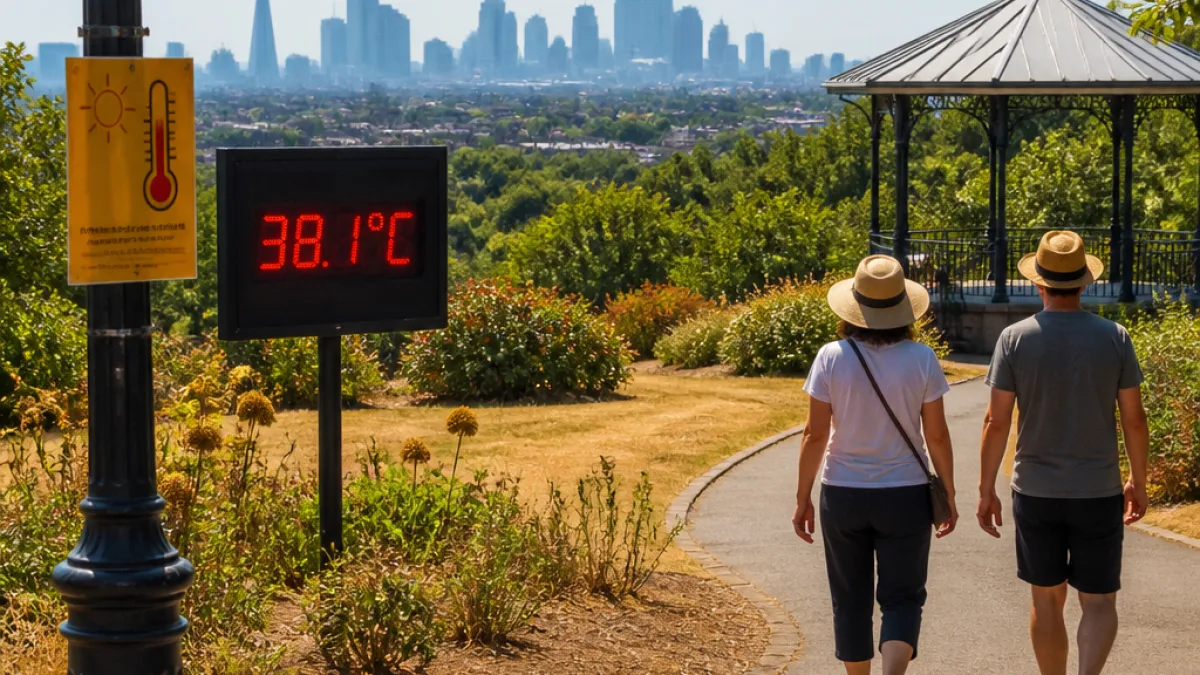
London and large swathes of southern England endured the country’s hottest day of the year so far after the Met Office logged a provisional temperature of 38.1C at Kew Gardens. The reading came as a major heat dome gripped much of Europe during the fifth heatwave of the summer.
Where temperatures peaked
Across England and neighbouring countries the mercury climbed to levels that stretched local services and raised fresh concerns about fires and health. Provisional Met Office figures show several notable regional peaks:
- Kew Gardens, West London – provisional 38.1C
- Charlwood, Surrey – 37.1C
- Teddington, London – 36.1C
- Pershore College, Worcestershire – 36.0C
- Temperatures in parts of Wales reached around 35C
| Location | Provisional max (C) |
|---|---|
| Kew Gardens (West London) | 38.1 |
| Charlwood (Surrey) | 37.1 |
| Teddington (London) | 36.1 |
| Pershore College (Worcestershire) | 36.0 |
Warnings and public-health implications
The Met Office issued an amber extreme weather warning covering east and south‑east England, including London, alongside parts of the Midlands, north‑west and south‑west England, and Yorkshire and Humber. An England-wide extreme heat alert — flagging significant impacts on health and social care services — remained in force until 9pm on Friday.
Those warnings are designed to prompt hospitals, care homes and local authorities to enact contingency plans for vulnerable people, as prolonged high temperatures can amplify risks of heat-related illnesses and put pressure on ambulance and emergency services.
Europe: wildfires and record heat
Across the Channel, temperatures were even higher. Large parts of France, Spain and other continental countries saw thermometers rise into the high 30s and low 40s Celsius. Bordeaux reached 39C, Paris about 37C, and parts of Spain topped 42C, intensifying fears of wildfires.
Authorities were already battling blazes in several regions. Data from the European forest fire information system indicated an unusually severe fire season, with burned areas surpassing typical totals for this time of year in some countries.
Local impacts and infrastructure
High temperatures affect much more than personal comfort. Heat can degrade road surfaces and rails, increase demand on the electricity network for cooling, and complicate firefighting operations by drying vegetation. In Hampshire, firefighters continued to tackle a substantial blaze in the New Forest.
In London, the heat is likely to test public transport resilience, with potential for speed restrictions on the rail network where tracks expand in the heat, and for increased incidents of heat-related calls to ambulance services. The amber warning advised employers, schools and community groups to assess arrangements for people who are more vulnerable to heat, including the elderly and those with medical conditions.
Seasonal context and climate signal
Forecasters say 2026 is on track to be the UK’s hottest year on record. The Met Office notes the country may record four separate days with temperatures at or above 36C this year — a threshold that was previously rare.
Scientists caution that while individual heat events occur naturally, the frequency and intensity of heatwaves have increased as the climate warms. This summer’s repeated heatwaves and the associated dry conditions have been cited by European agencies as factors driving an intense fire season.
Practical advice for Londoners
- Stay hydrated and avoid strenuous activity during the hottest parts of the day.
- Look out for neighbours and relatives who may be vulnerable, particularly older people and those with chronic illnesses.
- Follow local authority and NHS guidance on recognising and treating heat-related illness.
- Check travel updates from rail and bus operators if you plan to travel in or out of the capital.
As the heatwave continues to move across the UK and Europe, the focus for authorities remains on protecting vulnerable communities and managing the increased risk of wildfires and infrastructure disruptions. Londoners should expect warm conditions to persist in the near term and plan accordingly.
Aisha Rahman, WE NEWS London correspondent.










