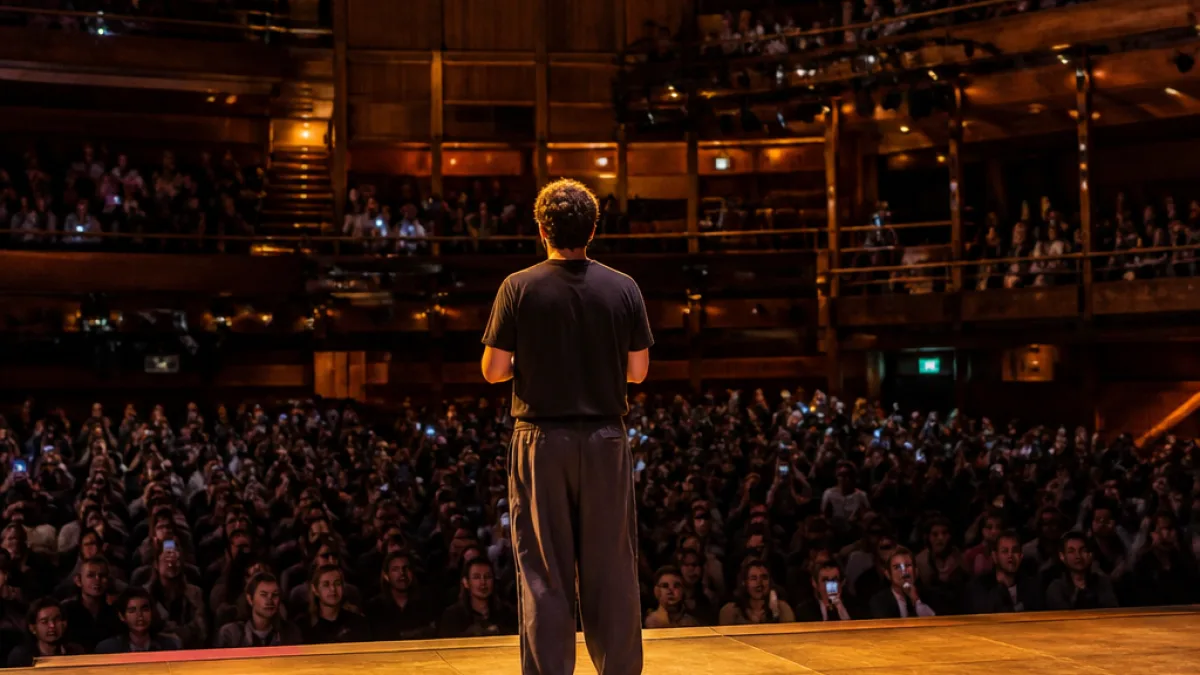
Cate Blanchett used her curtain call at the National Theatre's Lyttelton auditorium to make a direct plea to the audience: please stop filming the production. The actor, appearing in the new play Electra/Persona, spoke calmly to the crowd after the performance, asking patrons to be present for the remainder of the evening rather than record it on their phones.
Appeal for presence and shared experience
Still in stage costume — a plain black T-shirt and loose trousers — Blanchett addressed the theatre in a short speech that has since been widely shared online. She framed her request as an appeal for communal experience in public performance spaces, saying there are few places left where people can simply be together and be present.
“There are few places on this planet where we can simply be together and be present… for anyone who is filming the show, please don’t, because it spoils it for the next group of people who come in and are present with us. So thank you very much.”
The plea was met with warm applause from the audience. The moment throws a spotlight on an ongoing issue in live performance: the tension between audience members who want to capture memories on their devices and the rights of others — and artists — to an uninterrupted, communal encounter with the work.
About the production
Electra/Persona is a new piece by director-playwright Benedict Andrews that fuses Sophocles' Electra with Ingmar Bergman's Persona. The production features Blanchett and Nina Hoss in alternating roles determined by a coin toss each night. The run is scheduled through 10 October at the National Theatre's Lyttelton Theatre and includes a supporting cast that features Ella Lily Hyland.
| Production | Key facts |
|---|---|
| Title | Electra/Persona |
| Venue | National Theatre, Lyttelton |
| Stars | Cate Blanchett, Nina Hoss; Ella Lily Hyland (cast) |
| Run | Through 10 October |
Why filming matters to performers and audiences
The rise of smartphones has transformed how people document experiences, but live theatre has particular vulnerabilities. Recording during or immediately after a performance can:
- Distract and disturb other audience members attempting to remain absorbed in the piece.
- Change the atmosphere performers create, particularly in emotionally intense work where silence and attention are part of the contract between stage and stalls.
- Result in low-quality clips shared online that do not represent the production accurately but may shape public perception nonetheless.
Blanchett's short on-stage address did not ask for enforcement measures or sanctions; it was framed as a courteous request that respects the idea of theatre as a shared, ephemeral event. The reaction from the auditorium suggests many in the audience welcomed the appeal.
Local reaction and the wider conversation
At the National Theatre and across London venues, staff already try to manage mobile-phone use by requesting silence and switching devices to flight mode. Some productions also include announcements in programmes or before curtain-up. Blanchett's intervention, however, brings celebrity voice to the debate and may prompt wider discussion about behavioural norms in performance spaces.
For London theatre-goers, the practical takeaway is straightforward: if you plan to see Electra/Persona or other work at the National, consider leaving your phone in your bag during the performance and curtain call, or at least refrain from filming. That small change helps preserve the experience for everyone and respects the work the company has presented.
From the stalls of the Lyttelton to smaller fringe houses across the capital, the balance between recording memories and maintaining an undisturbed communal atmosphere remains a live issue — one that today’s moment at the National Theatre has brought clearly back into focus.