
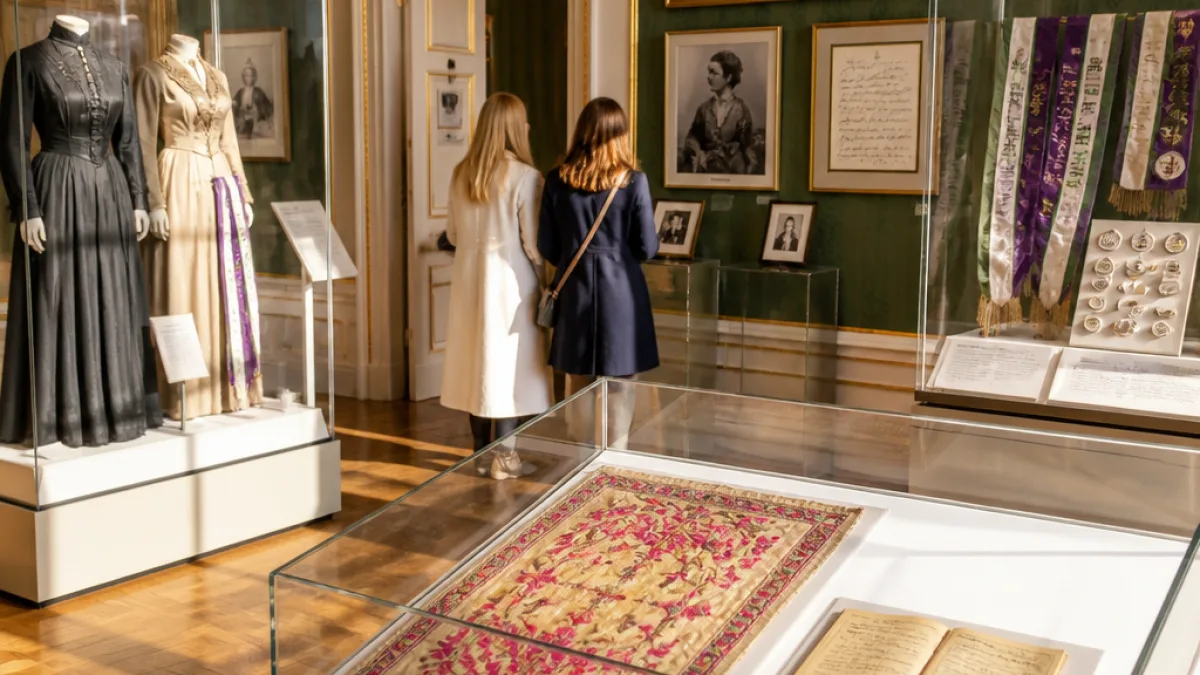
An exhibition opening at Kensington Palace is bringing renewed attention to the life of Princess Sophia Duleep Singh, the British‑Indian aristocrat who used her position in Victorian society to campaign for women's suffrage and to criticise British rule in India.
From Belgravia drawing rooms to the front line of suffrage
Sophia was born on 8 August 1876 in Belgravia and spent her life in London, moving in aristocratic circles while retaining a close and complicated relationship with her Indian heritage. The exhibition uses photographs, personal effects, letters and official documents to chart her life and the influences that shaped her political views.
Her father, Maharajah Duleep Singh, became ruler of the Sikh Empire aged five but was removed from the throne after the British annexation of the Punjab in 1849. Separated from his wife and taken to England as a young man, he established the family in Britain; Sophia later became well known in London society and was a goddaughter of Queen Victoria.
Five women who shaped her outlook
The display concentrates on five women whose presence left a mark on Sophia's life: Queen Victoria, her mother Bamba Müller, her sisters Catherine and Bamba, and her grandmother Jind Kaur. Curators say these relationships help explain the mixed loyalties and convictions that characterised her public life.
"Her older sister went and lived in Lahore… her middle sister went and lived in Germany."
The exhibition's historian, Dr Mishka Sinha, highlights how Sophia's immediate family dispersed geographically, yet she remained rooted in London — a city she used as a platform for political action.
Political contradictions and public campaigning
Sophia's biography is striking for its contradictions. A woman of wealth and social standing — and one who moved in royal circles — she nonetheless embraced suffragette activism and publicly criticised imperial policies. The Kensington Palace show sets out how those strands of identity coexisted, and how her royal associations both opened doors and complicated her campaigning.
Exhibition material examines how Sophia balanced life as a socialite with political militancy, and how her Indian heritage informed her critique of British colonial rule while she campaigned for women's rights in Britain.
Why the show matters now
The timing of the exhibition — marking 150 years since Sophia's birth — comes as a wider reassessment of Britain's imperial past and the role of imperial subjects in British political movements continues. Kensington Palace, a royal site, hosting this narrative underlines how intertwined the monarchy, empire and suffrage history can be.
- New display at Kensington Palace documents Sophia's life with photographs, letters and possessions.
- Exhibition emphasises five women who influenced her worldview and activism.
- Marks 150 years since her birth in Belgravia on 8 August 1876.
Practical information and local context
The exhibition is located within Kensington Palace, which is accessible by public transport across central and west London. Visitors should consult the palace website for opening times, ticketing and any conservational restrictions on viewing items. The palace's location in Kensington places the show within walking distance of local communities who have continued to shape and reinterpret the capital's multicultural history.
For Londoners interested in the intersections of gender, race and empire, the display offers a rare opportunity to see personal items that illuminate a life lived at those crossroads. It also raises questions for public institutions about how they present complicated historical figures who embodied both privilege and dissent.
As the exhibition demonstrates, Sophia Duleep Singh's life cannot be summarised simply as royal ornament or political agitator — she inhabited both roles and used the connections she had to press for change.
| Key date | Event |
|---|---|
| 8 August 1876 | Birth of Princess Sophia Duleep Singh in Belgravia, London |
| 1849 | British annexation of the Punjab (context for the family's displacement) |
| 150 years later | Kensington Palace exhibition opens marking her legacy |
The display invites visitors and scholars to reappraise how British public life was shaped by figures who crossed imperial and national boundaries — and how those lives shaped movements such as women's suffrage in ways that are still being understood.
















