Emergency response after fatality and Baker Street infrastructure damage
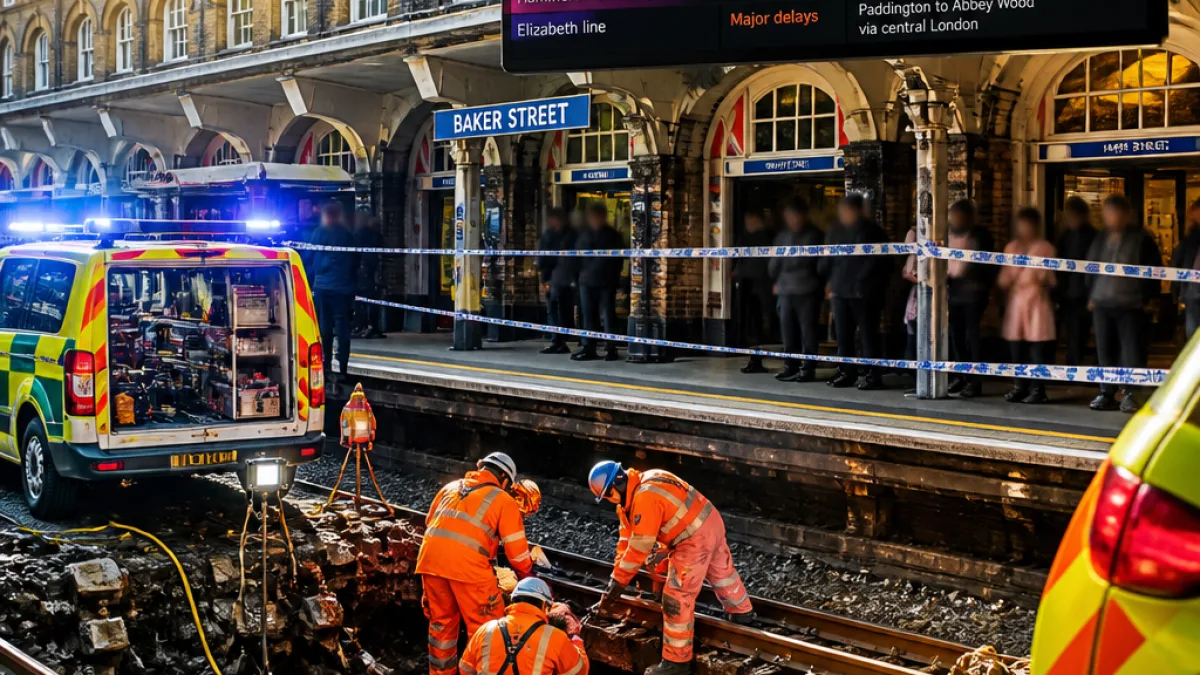
Emergency services and transport operators remained on the network on Thursday morning after a person was found dead on the tracks in west London and a collapsed drain caused infrastructure damage at Baker Street. The incidents have prompted suspensions and major delays across several London Underground lines and a partial suspension of the Elizabeth line.
British Transport Police said officers were called at around 05:10 on Thursday to reports of a casualty on the tracks in the Hayes area. Paramedics attended but the individual was pronounced dead at the scene. Enquiries into the circumstances of the death are ongoing.
"We were called at around 5.10am this morning (10 September) to reports of a casualty on the tracks in the Hayes area. Officers responded with paramedics, however sadly a person was pronounced dead at the scene. Enquiries into the circumstances leading up to their death are ongoing."
Transport for London (TfL) advised that the casualty has affected services on the Elizabeth line, with no service between Paddington and Heathrow Airport/Reading. At the same time, a collapsed drain at Baker Street has damaged track infrastructure and is disrupting services on the Circle, District, Hammersmith & City and Metropolitan lines.
What passengers are facing this morning
Commuters reported crowded carriages and long waits as several lines ran reduced or suspended services. Some trains are operating with significant delays while engineers and emergency crews work to make the network safe and restore services.
- Elizabeth line: partial suspension; no service between Paddington and Heathrow/Reading due to the casualty on the tracks.
- Circle, District, Hammersmith & City, Metropolitan lines: severe disruption following infrastructure damage at Baker Street caused by a collapsed drain.
- Network-wide: additional minor delays reported as the effects of both incidents ripple across connecting services.
Official and public information
British Transport Police continue to lead inquiries into the track casualty and have so far provided the initial timeline. TfL and its operational teams are managing the engineering response to the Baker Street damage and updating passengers via station staff and digital channels.
Support services were signposted in reporting: Samaritans are available day and night at 116 123 or via samaritans.org for anyone affected by the incident.
Timeline and current status
| Time (BST) | Event |
|---|---|
| ~05:10 | British Transport Police called to reports of a casualty on the tracks in the Hayes area |
| Morning | Collapsed drain at Baker Street reported; track infrastructure damaged, affecting multiple Underground lines |
| 10:10 (update) | BTP confirms a person was pronounced dead at the scene; enquiries ongoing |
Advice for travellers
Passengers planning to travel through central and west London this morning should expect significant delays and consider alternative routes where possible. Where services are suspended, TfL is likely to advise on replacement bus routes and onward travel options; riders should check the TfL website and live travel alerts before setting out.
At street level, commuters described crowded platforms and frustration but also appreciation for staff working to provide information. "It was chaotic at Paddington and people were trying to find taxis or buses," one passenger said. Staff at affected stations were directing people and offering updates as they came through.
Wider consequences
Disruption of this scale early in the working day will affect commuters, airport travellers heading to Heathrow and services beyond Paddington to Reading. The combination of a major incident on the Elizabeth line and infrastructure damage in the Underground network highlights vulnerabilities where separate incidents can conspire to create widespread travel chaos.
Further updates will be published as British Transport Police and TfL release more information on the causes and timescale for restoring normal services. For now, passengers should allow extra time, check official TfL channels and consider avoiding rail travel through affected corridors if alternatives exist.
Reporting from the network this morning underlines the human cost when incidents occur on busy transport arteries — and the pressure on emergency and engineering teams tasked with getting London moving again.