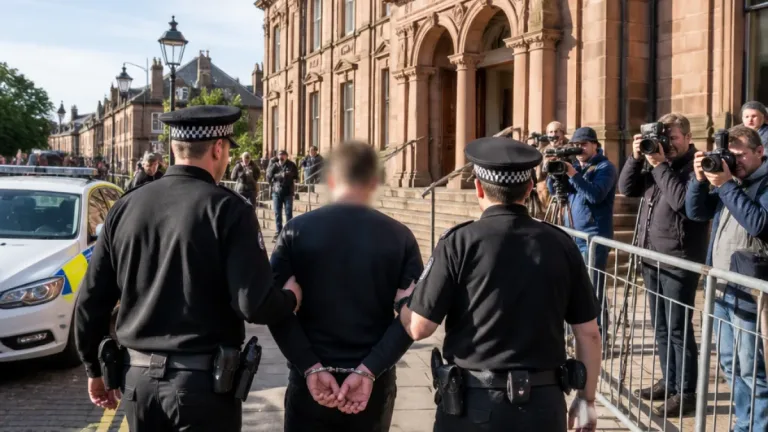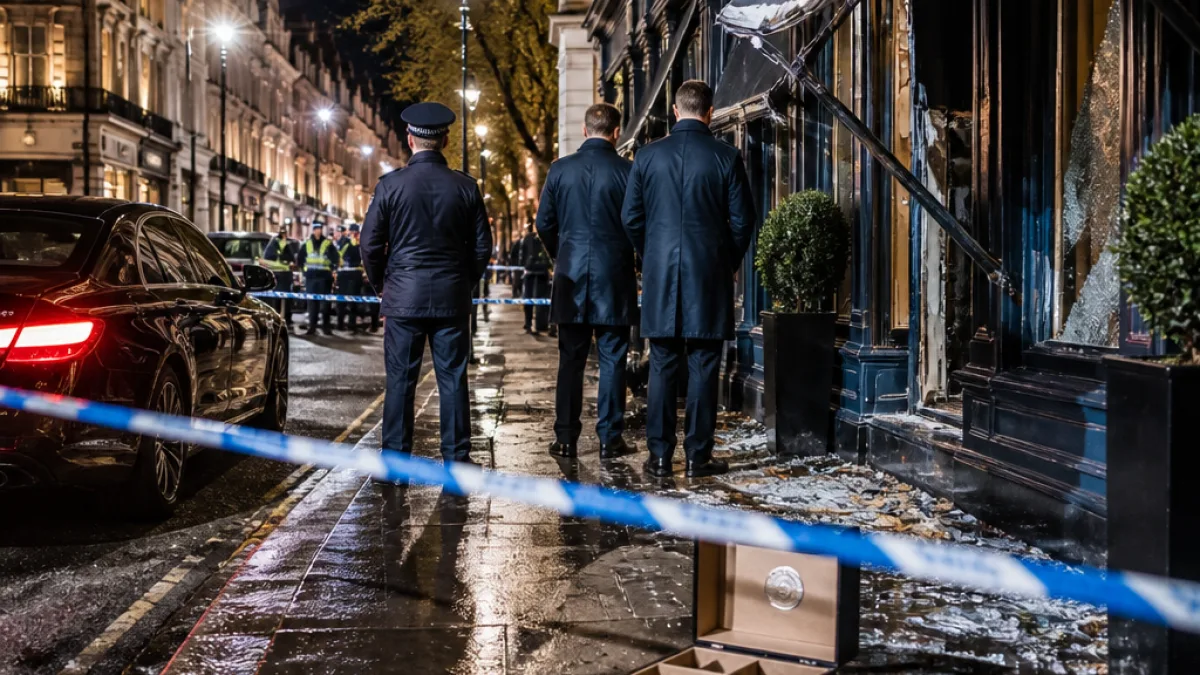
Organised groups are responsible for a steady stream of violent robberies targeting luxury wristwatches in central London, with Scotland Yard figures suggesting thieves are taking about £1 million worth of timepieces every month in the West End.
Scale of the problem revealed at court
The magnitude of the trade emerges from evidence presented at Southwark Crown Court during the trial of three men linked to the theft of a £137,000 Richard Mille watch outside a Mayfair restaurant. Police recorded 97 watch robberies or attempted robberies across Westminster, Kensington and Chelsea, and Hammersmith and Fulham in the first six months of 2026, with a further 70 incidents reported between July and September.
Detective Sergeant Andy Swindells told the court that, despite police activity, high-value watch robbery remains a major issue across central London. He said that offenders often work in coordinated groups who carry out reconnaissance before striking amid the capital's night-time economy.
"Despite all of our efforts, high-value watch robbery remains a problem in the West End, and we average about £1 million stolen from the wrists of Londoners and visitors every month,"
The court heard that victims were not only deprived of expensive items but were frequently subjected to violence. Some people were punched, kicked or otherwise injured; in around one in five offences a knife was either displayed or its use implied.
Where and how offenders operate
Police have identified Mayfair and Knightsbridge as particular hotspots. Incidents often occur around restaurants, hotels and other venues frequented by affluent customers and tourists. The men tried at Southwark were accused of surrounding a businessman shortly before midnight, cutting through the strap and ripping the watch from his wrist.
The victim in that case, Romanian fashion entrepreneur Catalin Botezatu, told jurors he was pushed against railings and feared for his life. The watch had sentimental value: it had been given to him by a close friend who has since died and, according to evidence, has not been recovered.
"I couldn't believe that something like this could happen in London, in front of a luxury restaurant where I was a client,"
Two defendants — Eldahouzze and El Habchi — were convicted after a nine-day trial; a third, Djoudi, admitted the robbery. Sentencing was under way at the time the figures were disclosed.
Police response and public impact
Metropolitan Police officers stress they are investigating and pursuing those responsible, but the persistence of the crime type raises questions about prevention in public spaces and security for high-net-worth individuals visiting central London. The use of group tactics, sharp implements to sever straps and physical assault points to a pattern of offences that mix planning with opportunism.
Local businesses and residents are affected by both the direct threat to people and the reputational risk to areas dependent on dining, hospitality and tourism. For visitors and Londoners who own high-end watches, the advice from investigators is to stay alert in busy night-time hotspots and to seek assistance from venue security if they feel threatened.
- Incidents recorded: 97 (Jan–Jun 2026); 70 (Jul–Sep 2026)
- Estimated value stolen: about £1 million per month in the West End
- Hotspots: Mayfair, Knightsbridge, central restaurant and hotel areas
- Violence: victims punched, kicked; knife sighted or implied in ~20% of cases
| Period | Recorded incidents |
|---|---|
| Jan–Jun 2026 | 97 |
| Jul–Sep 2026 | 70 |
Voices from the street
Speaking to people who work in central London, there is a sense of unease. A maître d' at a Mayfair restaurant said staff try to remain vigilant but warned that sustained police action was needed to deter gangs that target the area’s night-time footfall. Another local resident argued that improved lighting, CCTV coverage and closer liaison between venues and neighbourhood police teams could help.
For victims, the personal consequences extend beyond the value of a watch. In the case heard at Southwark, the loss was compounded by physical injury and the trauma of a violent encounter in a high-profile part of the capital.
What happens next
Prosecutions are continuing from the trial. Scotland Yard has set out the scale of the problem to the court, and police sources say investigations into organised groups remain a priority for units responsible for central London crime. As the Met pursues those responsible, residents, visitors and businesses will be watching to see whether arrests and targeted policing reduce the number and severity of incidents.
For now, the message from officers is clear: these are often organised, sometimes violent offences. People dining or socialising in the West End should be aware of their surroundings and report suspicious behaviour to venue staff or, in an emergency, dial 999.