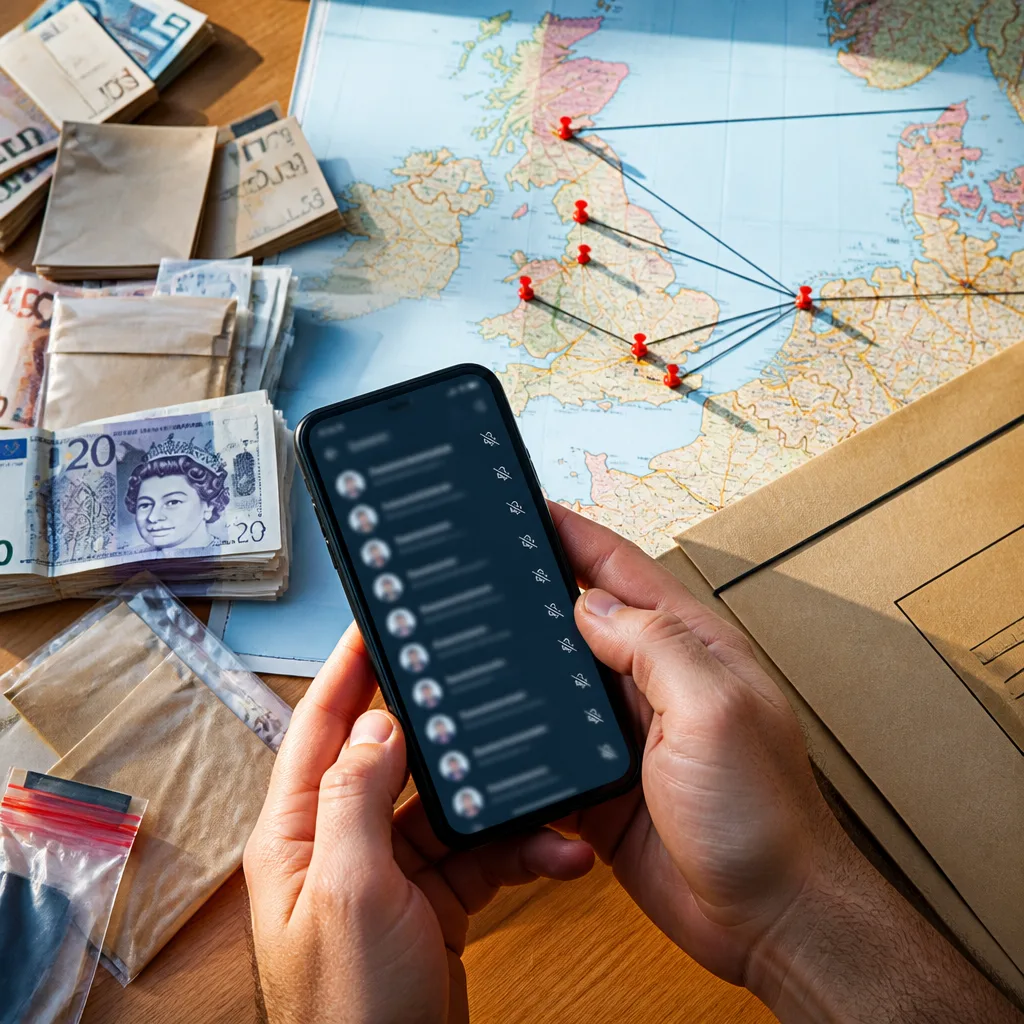
An international investigative network has established that a WhatsApp group chat was used to organise the movement of substantial sums of cash across multiple countries, including transfers routed to British cities, with some payments linked to extremist groups in Syria.
Scope of the network
The European Broadcasting Union (EBU) journalism consortium concluded the chat, which had 532 members, was employed to arrange cash transfers for clients via an informal transfer method that leaves little or no conventional paper trail. Investigators say the system was used for a wide range of illicit activity, from organised crime to terror financing.
| Detail | Reported figure |
|---|---|
| Group members | 532 |
| Messages recovered | 82,000+ |
| Period covered | Late February to December 2022 |
How transfers were organised
Material examined by the EBU shows members corresponded in Arabic to set up cash payments using a traditional brokered system often known as hawala. Rather than moving bank records or physically carrying bank notes across borders, the mechanism relies on trusted intermediaries who agree to settle obligations among themselves at a later time.
- Hawaladar brokers accept a cash payment in one place and their counterpart supplies equivalent funds elsewhere, minus a fee.
- The arrangement creates no formal international banking record, making oversight and tracing difficult.
- While legal use exists — for example sending remittances where banking is limited — the system can be abused by criminals seeking to bypass formal channels.
Investigative findings and legal process
The group was first brought to light by Belgian examining magistrate Vincent Guerra, who reviewed the messages and transactions. Guerra characterised the volume of transfers as exceptionally large and said the network operated globally.
Guerra said the number of transactions was "staggering" and the network covered "the entire planet".
What began as an inquiry into possible terror financing broadened substantially as investigators identified a much larger body of transactions and uses across different types of illicit activity. The EBU reported that some payments originating in Brussels reached militants associated with the Islamic State group in Syria. The network was also reported to facilitate people‑smuggling and drug trafficking.
Implications for UK law enforcement and policy
Messages recovered indicate that funds were routed to destinations in the United Kingdom, including London and Birmingham. The scale and opacity of the transfers pose clear challenges to authorities attempting to detect and prosecute cross‑border financial crime. Offenders exploiting informal transfer systems can significantly reduce electronic traces and complicate mutual legal assistance.
Law enforcement agencies must balance the legitimate role that informal transfer systems can play for diaspora communities with the need to prevent their exploitation by criminal networks. The investigative material demonstrates how technology platforms can be used to coordinate traditional, non‑banking methods of transferring value on a large scale.
Further inquiries and public interest
The reporting network’s findings are likely to prompt further enquiries by national agencies and international partners into the use of encrypted messaging and informal finance to move funds illicitly. Policymakers may face renewed pressure to consider measures that improve transparency while protecting legitimate remittance services.
As the material is examined by judicial authorities and investigative agencies, any individuals implicated retain the right to due process. The reporting to date sets out what investigators have recovered and identified; criminal liability will be a matter for prosecutors and courts.