
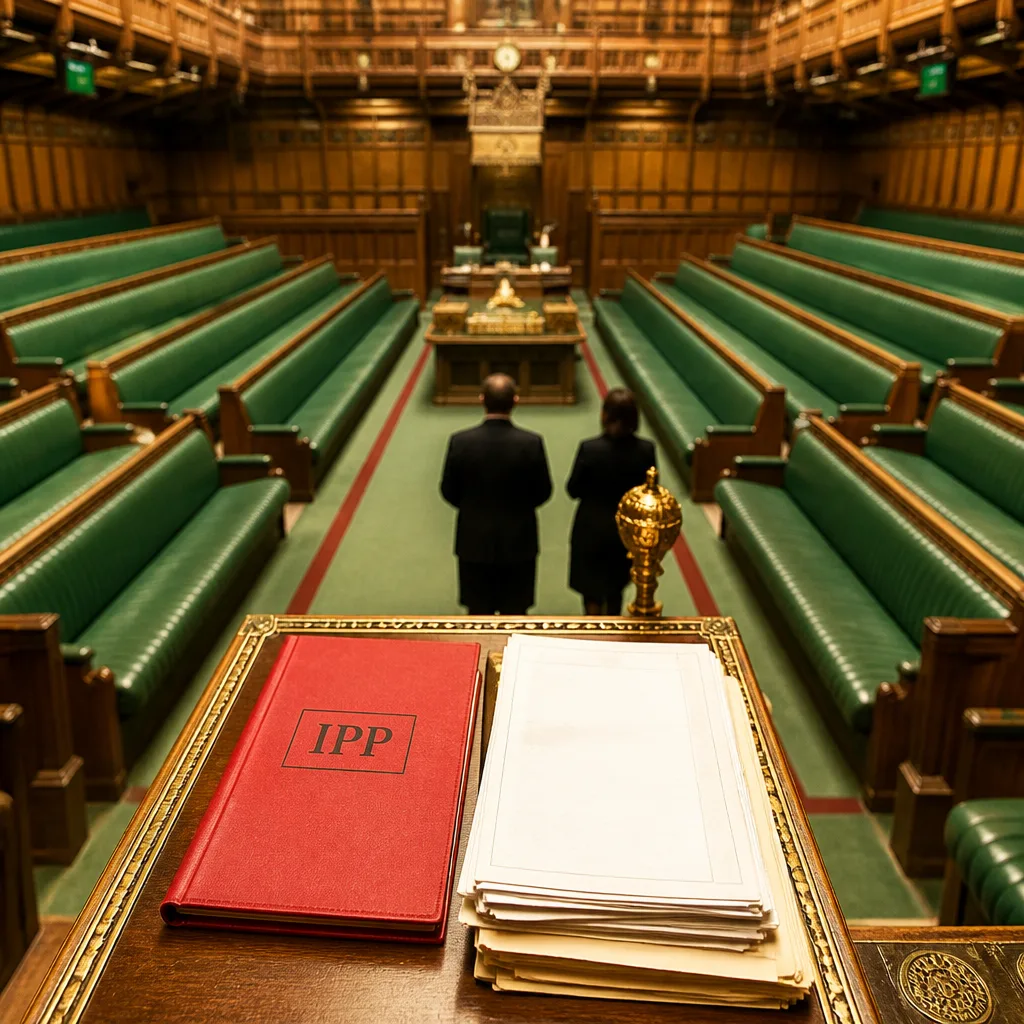
The prime minister has pledged to abolish indefinite Imprisonment for Public Protection (IPP) sentences within the current parliamentary term, saying the government will introduce legislation to remove the open‑ended orders and ensure those who have served their time can be considered for release.
Government to legislate before Parliament dissolves
In remarks made to broadcasters, the prime minister described the situation as an injustice for a number of people still detained without a fixed release date and said the government will table a bill to terminate IPP sentences by the end of this Parliament. He said ministers will proceed with caution and that a cross‑party oversight group will be established to guide implementation.
The move follows public concern and campaigning over the fate of prisoners sentenced under the IPP regime, which was introduced in the 2000s and later abolished. Campaigners and relatives of those serving the sentences have argued many remain imprisoned despite having served the punitive element of their term.
"I was faced with a situation where people on those sentences who have more than served their time, not being released when others who've committed very serious crimes being released early,"
The prime minister told the BBC he had long held reservations about the IPP framework and that his decision reflected a judgment about public confidence in the justice system. He said the public would prefer a system in which prisoners who had served the time allocated to their offending were prioritised for consideration for release ahead of others granted early release under wider reforms.
Political and legal implications
Ending IPP sentences will require primary legislation and careful drafting to address several legal and practical consequences. Ministers have indicated they will consider how to handle breach procedures, licence supervision, and the role of parole authorities for those already subject to indeterminate terms.
Officials must also reconcile the change with ongoing reforms to early release policies, which have themselves been the source of controversy after the planned early release of certain prisoners drew public attention. The government said it would be "very careful" in the approach to repeal to avoid unintended public safety risks while remedying longstanding unfairness.
Human impact and campaigners
Campaign groups and family members of people serving IPP sentences have long pressed for comprehensive reviews and remedial action. The Independent has campaigned for reviews of all IPP cases, highlighting individuals who have no definite release date despite having served tariff periods.
Those campaigns provided a backdrop to the announcement and appear to have helped frame the political argument for legislative change. The prime minister said he had listened to families affected by IPP sentences when shaping the policy decision.
- Legislation to be introduced before Parliament ends to terminate IPP sentences.
- Cross‑party oversight to be set up to guide implementation.
- Cautious approach intended to balance fairness to prisoners with public protection.
Examples of those affected
The Independent and campaign groups have compiled lists of people still subject to IPP terms. The government has not released a comprehensive list, but media reporting has named several individuals whose cases have been cited by campaigners as emblematic of the issue.
| Name | Context |
|---|---|
| Leroy Douglas | Named in media coverage of IPP cases |
| Luke Ings | Included among those reported as trapped on IPP terms |
| Liam Bennett | Reported as serving an IPP sentence without fixed release date |
| Wayne Williams | Named in coverage of campaigners seeking review of IPP cases |
| Abdullahi Suleman | Identified in media reports on IPP injustices |
| Yusuf Ali | Reported among those affected by IPP regime |
| James Lawrence | Named in Independent coverage of IPP prisoners |
| Thomas White | Included in lists of IPP cases highlighted by campaigners |
Any legislative path will need to stipulate how convictions, tariffs and licence periods are treated so that judges, parole boards and probation services have clear guidance. Legal experts will watch drafting closely to understand whether repeal leads to automatic release, review mechanisms, or recalculated sentences.
The government plans to set out further detail when the justice secretary takes the proposals to Parliament. The announcement marks a significant shift in policy towards a cohort that campaigners argue has endured a legal anomaly for many years.