Mechanical tusker proposed to preserve tradition while avoiding animal suffering
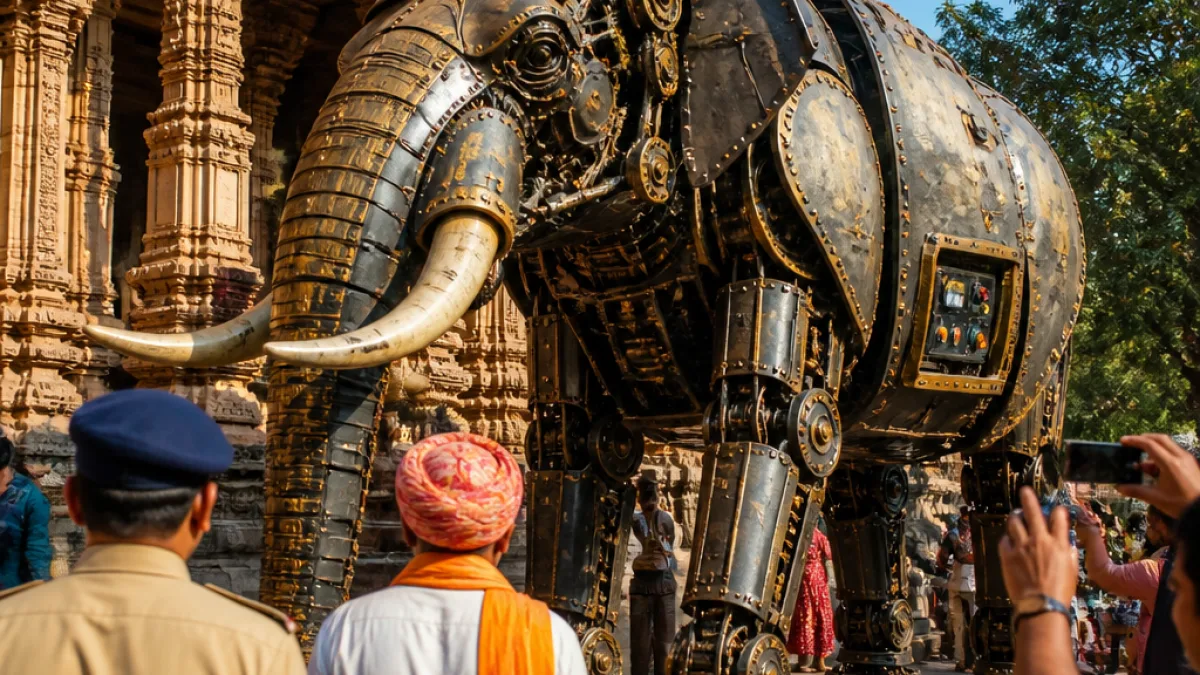
The Shri Mahakaleshwar temple trust in Ujjain has received a proposal from PETA India to donate a life‑size mechanical elephant to participate in the centuries‑old Shrawan processions and act as a permanent attraction at the temple precincts. The offer comes amid growing concern over the health of the temple’s long‑standing lead elephant and questions about the welfare of captive animals used in religious events.
PETA's communication to local authorities, including the Ujjain district collector and the chief wildlife warden, says the robotic tusker could stand in for a live animal during sacred processions and draw visitors for photographs throughout the year without subjecting any animal to suffering, according to the organisation’s senior policy and legal advisor, Vikram Chandravanshi.
"We have approached the temple trust, Madhya Pradesh authorities including Ujjain district collector and chief wildlife warden offering to donate a mechanical elephant, now accepted in temples in Kerala, Karnataka and Maharashtra," Chandravanshi said.
Local context: health crisis among temple elephants
The proposal arrives at a sensitive time for temple officials and the forest department. The temple’s principal elephant, Shyamu, aged 32, has been diagnosed with Elephant Endotheliotropic Herpesvirus (EEHV1), described by the divisional forest officer as a highly fatal haemorrhagic disease. Shyamu had earlier been reported to have severe musculoskeletal ailments that limited mobility and produced visible distortion of the hind limbs, along with skin and systemic concerns.
Following Shyamu’s illness, the temple has replaced the animal on procession duty with Suma, a 67‑year‑old elephant who underwent a detailed medical examination and was cleared for duties three days prior to the report. The forest division is involved in the medical assessment and management of both animals, as part of its statutory responsibilities for captive wild animals.
Implications for devotees, tradition and tourism
Proponents of the mechanical elephant argue it offers a compromise between preserving ritual continuity and ensuring animal welfare. PETA contends that similar robotic animals have been adopted at some temples in Karnataka, Kerala and Maharashtra, where they reportedly serve both ceremonial and visitor‑engagement roles.
- Proposed donor: PETA India, through its legal and policy wing.
- Motivation: Replace live animals in processions where health, welfare or logistics pose concerns.
- Local actors: Shri Mahakaleshwar temple trust, Ujjain district collector, chief wildlife warden, divisional forest office.
Temple authorities and forest officials face a range of practical questions: how a mechanical elephant would be integrated into ritual protocols, the cost and maintenance of such a device, and whether devotees and priests would accept an artificial substitute in place of a live animal that historically symbolises aspects of the procession. Those operational details were not specified in the PETA communication reported by media.
Data snapshot: elephants involved with Mahakaleshwar processions
| Elephant | Age (years) | Current status |
|---|---|---|
| Shyamu | 32 | Diagnosed with EEHV1; significant musculoskeletal and systemic health issues |
| Suma | 67 | Cleared after medical examination; currently assigned procession duties |
Forest division officials have statutory oversight of captive elephants, including veterinary care and movement permissions. The divisional forest officer, Anurag Tiwari, confirmed Shyamu’s diagnosis and noted the animal’s prolonged health challenges in media commentary.
The proposal from PETA is likely to prompt consultation among the temple trust, the forest department and possibly the state cultural and tourism authorities before any decision is taken. Any change to traditional practice—especially in a city whose religious calendar and economy are closely linked to pilgrimage traffic—would have social and administrative consequences.
For residents and devotees, the debate raises broader questions about how to balance preservation of intangible cultural heritage with contemporary standards of animal welfare and public safety. Temple and administration officials have not disclosed a final position on the PETA offer at the time of reporting.
Further steps will depend on formal responses from the temple trust and clearances from wildlife authorities, including assessments of ritual acceptability, technical feasibility and long‑term maintenance of any donated mechanical device.