Tamil Nadu on Wednesday announced a substantial expansion of state-funded health benefits and a multi-pronged investment drive in health infrastructure and human resources, the Chief Minister said in the Assembly.
Insurance cover raised five-fold
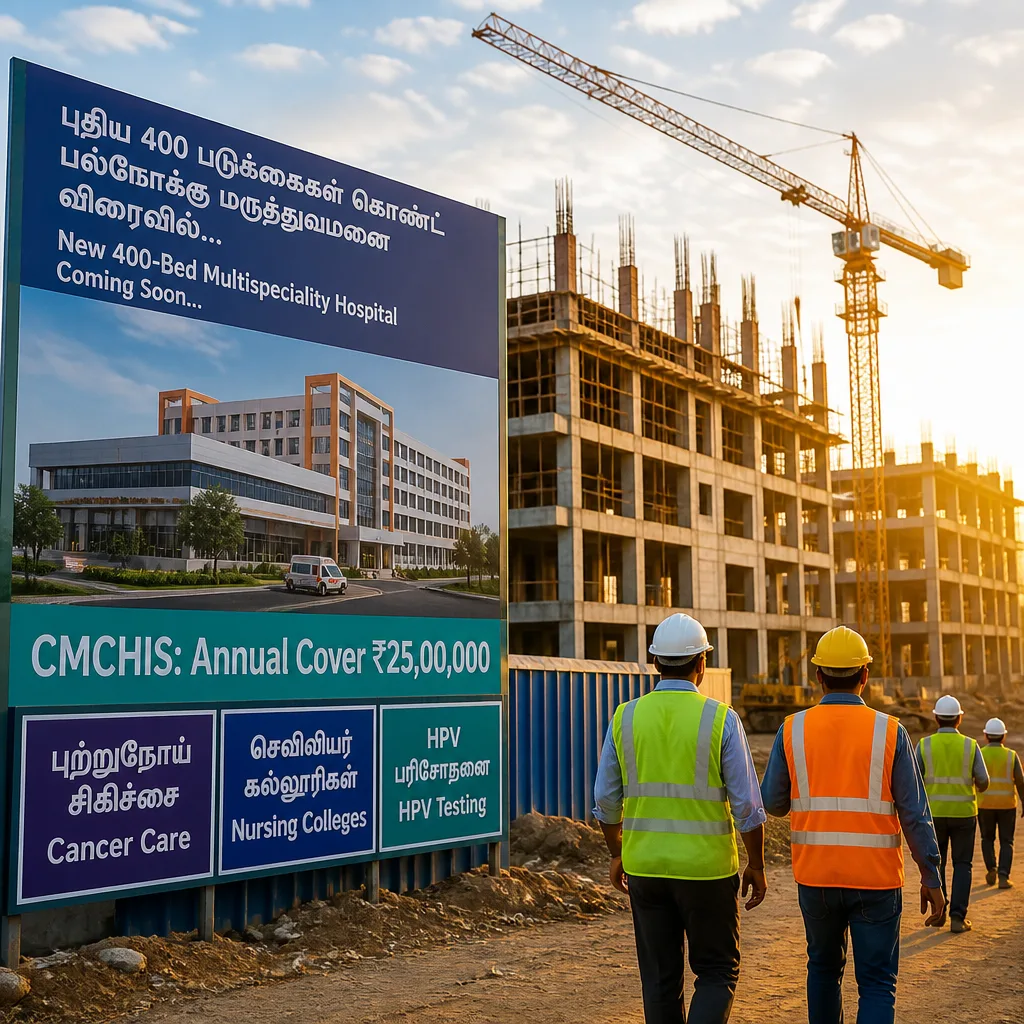
Under the revisions to the Chief Minister's Comprehensive Health Insurance Scheme (CMCHIS), the annual entitlement per beneficiary will be increased from ₹5 lakh to ₹25 lakh, the Chief Minister, C Joseph Vijay, said while making the announcements under Rule 110.
“Medical care is a fundamental right, not a privilege,”
The government said the move aims to remove financial barriers to quality care irrespective of income or location, and to make advanced treatments more accessible to citizens across the State.
Planned capital works and specialised services
The Chief Minister outlined a series of capital and programme investments targeted at tertiary care, cancer services and specialised support for transgender persons.
- A new 400‑bed multispeciality hospital of international standards will be constructed at Perambur in North Chennai, estimated at ₹300 crore.
- Support for transgender persons to access specialised medical and surgical care will be provided under the state insurance scheme at seven government medical college hospitals, including those in Chennai, Tirunelveli, Tuticorin and Kanyakumari.
- Expansion of cancer care: the Chief Minister's Cancer Care Mission will be upgraded with an allocation of ₹677.44 crore, and an integrated cancer treatment unit (G+4 floors) will be established at the Rajiv Gandhi Government General Hospital in Chennai at a cost of ₹471.80 crore.
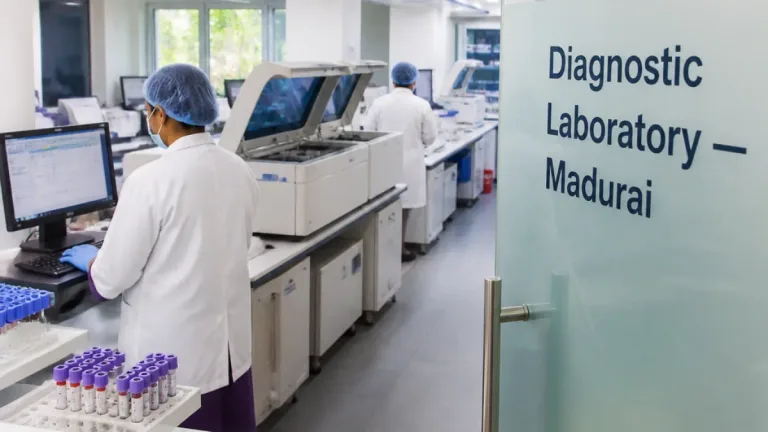
The government also announced plans to set up five regional cancer centres in districts including Thanjavur, Coimbatore and Madurai to decentralise specialist oncology services.
| Item | Allocation / Detail |
|---|---|
| Annual CMCHIS cover | Raised to ₹25 lakh (from ₹5 lakh) |
| Perambur multispeciality hospital | 400 beds; ₹300 crore |
| Cancer Care Mission upgrade | ₹677.44 crore |
| Integrated cancer unit at RGGGH, Chennai | G+4; ₹471.80 crore |
| Medical education expansion | ₹351 crore to add nursing and pharmacy seats; seven new nursing colleges and capacity expansion |
Workforce and early-detection measures
To address shortages in allied health personnel, the State will invest ₹351 crore to create additional student seats in nursing and pharmacy courses. This package includes the establishment of seven new nursing colleges and increased intake at existing institutions.
For cancer screening and early detection, the Chief Minister said advanced equipment—including robotic surgery systems and linear accelerators—will be procured, and HPV DNA testing for women will be carried out in selected districts to prioritise early identification of high‑risk human papillomavirus types linked to cervical cancer. Nutrition support was also listed among the priorities to improve outcomes.
Implications and context
The enhancements to CMCHIS and the planned expansion of tertiary and cancer-care capacity signal a move towards broader financial protection and decentralised specialist services in the State. If implemented in full, the higher insurance ceiling may reduce out‑of‑pocket expenditure for complex care, while regional cancer centres and a substantial upgrade in staff training capacity aim to shorten referral chains and build local diagnostic and treatment capability.
Public health experts generally stress that increased funding must be matched by careful governance, timely procurement, transparent contracting and sustained staffing to realise expected benefits. Citizens are advised to confirm eligibility and claim procedures with the State health department or their treating hospitals. For individual medical advice, consult a qualified doctor; content in this report is informational and not a substitute for professional medical counsel.
The announcements also included a separate note that official vehicles and a monthly allowance for MLAs would be provided to assist constituency grievance redressal, and other administrative measures were outlined in the Assembly speech.