Itanagar, Aug 20: Union Parliamentary Affairs Minister Kiren Rijiju on Thursday said that India's border areas, long neglected according to him, have become a “top priority” for the Narendra Modi government as the Centre seeks to counter claims of fresh Chinese incursions in Arunachal Pradesh.
Rijiju highlights development push in remote sectors
Posting on X, Mr Rijiju — who represents Arunachal West in the Lok Sabha — said he had visited remote sectors in the state to accelerate infrastructure works. He named Maza, Galemo and Taksing as locations where he had pressed for faster execution of projects. He added that the government was committed to border development, a departure, he argued, from earlier approaches.
His comments came amid renewed concerns about Chinese military activity in the Upper Subansiri region of Arunachal Pradesh. Mr Rijiju sought to rebut criticism over the handling of the frontier, and used the opportunity to draw attention to what he described as a historical policy of underdevelopment along India's borders.
Historical context cited
In his social media posts, Mr Rijiju referred to a 2013 statement in Parliament by then-Defence Minister A.K. Antony, in which Mr Antony acknowledged that for decades India had followed a policy of keeping border areas less developed. Mr Antony, Mr Rijiju noted, had said that independent India had adopted a posture that considered "undeveloped borders" as a form of defence.
"The independent India had a policy for many years that the best defence is not to develop the border. Undeveloped borders are safer than developed borders. So, for many years, there was no construction of roads or airfields in the border areas."
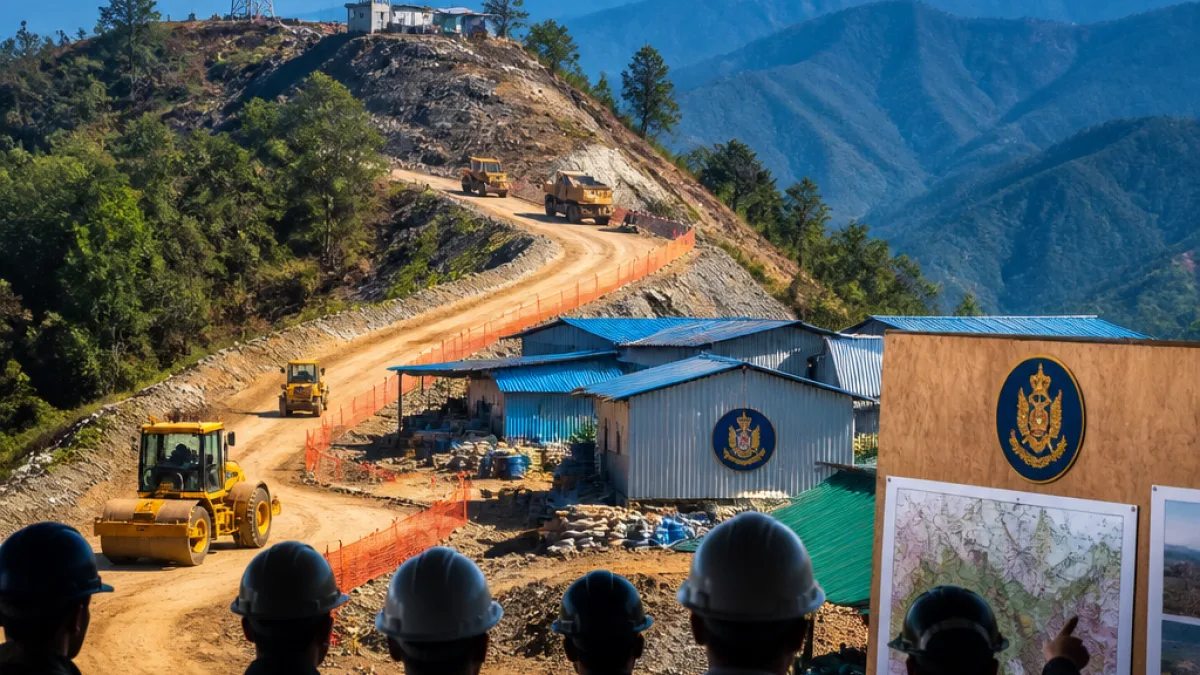
Mr Rijiju said the Modi government had shifted course and was now prioritising infrastructure in frontier tracts.
Political rebuttal and record
In his posts, Mr Rijiju explicitly targeted the Congress, invoking Mr Antony’s frank parliamentary admission as a critique of the earlier party’s record on border infrastructure. He said some people had been making casual comments on border matters and insisted the present government was committed to correcting past neglect.
The minister’s remarks arrive against the backdrop of heightened attention to the India–China boundary in Arunachal Pradesh, where occasional reports of patrol face-offs and infrastructure build-up have been a recurring source of concern for local communities and the state administration.
Local impact and administration priorities
Development of roads, helipads and border outposts in remote frontier sectors can materially change the security and life conditions for residents in high-altitude and sparsely populated areas. Improved connectivity can enhance movement of troops and supplies, enable faster disaster response and open access to markets, healthcare and education for border communities.
Mr Rijiju’s naming of Maza, Galemo and Taksing — all located in forward areas of Arunachal Pradesh — underscores the government’s stated focus on hard infrastructure. These are sectors where road links and air connectivity have long lagged, complicating both civilian access and defence logistics.
- Maza — cited by the minister as a site for accelerated works;
- Galemo — another forward area where development was reportedly pushed;
- Taksing — named as a focus for speeding up construction.
| Item | Implication |
|---|---|
| Road and airfield construction | Faster troop movement, better civilian access |
| Border outposts | Enhanced surveillance and deterrence |
Observers note that while infrastructure is a central pillar of frontier policy, its rollout in difficult terrain requires sustained funding, engineering solutions, environmental clearances and coordination with local administrations.
What remains to be clarified
Mr Rijiju’s remarks address the political narrative around past neglect and set out a current-government priority, but they do not provide specific timelines, project costs or completion targets for the works he referred to. The minister’s statement also does not elaborate on whether additional forces, surveillance assets or diplomatic steps are being deployed in response to reports of activity in Upper Subansiri.
As the Centre emphasises infrastructure, questions remain about the pace of implementation and how civil development and security objectives will be balanced in sensitive border tracts of Arunachal Pradesh.
For now, the defence of and development in frontier districts has moved to the centre of public discourse, with the Union government signalling a policy departure from earlier decades and pledging tangible work in remote sectors of the northeastern state.