High Court seeks reply on coal stockpiles at Sarai platform
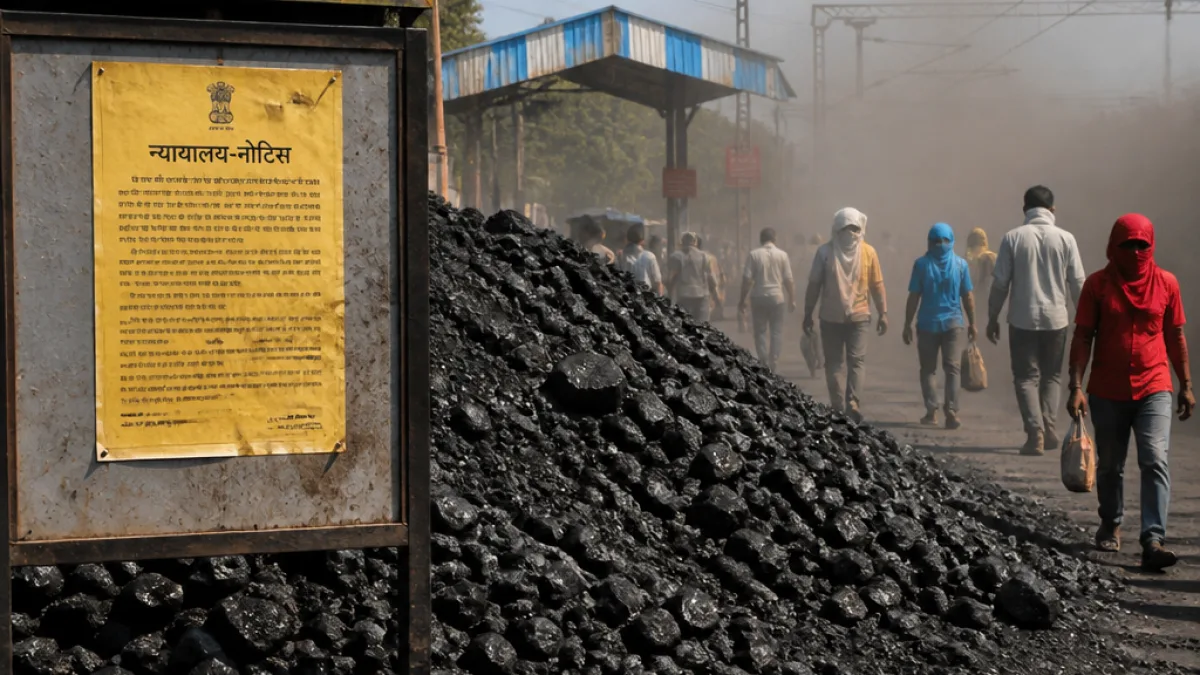
The Madhya Pradesh High Court has issued notices to the Union government and the Divisional Railway Manager (DRM), Jabalpur, after a petition alleged that coal is being dumped on a passenger platform at Sarai railway station in Singrauli district, creating a health and environmental hazard for surrounding villages.
The bench comprising Acting Chief Justice Vivek Rusia and Justice Pradeep Mittal heard the petition on August 14 and directed respondents to file their reply by August 20, according to the order reported from the hearing. Notices were issued to the Union government and the DRM, Jabalpur division, among other respondents.
Allegations of air pollution and rising respiratory illnesses
The petition, filed by Advocate Vijay Jaiswal of Singrauli, states there are two platforms at Sarai station and that one of them is routinely used for dumping coal. The filing contends the practice is causing inconvenience to passengers and creating a health hazard because fine coal particles are becoming airborne and contaminating the surroundings.
“The fine coal particles are flying high and far, covering the landscape in five to six villages in the neighbourhood,”
The petitioner further claimed the contamination has led to a spurt in cases of respiratory disorder in these villages, and sought court intervention to stop coal dumping on the platform so as to contain pollution in the area.
Local administrative linkages and implications for Jabalpur division
Although the alleged dumping is at Sarai station in Singrauli district, the notice names the DRM, Jabalpur, because the station falls under the Jabalpur railway division. Any directions from the High Court to the divisional railway administration could prompt operational changes across platforms and yards managed by Jabalpur division, with implications for goods handling, passenger convenience and local environmental safeguards.
- Who was served notice: Union government; DRM, Jabalpur division (among other respondents).
- Hearing date: Petition heard on August 14, reply sought by August 20.
- Core relief sought: An order to stop dumping coal on Sarai platform to prevent pollution and protect health of nearby villagers.
Context and concerns for residents
Coal handling close to passenger areas can generate dust and particulate matter that travel downwind and settle across villages, crops and dwellings. In coal belts such as parts of Singrauli — and in many areas served by Jabalpur division — coal dust is a recognised occupational and public-health hazard. If the court finds evidence supporting the petitioner's claims, railway operations may be required to adopt alternative loading arrangements, covered storage, water-spraying mitigation or relocation of stockpiles away from passenger access areas.
| Item | Detail |
|---|---|
| Station | Sarai railway station, Singrauli district |
| Respondents served notice | Union government; DRM, Jabalpur division (others named in petition) |
| Alleged impact | Airborne coal particles affecting 5–6 villages, rise in respiratory ailments (as claimed) |
| Court timeline | Petition heard 14 August; reply due by 20 August |
The matter highlights the intersection of railway operations, industrial freight movement and community health in the region. For residents of villages adjacent to rail lines and goods yards, unchecked stockpiling of coal on open platforms can exacerbate chronic respiratory conditions, especially among children, the elderly and those with pre-existing ailments.
The High Court notice places the onus on the railway administration and the Union government to explain the practices at Sarai station and to outline any mitigation measures already in place. The bench's response period will determine whether interim directions are required to prevent further pollution before a detailed hearing.
As the Jabalpur division responds to the court, the case will be watched by environmental groups, local public-health practitioners and rural residents concerned about air quality and the impacts of freight-handling practices on village life and livelihoods.