MLA says ruling overlooked key facts, will approach Supreme Court
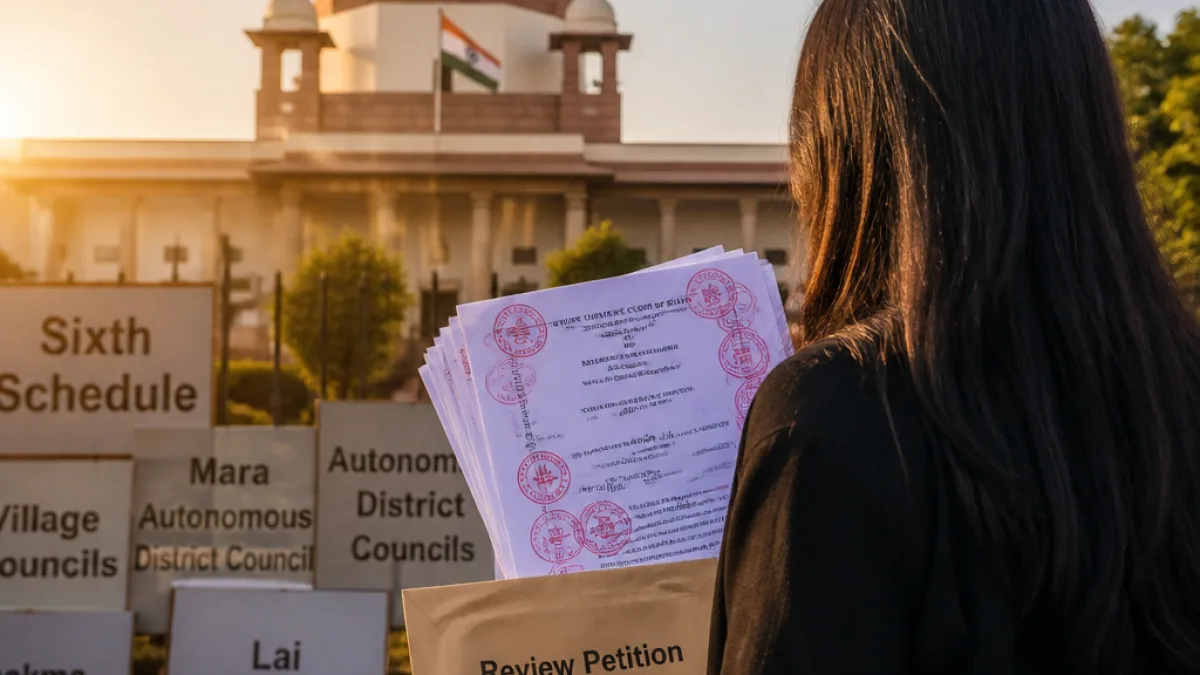
Rashik Mohan Chakma, a Member of the Mizoram Legislative Assembly who also serves on the Chakma Autonomous District Council (ADC), announced plans on Tuesday to seek a review of the Supreme Court's July 20, 2026 judgment addressing dual membership and office-of-profit questions for ADC members.
The judgment, passed in Civil Appeal No. 9212 of 2026 (Rustom Chakma vs The State of Mizoram & Others), directed that the Chakma and Mara ADCs restore prohibitions on holding an ADC post and membership in the State Assembly at the same time. The Supreme Court recorded that all ADCs ought to have comparable provisions barring simultaneous membership.
Chakma contended that the court's observations failed to take into account material developments concerning the Lai Autonomous District Council. He maintained the Lai ADC repealed its 2002 Constitution and Conduct of Business Rules in 2010, thereby removing a restriction on dual membership — a fact, he said, which was not placed before the court during hearings.
Allegation of procedural lapse in disposal of the case
The MLA further argued that the matter was effectively finalised at an early stage after notice was issued, without providing him an opportunity to file a written response. He said he would raise this procedural concern in the review petition, asserting that the disposal left him without a chance to present key facts that could have influenced the court's view.
In addition to procedural objections, Chakma indicated the review will challenge the judgment's treatment of disqualification on the ground of holding an office of profit. He asserted that questions of qualification and disqualification, including what constitutes an office of profit, fall primarily within the legislative domain of Parliament and State Legislatures, not autonomous councils constituted under paragraph 4 of the Sixth Schedule.
Potential ramifications beyond Mizoram
Chakma warned the consequences of the judgment could extend beyond the three ADCs in Mizoram. He signalled that the review petition would also draw attention to other Sixth Schedule autonomous bodies, naming the Bodoland Territorial Council, Karbi Anglong Autonomous Council and Dima Hasao Autonomous Council as examples that might be affected by the court's reasoning.
The MLA indicated the review will seek clarification on whether ADCs possess law-making competence to regulate the qualifications or disqualifications of their members in a manner that may differ from State or Parliamentary legislation, and whether uniform rules on dual membership must be imposed across distinct councils.
What the judgment established
The July 20 decision directed the Chakma and Mara ADCs to restore dual membership restrictions. While the court emphasised uniformity in the relevant provisions across ADCs, Chakma disputes the premise that all councils are in the same legal position given differences in their constitutions and rule changes over time.
| ADC / Sixth Schedule body | Mention in petition |
|---|---|
| Chakma ADC | Directly affected by judgment |
| Mara ADC | Directed to restore dual membership restriction |
| Lai ADC | Alleged 2010 repeal of restriction cited by Chakma |
| Bodoland, Karbi Anglong, Dima Hasao | Listed by Chakma as other Sixth Schedule councils of concern |
Points the review petition is expected to raise
- Whether the Supreme Court was apprised of the Lai ADC's 2010 repeal of its 2002 rules removing dual membership restrictions.
- Whether the court had adequate opportunity to consider written submissions from affected members before disposing of the case.
- Whether ADCs under the Sixth Schedule have legislative competence related to member qualifications and disqualifications that could render a uniform judicial direction inappropriate.
Chakma said the review will argue these legal and procedural points before the appropriate bench of the Supreme Court. He signalled the petition will engage both the specific facts of the ADC constitutions and broader constitutional questions about the scope of Sixth Schedule powers.
Legal and political backdrop
The dispute reflects a long-standing tension about the relationship between State-level elected representation and autonomous council offices created under the Sixth Schedule. ADCs were established to provide self-governance to tribal areas, with separate constitutions and rules in some cases. The Supreme Court's insistence on parity in restrictions has immediate consequences for sitting legislators who are also ADC members.
No official response from the State government, the Election Commission or the Lai ADC was available at the time of reporting. The Supreme Court order and the civil appeal number cited are matters of public record.
The review petition, once filed, will determine whether the court revisits or clarifies its earlier direction and whether its view on uniform dual-membership restrictions stands after further argument and evidence.